

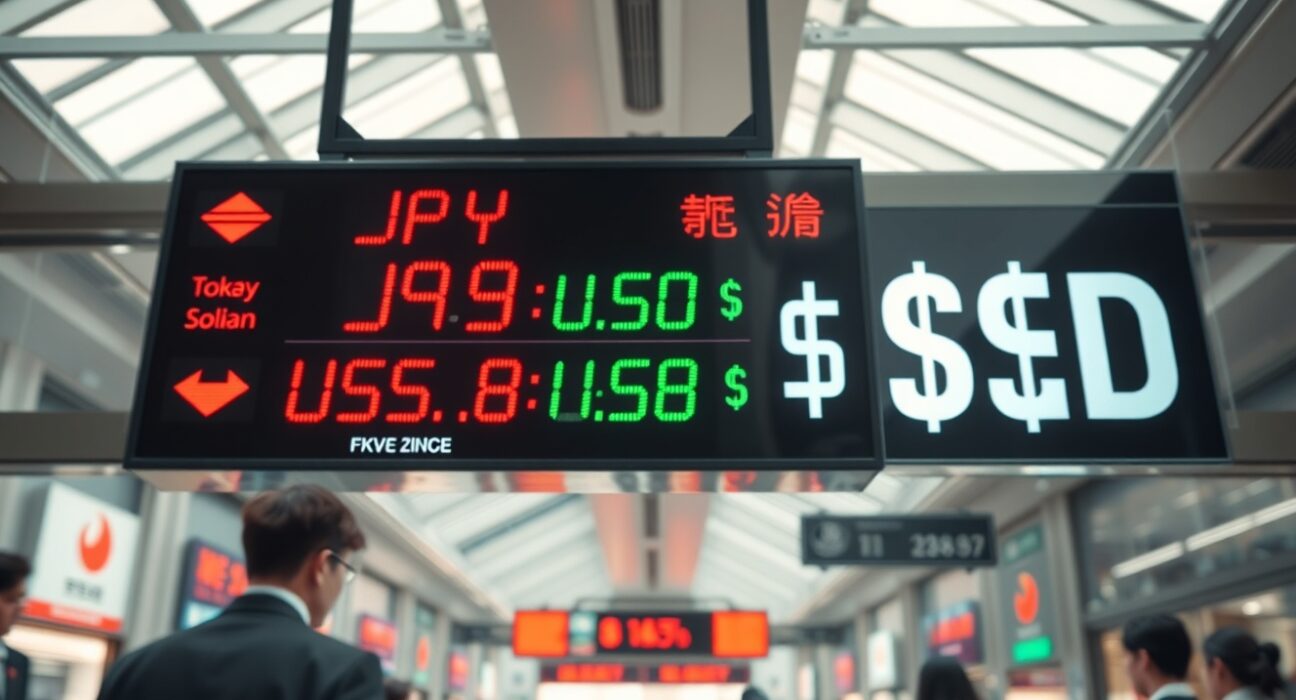
The Japanese yen steadied near a 40-year low against the U.S. dollar on Tuesday, as the greenback paused its recent rally following a period of sustained strength. Asian currencies traded in a mixed pattern, reflecting ongoing uncertainty over global interest rate trajectories and regional economic divergences.
Yen Hovers at Critical Levels
The yen traded around 151.50 against the dollar in early Asian hours, after briefly touching levels not seen since 1990 earlier this week. The currency’s weakness has been driven by the wide interest rate differential between Japan and the United States, with the Bank of Japan maintaining its ultra-loose monetary policy while the Federal Reserve keeps rates elevated.
Japanese authorities have repeatedly signaled readiness to intervene in the foreign exchange market if yen moves become disorderly. Finance Minister Shunichi Suzuki reiterated that stance this week, stating that officials are watching currency movements with a high sense of urgency. However, traders remain skeptical that intervention alone can reverse the trend without a fundamental shift in policy direction.
Dollar Takes a Breather
The dollar index, which measures the greenback against a basket of major currencies, edged lower by 0.2% on Tuesday, pausing after a four-week winning streak. The pullback came as U.S. Treasury yields eased slightly, with the 10-year note falling to 4.85% from recent highs above 5%.
Market participants are now focused on upcoming U.S. economic data, including nonfarm payrolls and consumer price index figures, which could influence the Fed’s next policy move. A stronger-than-expected jobs report could reignite dollar buying, while signs of a cooling economy might accelerate the greenback’s retreat.
Asian Currency Divergence
Across Asia, currency performance was uneven. The Chinese yuan weakened slightly, with the onshore rate falling to 7.32 per dollar, as concerns over the country’s economic recovery persist. The People’s Bank of China set a weaker daily fixing, signaling tolerance for gradual depreciation.
In contrast, the South Korean won and the Singapore dollar gained modestly, supported by resilient export data and stable capital flows. The Indian rupee remained largely unchanged, as the Reserve Bank of India’s intervention helped cap volatility.
The Thai baht and Indonesian rupiah edged lower, pressured by higher oil prices and domestic political uncertainties. The mixed performance underscores the lack of a uniform driver for Asian currencies, with local factors playing an increasingly important role.
Why This Matters
The yen’s trajectory is closely watched by global investors because of its status as a major reserve currency and its role in carry trades. A sustained weakening of the yen increases import costs for Japan, raising inflation pressures and potentially forcing the Bank of Japan to adjust its yield curve control policy.
For Asian economies, a weaker yen can also create competitive pressures, as Japanese exports become cheaper relative to regional peers. This dynamic has historically led to currency wars, though central banks have so far refrained from aggressive competitive devaluation.
Conclusion
The yen remains under pressure near multi-decade lows, with the dollar’s pause providing only temporary relief. Asian currencies are likely to remain mixed in the near term, driven by a combination of global rate expectations, local economic data, and central bank interventions. Traders should watch for U.S. economic releases and any policy signals from the Bank of Japan for clearer direction.
FAQs
Q1: Why is the yen weakening against the dollar?
The yen is weakening primarily due to the wide interest rate differential between Japan and the U.S. The Federal Reserve has maintained high interest rates to combat inflation, while the Bank of Japan keeps rates near zero to stimulate the economy, making the dollar more attractive to investors.
Q2: Will the Japanese government intervene to support the yen?
Japanese authorities have signaled readiness to intervene if the yen moves too rapidly or disorderly. However, intervention alone is unlikely to reverse the long-term trend without a change in monetary policy. Previous interventions in 2022 had only temporary effects.
Q3: How does a weaker yen affect Asian currencies?
A weaker yen can put pressure on other Asian currencies by making Japanese exports more competitive, potentially leading to competitive devaluations. However, each country’s currency is also influenced by its own economic conditions, trade balances, and central bank policies, resulting in mixed performance across the region.
Disclaimer: The information provided is not trading advice, Bitcoinworld.co.in holds no liability for any investments made based on the information provided on this page. We strongly recommend independent research and/or consultation with a qualified professional before making any investment decisions.
