

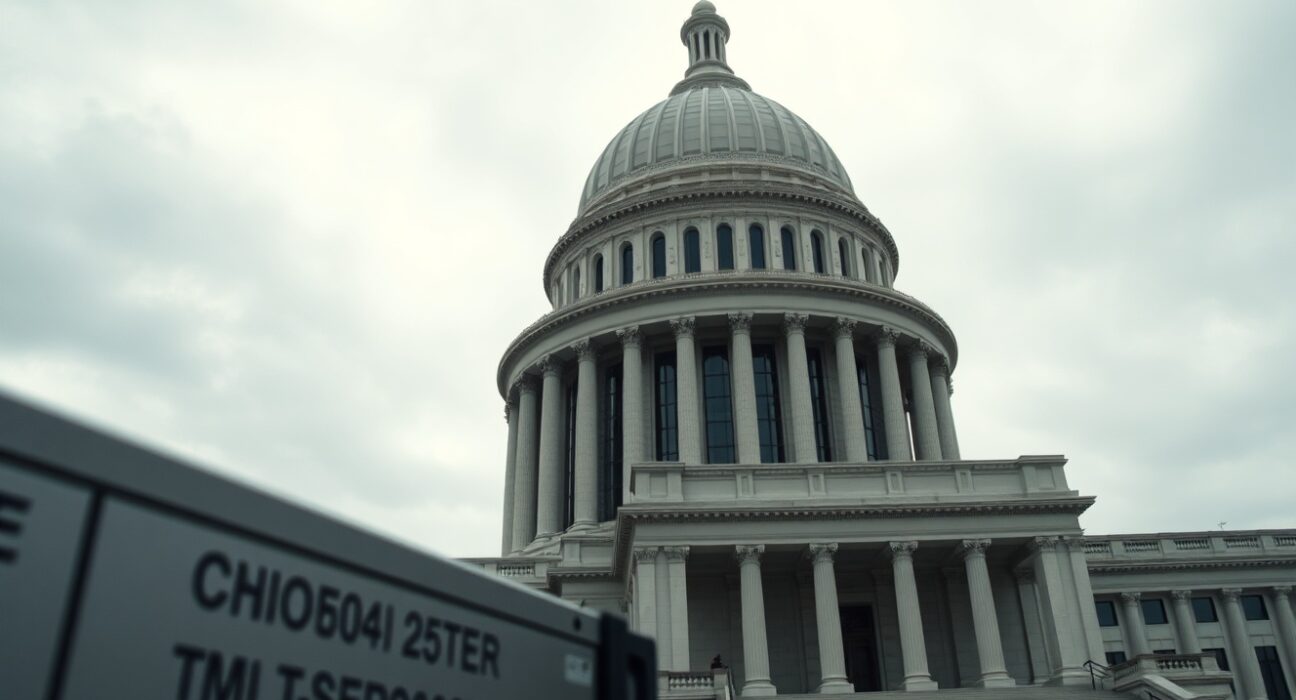
The narrative of a fierce rivalry between OpenAI and Anthropic has dominated tech industry headlines for years. But a series of recent actions by the U.S. government suggests that the competitive dynamic is being fundamentally reshaped by a force far larger than any single company: federal oversight of advanced artificial intelligence models.
Government Review Becomes the New Normal
Two weeks after the U.S. government pulled Anthropic’s Fable and Mythos models from general release, OpenAI’s next-generation system appears to be heading for a similar fate. According to a report from The Information, OpenAI’s GPT-5.6 will initially be released only in a limited preview, with the government approving access on a customer-by-customer basis until a broader release can be authorized.
OpenAI CEO Sam Altman reportedly projected the preview period would last only a couple of weeks. However, Anthropic’s Mythos model has already been in preview for months with no clear path to general availability. Even a short delay carries significant economic consequences for companies spending billions on model development and seeking to improve their bottom lines.
Shared Problems, Shared Risks
This regulatory convergence places OpenAI and Anthropic in an identical position for the first time. Both face the same uncertainty, the same potential for extended review periods, and the same disaster scenario if the approval process becomes permanently gridlocked. The cost of implementing a haphazard government approval process for every frontier model is becoming obvious, and no fix will help one lab without helping the others.
Industry conversations have often focused on assigning blame — accusing Anthropic of running a regulatory capture scheme or OpenAI of cozying up to political power to ice out a rival. These narratives are understandable given the billions of dollars at stake, but they miss the larger structural shift underway.
The Core Problem: An Undefined Process
The most immediate challenge is establishing a release process that makes sense. As Dean Ball, a George Mason University fellow and soon-to-be OpenAI employee, detailed in a recent analysis, it remains unclear what kind of safety assurances could satisfy regulators. The U.S. government currently lacks the expertise and capacity for the kind of testing required for frontier AI systems. More fundamentally, regulators have not articulated what specific risks they are trying to protect against.
This does not mean the underlying concerns are invalid. Even skeptics of the most dramatic AI risk scenarios acknowledge clear evidence that AI tools are revolutionizing cybersecurity, with parallel developments in biorisk and alignment research. Restricting model releases alone cannot be the answer — it will only limit what is available to the public — but legitimate concerns must be addressed.
A Path Forward Requires Collective Action
The best ideas for addressing these challenges, as laid out by Ball, will require cooperation. It will mean trusting independent groups to guide the process, even when their goals do not perfectly align with any single company’s interests. It will mean lining up behind the least-bad regulatory options available, rather than fighting every regulation tooth-and-nail.
Most of all, it will mean fighting for AI as an industry, instead of viewing safety and regulation as opportunities to gain competitive advantage. For many people working in AI, that will be a difficult sell. But AI models have progressed to the point where their capabilities carry real political consequences. Dealing with those consequences will require collective action.
Conclusion
The weeks and months ahead will determine whether the AI industry is capable of that kind of cooperation. If model development slows significantly due to regulatory uncertainty, it will likely chill the ongoing data center buildout and put the entire industry at risk. The rivalry between OpenAI and Anthropic may continue to generate headlines, but the story that matters now is whether they can work together to shape a regulatory framework that protects both innovation and public safety.
FAQs
Q1: Why are AI models being held up by the U.S. government?
The government is reviewing frontier AI models before general release to assess potential risks, including cybersecurity and biosecurity concerns. However, the review process lacks clear standards and expertise, leading to delays.
Q2: How does this affect OpenAI and Anthropic differently?
Both companies now face the same regulatory uncertainty. Previously seen as rivals with different strategies, they are now in an identical position of waiting for government approval before releasing their most advanced models.
Q3: What happens if the review process remains unclear?
Extended delays could limit the economic upside of costly new AI systems, slow the pace of model development, and chill investment in data center infrastructure. The entire AI industry could face significant disruption.
Disclaimer: The information provided is not trading advice, Bitcoinworld.co.in holds no liability for any investments made based on the information provided on this page. We strongly recommend independent research and/or consultation with a qualified professional before making any investment decisions.
