

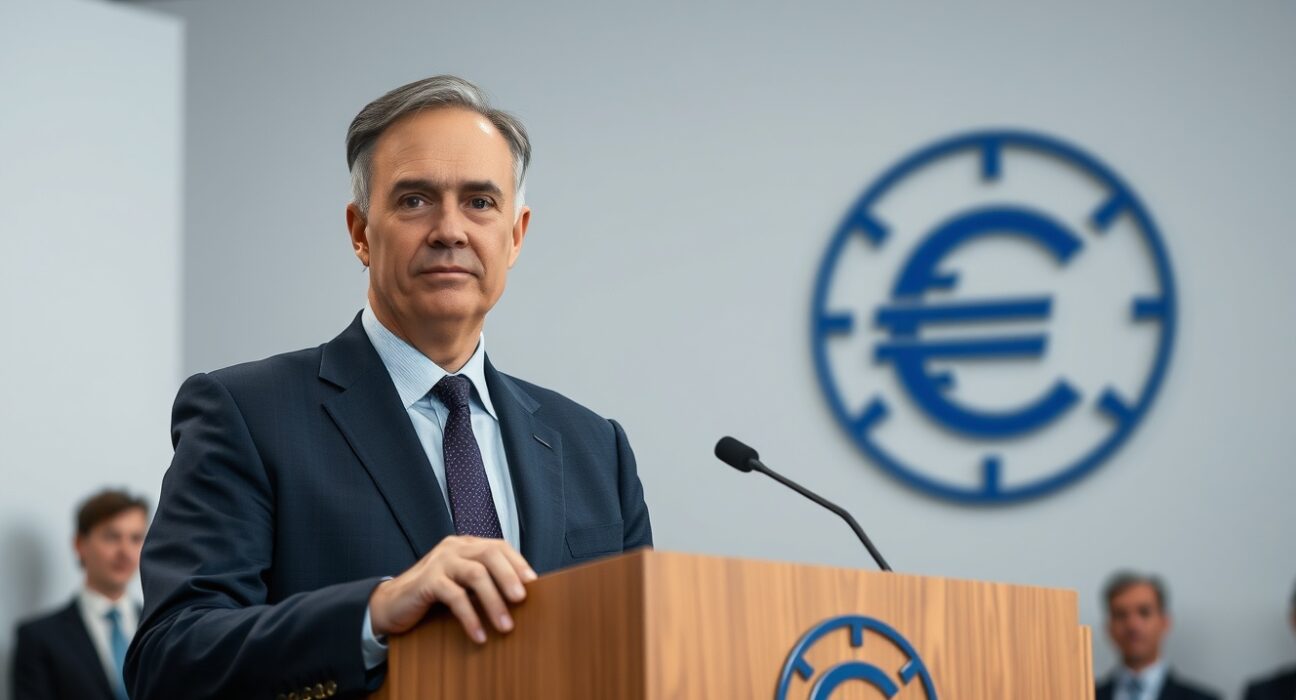
European Central Bank (ECB) Governing Council member and Latvijas Banka Governor Mārtiņš Kazāks has stated that the likelihood of negative economic scenarios for the eurozone has decreased substantially. Speaking in a recent interview, Kazāks noted that while risks remain, the overall outlook has improved markedly compared to earlier periods of heightened uncertainty.
Improved Outlook for the Eurozone
Kazāks emphasized that the probability of severe adverse outcomes—such as a deep recession or financial instability—has fallen significantly. This shift reflects a combination of factors, including easing energy prices, resilient labor markets, and the ECB’s own monetary policy measures. The comments come as the eurozone economy shows signs of stabilization after a period of high inflation and geopolitical shocks.
Monetary Policy Implications
The remarks from Kazāks, who is considered a centrist within the ECB’s Governing Council, suggest that the central bank may be approaching a turning point in its policy cycle. While inflation remains above the ECB’s 2% target, the reduced risk of worst-case scenarios could influence the pace and scale of future interest rate decisions. Markets are closely watching for any shift in language from policymakers as the next meeting approaches.
Why This Matters for Investors and Consumers
For businesses and households across the eurozone, the diminished risk of negative scenarios translates into greater confidence in economic planning. Lower uncertainty typically supports investment, consumption, and credit markets. However, Kazāks also cautioned that the recovery remains fragile and that the ECB must remain vigilant against persistent inflationary pressures.
Conclusion
ECB policymaker Mārtiņš Kazāks has delivered a notably more optimistic assessment of the eurozone’s economic trajectory, stating that the probability of severe negative outcomes has fallen massively. While risks persist, the improved outlook signals a potential stabilization phase for the region’s economy, with implications for monetary policy direction and market sentiment.
FAQs
Q1: What did ECB’s Kazāks say about negative scenarios?
A: Kazāks stated that the possibility of negative economic scenarios for the eurozone has fallen massively, indicating a significantly improved risk assessment compared to recent periods.
Q2: What factors contributed to this improved outlook?
A: Key factors include easing energy prices, resilient labor markets, and the ECB’s monetary policy measures that have helped stabilize the economy.
Q3: What does this mean for future ECB interest rate decisions?
A: The reduced risk of severe downside scenarios could influence the ECB’s policy path, potentially allowing for a more measured approach to future rate adjustments, though inflation remains a key concern.
Disclaimer: The information provided is not trading advice, Bitcoinworld.co.in holds no liability for any investments made based on the information provided on this page. We strongly recommend independent research and/or consultation with a qualified professional before making any investment decisions.
