

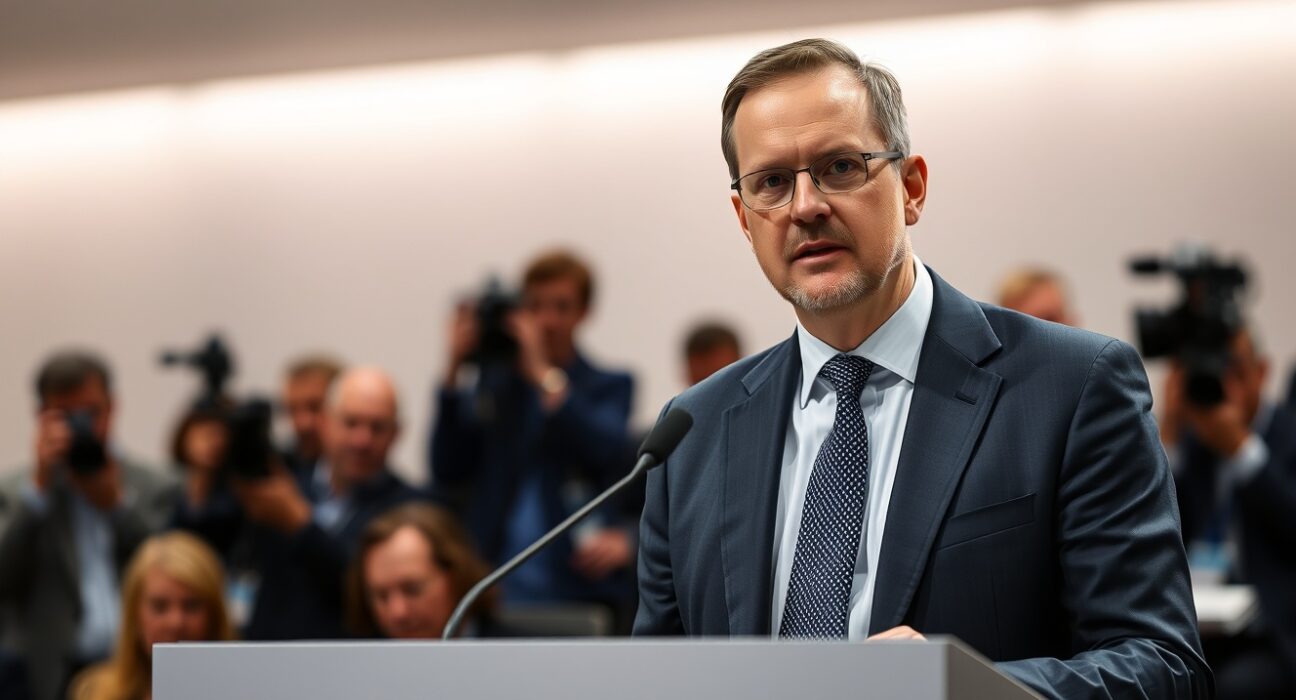
The European Central Bank’s chief economist, Philip Lane, has indicated that oil prices are expected to remain above pre-Ukraine war levels through 2027 and 2028, a projection that carries significant implications for the eurozone’s inflation trajectory and monetary policy outlook. Speaking at an event in Frankfurt, Lane presented charts showing that while energy costs have moderated from their 2022 peaks, they are not forecast to return to the baseline seen before Russia’s full-scale invasion of Ukraine.
Persistent Price Floor for Energy
Lane’s remarks underscore a fundamental shift in the global energy landscape. The ECB’s internal models now price in a sustained premium on crude oil, reflecting structural factors such as ongoing supply chain realignments, sanctions regimes, and investment shortfalls in new production capacity. The central bank’s projections suggest that oil prices will settle at a level that is measurably higher than the 2019-2021 average, creating a persistent cost pressure that the eurozone economy must absorb.
This outlook is critical because energy prices have been the primary driver of inflation in the eurozone over the past two years. While headline inflation has fallen from its double-digit peak, core inflation—which excludes volatile energy and food costs—has proven stickier. Lane’s data suggests that the energy component will continue to provide a floor under overall price levels, complicating the ECB’s efforts to bring inflation back to its 2% target.
Implications for ECB Monetary Policy
The forecast of persistently higher oil prices directly influences the ECB’s interest rate decisions. If energy costs remain elevated, the central bank may need to maintain a tighter monetary policy stance for longer than markets currently anticipate. Lane’s presentation did not signal an immediate change in policy, but it reinforced the message that the ‘last mile’ of disinflation could be the most challenging.
Analysts are now recalibrating their expectations for rate cuts. The ECB has held rates steady at 4% since September 2023, and market pricing had previously factored in a first cut as early as June 2024. Lane’s commentary suggests that policymakers are wary of declaring victory too early, particularly if external supply shocks keep energy prices aloft.
Structural vs. Cyclical Factors
Lane distinguished between cyclical price spikes—which tend to fade as supply chains adjust—and structural shifts that embed higher costs into the economy. The ECB’s view is that the current oil price floor is structural, driven by geopolitics and the green transition. As Europe accelerates its shift away from fossil fuels, short-term supply constraints are likely to persist, keeping prices elevated even as long-term demand may eventually decline.
This analysis is consistent with forecasts from the International Energy Agency (IEA) and the Organization of the Petroleum Exporting Countries (OPEC), both of which see oil prices remaining in the $75–$90 per barrel range through the end of the decade, compared to a pre-war average of approximately $60 per barrel.
Conclusion
Philip Lane’s warning that oil prices will stay above pre-war levels for the next several years is a sobering reminder that the economic fallout from the war in Ukraine is not temporary. For businesses and households in the eurozone, it means persistently higher costs for transportation, heating, and manufactured goods. For the ECB, it means a longer and more cautious path to monetary normalization. The central bank’s credibility hinges on navigating this environment without triggering a recession, making Lane’s forward guidance a key signal for financial markets.
FAQs
Q1: Why does the ECB expect oil prices to stay above pre-war levels?
The ECB cites structural factors including ongoing sanctions on Russia, reduced global investment in new oil production, and supply chain disruptions related to the energy transition. These factors have created a new, higher price floor that is not expected to revert to pre-2022 levels.
Q2: How do higher oil prices affect eurozone inflation?
Oil prices directly impact fuel and energy costs, which feed into transportation, manufacturing, and heating. Higher energy prices raise headline inflation and can spill over into core inflation as businesses pass on costs to consumers, making it harder for the ECB to reach its 2% target.
Q3: Will the ECB change interest rates because of this forecast?
Lane’s remarks suggest the ECB will maintain a cautious stance. While no immediate policy change was signaled, the forecast of persistent energy inflation supports the argument for keeping rates higher for longer to ensure inflation is fully under control before cutting.
Disclaimer: The information provided is not trading advice, Bitcoinworld.co.in holds no liability for any investments made based on the information provided on this page. We strongly recommend independent research and/or consultation with a qualified professional before making any investment decisions.
