

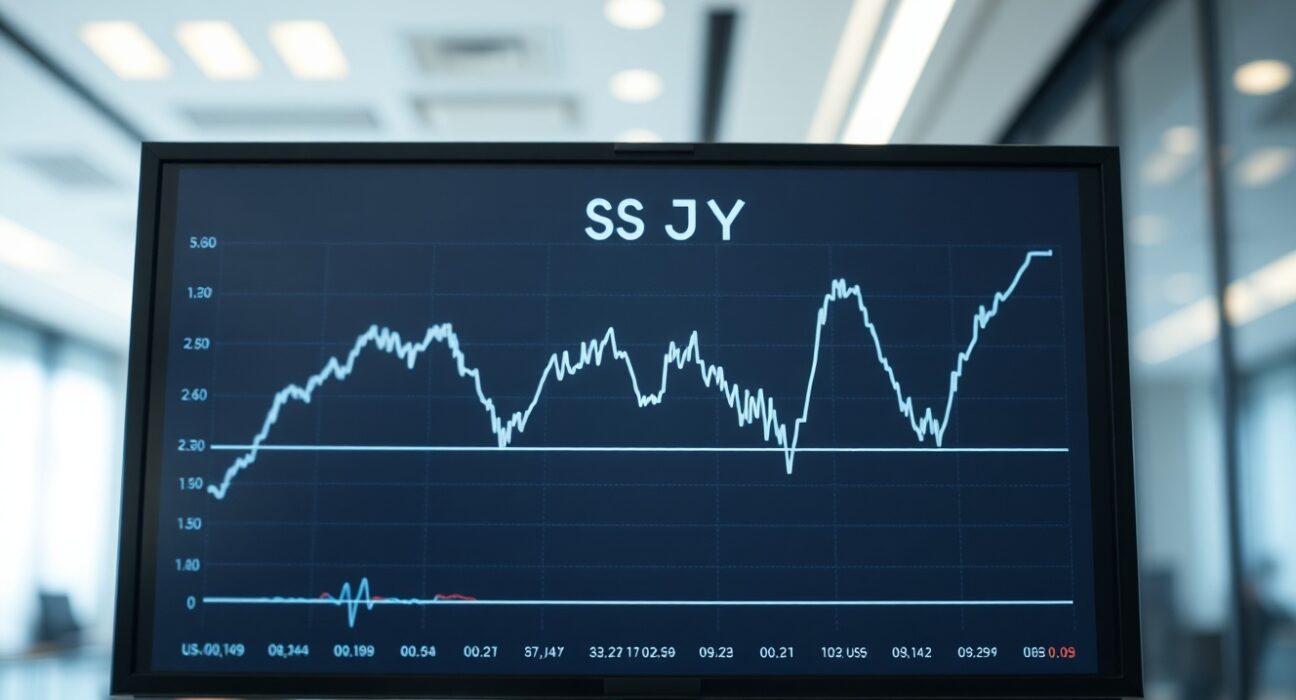
The Japanese yen continued its downward trajectory against the US dollar during Tuesday’s trading session, as the persistent interest rate differential between the United States and Japan remained a primary driver of currency market dynamics. The dollar found broad support, reinforcing a trend that has characterized much of the recent trading period.
Interest Rate Divergence Fuels Dollar Strength
The core factor underpinning the yen’s weakness is the widening gap between US and Japanese bond yields. The Federal Reserve has maintained elevated interest rates to combat inflation, while the Bank of Japan (BOJ) has kept its policy rates at ultra-low levels, even after a modest adjustment in March. This divergence makes dollar-denominated assets more attractive to yield-seeking investors, putting consistent downward pressure on the yen.
Market participants are closely watching for any signals from the BOJ regarding future policy normalization. However, Governor Kazuo Ueda has indicated that the central bank will proceed cautiously, given the fragile state of Japan’s economic recovery. This cautious stance has limited the yen’s ability to recover ground.
Market Reaction and Technical Levels
The USD/JPY pair has moved decisively above the 155.00 level, a psychologically important threshold that traders are monitoring for potential intervention by Japanese authorities. The Ministry of Finance has previously warned against speculative moves, but concrete action has yet to materialize.
From a technical perspective, the pair is trading near recent highs, with resistance levels emerging around 156.50 and 158.00. Support is seen near the 154.00 mark. Volume data suggests continued interest from institutional investors, who are positioning for further yen weakness in the near term.
Implications for Japanese Economy and Consumers
A weaker yen presents a mixed picture for Japan’s economy. Exporters benefit from increased competitiveness abroad, and major corporations have revised their profit forecasts upward. However, households and small businesses face higher import costs for energy, food, and raw materials, contributing to domestic inflationary pressures. The government’s approval ratings have been sensitive to the rising cost of living, adding a political dimension to currency policy decisions.
Conclusion
The yen’s decline reflects the fundamental reality of divergent monetary policies. While intervention remains a possibility, the market’s focus is on upcoming economic data from both the US and Japan, including inflation figures and central bank minutes, which could provide further direction. For now, the interest rate gap continues to favor the dollar, keeping the yen under sustained pressure.
FAQs
Q1: Why is the Japanese Yen falling against the US Dollar?
The primary reason is the interest rate differential. The US Federal Reserve has raised rates significantly, while the Bank of Japan has kept rates near zero, making dollar-based investments more attractive and weakening demand for the yen.
Q2: Could the Japanese government intervene to support the yen?
Yes, Japanese authorities have a history of intervening in currency markets when they deem moves excessive or speculative. However, intervention is typically reserved for periods of high volatility and may have only a temporary effect.
Q3: How does a weak yen affect the average person in Japan?
A weak yen increases the cost of imported goods, including energy and food, leading to higher living expenses. While it benefits exporters and tourism, it places a burden on households and small businesses that rely on imports.
Disclaimer: The information provided is not trading advice, Bitcoinworld.co.in holds no liability for any investments made based on the information provided on this page. We strongly recommend independent research and/or consultation with a qualified professional before making any investment decisions.
