

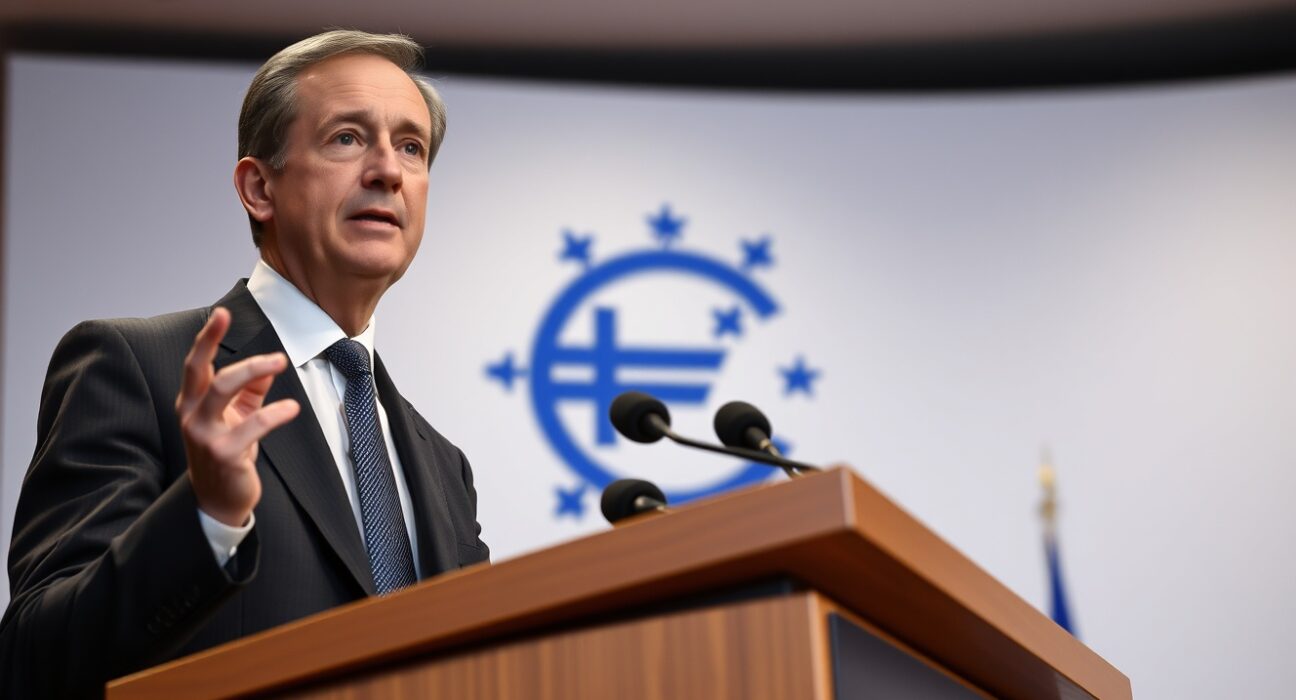
European Central Bank (ECB) board member Joachim Nagel stated on Tuesday that he will keep his options open for the upcoming monetary policy decisions in July and September, emphasizing a data-dependent approach amid ongoing economic uncertainty.
Data-Dependent Stance Signals Caution
Speaking at an event in Berlin, Nagel, who also serves as the president of the Bundesbank, refrained from committing to any specific rate path. His remarks come as the ECB navigates a complex landscape of stubborn inflation, sluggish eurozone growth, and geopolitical risks. “I will keep my options open for the July and September decisions,” Nagel said, adding that incoming economic data will guide the Governing Council’s next moves.
Nagel’s comments align with the ECB’s recent communication strategy, which has shifted away from forward guidance toward a meeting-by-meeting assessment. Markets currently price in a potential rate cut in September, but Nagel’s cautious tone suggests that a July move is not off the table, nor is it guaranteed.
Implications for Eurozone Monetary Policy
The ECB has already cut rates twice in 2025, most recently in June, bringing the deposit facility rate to 3.25%. However, core inflation remains above the 2% target, driven by sticky services prices and wage growth. Nagel noted that while inflation is trending downward, the pace of disinflation remains uncertain.
“We must remain vigilant,” Nagel said. “Premature easing could undo the progress we have made.” His remarks underscore a divide within the Governing Council between hawks, who favor a slower easing cycle, and doves, who argue that the eurozone economy needs more stimulus.
Market and Economic Context
The eurozone economy expanded by just 0.3% in the first quarter of 2025, with manufacturing output contracting for the fifth consecutive month. Germany, the bloc’s largest economy, narrowly avoided a recession but faces headwinds from weak global demand and structural challenges. Nagel acknowledged the fragility of the recovery but stressed that monetary policy cannot solve structural problems.
Financial markets reacted modestly to Nagel’s comments, with the euro gaining 0.2% against the dollar and bond yields edging higher. Analysts at ING noted that Nagel’s balanced tone leaves the door open for either a hold or a cut in July, depending on upcoming data releases, including the June inflation report due later this week.
Conclusion
Nagel’s deliberate ambiguity reflects the ECB’s current predicament: inflation is not yet defeated, but the economy is showing signs of strain. His message reinforces the Governing Council’s commitment to data dependency, leaving markets to parse every economic indicator for clues. The July and September meetings will be pivotal in determining whether the ECB can engineer a soft landing or must choose between fighting inflation and supporting growth.
FAQs
Q1: What did ECB’s Nagel say about July and September rate decisions?
Nagel stated he will keep his options open, meaning the ECB could either hold rates steady or cut them, depending on incoming economic data.
Q2: Why is Nagel’s stance significant for markets?
His comments provide insight into the ECB’s internal debate between hawks and doves, influencing expectations for the eurozone interest rate path and affecting currency and bond markets.
Q3: What economic factors are driving the ECB’s caution?
Sticky core inflation, particularly in services and wages, alongside weak eurozone growth and geopolitical risks, are pushing the ECB to remain flexible rather than committing to a predetermined rate trajectory.
Disclaimer: The information provided is not trading advice, Bitcoinworld.co.in holds no liability for any investments made based on the information provided on this page. We strongly recommend independent research and/or consultation with a qualified professional before making any investment decisions.
