

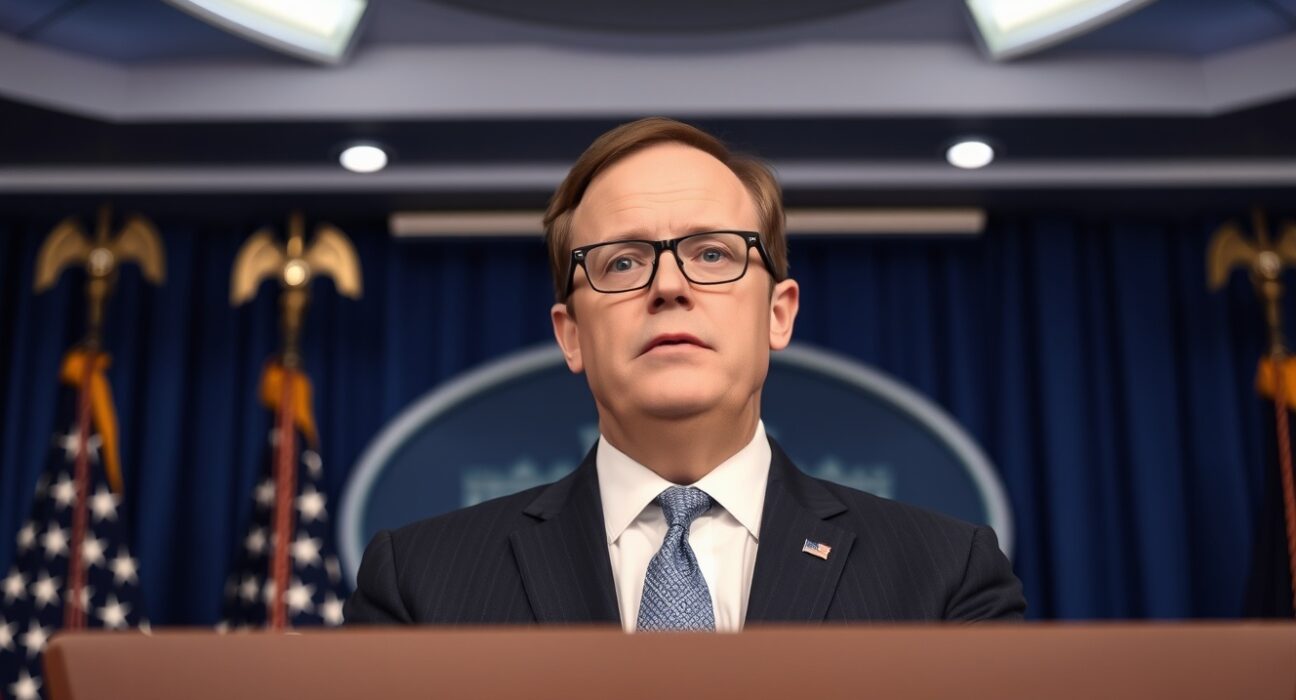
Kevin Hassett, chairman of the White House National Economic Council (NEC), stated on Monday that raising interest rates would be a mistake, injecting a new voice into the ongoing debate over the direction of U.S. monetary policy. Hassett’s comments, made during a press briefing, come as the Federal Reserve weighs its next moves amid persistent inflation and mixed economic signals.
Hassett’s Stance on Monetary Policy
Hassett argued that increasing borrowing costs could undermine recent economic gains, including job growth and consumer spending. ‘Raising rates now would be a mistake,’ Hassett said, without elaborating on specific data or timing. His remarks align with the White House’s broader emphasis on sustaining economic momentum, even as the Fed seeks to cool inflation to its 2% target.
The NEC chairman’s comments highlight a recurring tension between the executive branch and the independent Federal Reserve. While the White House has historically avoided direct commentary on rate decisions, Hassett’s statement reflects a more assertive approach under the current administration.
Market and Political Implications
Financial markets reacted cautiously to the remarks, with bond yields and the dollar showing little immediate change. Analysts noted that Hassett’s influence on actual Fed policy is limited, but his words could shape market sentiment and public perception. The Fed has raised rates aggressively over the past two years to combat inflation, but recent data showing a cooling economy has fueled speculation of a pause or reversal.
Politically, the statement gives ammunition to both sides of the debate. Critics of the Fed’s tightening cycle may seize on the White House’s opposition, while supporters of rate hikes argue that central bank independence is crucial for long-term price stability.
Why This Matters for Readers
For consumers and businesses, the trajectory of interest rates directly affects mortgage rates, credit card APRs, auto loans, and the cost of capital for expansion. A premature rate cut or continued hikes could influence everything from housing affordability to corporate investment decisions. Hassett’s warning adds to the uncertainty, reminding stakeholders that economic policy remains a contentious and closely watched arena.
Conclusion
Kevin Hassett’s public caution against raising interest rates underscores the delicate balance between supporting growth and controlling inflation. While the Fed retains independence, the White House’s position signals ongoing political pressure. The coming months will reveal whether the central bank heeds this advice or charts its own course based on incoming economic data.
FAQs
Q1: Who is Kevin Hassett?
Kevin Hassett is the chairman of the White House National Economic Council, serving as a top economic adviser to the president. He previously held roles at the Council of Economic Advisers and the American Enterprise Institute.
Q2: Why did Hassett say raising interest rates would be a mistake?
He argued that higher rates could slow economic growth and undermine recent progress in job creation and consumer spending, though he did not provide specific evidence in his statement.
Q3: Can the White House control the Federal Reserve’s interest rate decisions?
No. The Federal Reserve is an independent central bank that sets monetary policy based on its dual mandate of maximum employment and stable prices. While the White House can express opinions, it does not direct Fed policy.
Disclaimer: The information provided is not trading advice, Bitcoinworld.co.in holds no liability for any investments made based on the information provided on this page. We strongly recommend independent research and/or consultation with a qualified professional before making any investment decisions.
