

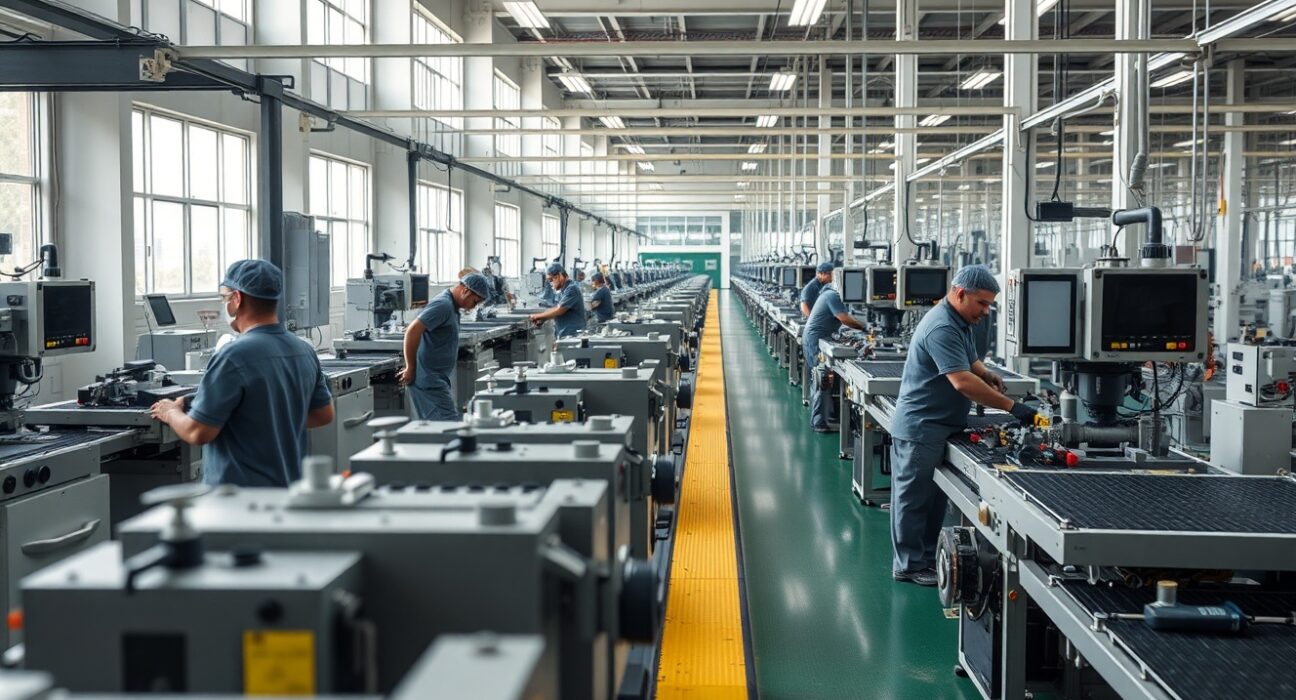
Brazil’s manufacturing sector moved back into expansion territory in June, with the S&P Global Brazil Manufacturing Purchasing Managers’ Index (PMI) climbing to 50.8 from 49.1 in May. The reading, released this week, marks the first time in three months that the index has crossed the 50.0 threshold that separates expansion from contraction.
Return to Growth After a Brief Contraction
The June PMI data signals a modest but meaningful improvement in operating conditions for Brazilian manufacturers. A reading above 50.0 indicates expansion in the sector, while a figure below that level points to a contraction. The shift from 49.1 to 50.8 reflects a rebound in output and new orders, driven partly by improving domestic demand and a stabilization in business confidence.
According to the survey data, production volumes increased for the first time in three months, and new orders rose at a moderate pace. Panelists reported that customer demand, particularly from the domestic market, showed signs of recovery after a sluggish period. Export orders, however, remained subdued, suggesting that external demand continues to face headwinds from global economic uncertainty.
Key Drivers and Sector Implications
The improvement in the PMI was broad-based but led by the intermediate goods category. Consumer goods producers also reported a slight uptick in activity, while investment goods remained relatively flat. Employment levels across the sector continued to decline, albeit at a slower rate, as firms remained cautious about hiring amid ongoing cost pressures.
Input cost inflation remained a concern for manufacturers, with prices for raw materials and energy still elevated. However, the rate of cost increase moderated compared to earlier in the year. In response, firms raised their selling prices only selectively, reflecting competitive pressures in the market.
What This Means for Brazil’s Broader Economy
The manufacturing PMI is a closely watched indicator for the health of Brazil’s industrial sector, which accounts for a significant share of the country’s GDP and employment. The return to expansion in June provides a cautiously optimistic signal for the broader economy, which has been navigating high interest rates, inflation, and political uncertainty.
Economists note that a single month’s reading does not confirm a sustained recovery, but the trend is encouraging. If the improvement in new orders and output continues in the coming months, it could support a broader economic rebound in the second half of the year.
Conclusion
The June PMI reading of 50.8 offers a positive data point for Brazil’s manufacturing sector after a period of contraction. While challenges remain, including subdued export demand and persistent cost pressures, the uptick in domestic orders and production provides a foundation for cautious optimism. The coming months will be critical in determining whether this expansion is sustained or merely a temporary reprieve.
FAQs
Q1: What does a PMI reading above 50 mean?
A PMI reading above 50 indicates that the manufacturing sector is expanding compared to the previous month. A reading below 50 signals contraction. The 50.8 reading for Brazil in June therefore points to a modest expansion.
Q2: Why did Brazil’s manufacturing PMI improve in June?
The improvement was driven by a rebound in output and new orders, particularly from the domestic market. Business confidence also stabilized, contributing to the uptick in activity.
Q3: Is a PMI of 50.8 considered strong?
A reading of 50.8 is modestly above the expansion threshold. It indicates a slight improvement in operating conditions but does not yet signal strong or rapid growth. Sustained readings above 52 or 53 would typically indicate a more robust expansion.
Disclaimer: The information provided is not trading advice, Bitcoinworld.co.in holds no liability for any investments made based on the information provided on this page. We strongly recommend independent research and/or consultation with a qualified professional before making any investment decisions.
