

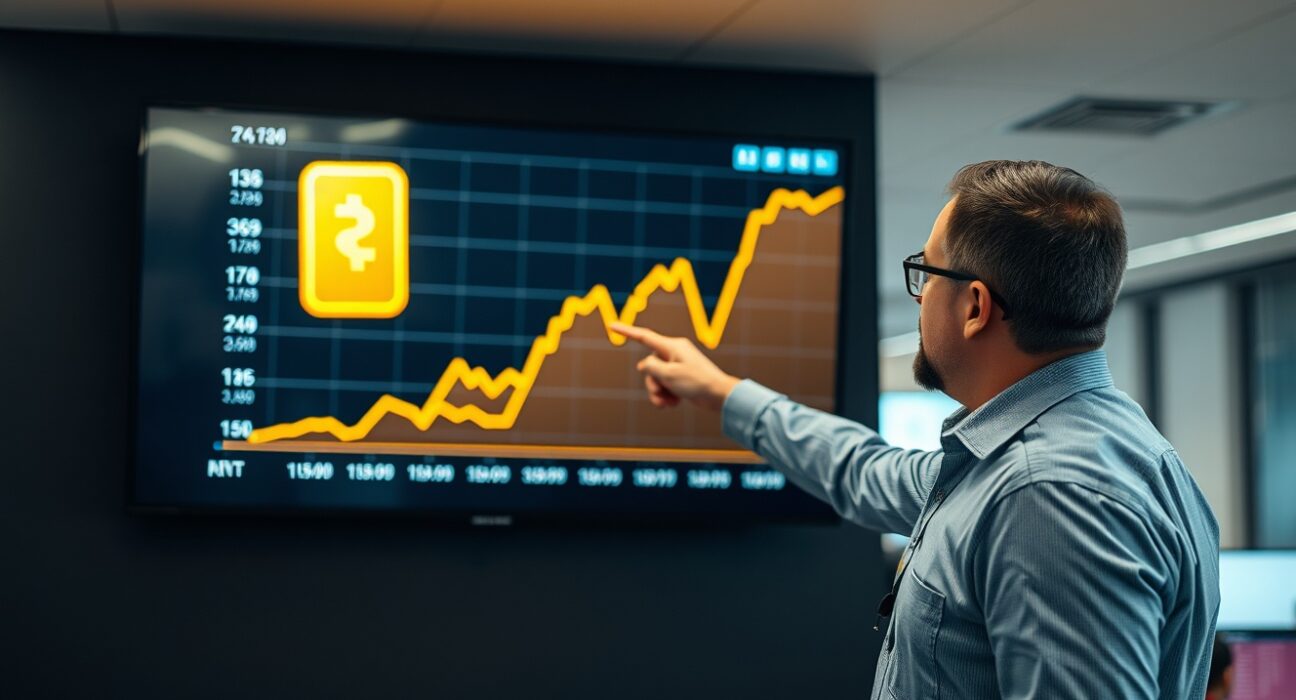
Gold prices experienced a notable surge on Tuesday, driven by a combination of mixed U.S. economic data and hawkish comments from Federal Reserve Governor Christopher Warsh. The precious metal’s rally highlights renewed investor anxiety over the economic outlook and the future path of monetary policy, reinforcing gold’s traditional role as a safe-haven asset.
Mixed Signals from the US Economy
The latest batch of U.S. economic data painted a conflicting picture, which often fuels uncertainty in financial markets. While some reports indicated resilience in consumer spending and the labor market, others pointed to cooling manufacturing activity and persistent inflationary pressures. This lack of a clear directional trend makes it difficult for investors to assess the health of the economy and predict the Federal Reserve’s next move, prompting a shift toward perceived safer assets like gold.
Fed Governor Warsh’s Hawkish Stance
Adding to the market’s cautious mood were remarks from Federal Reserve Governor Christopher Warsh. In a recent speech, Warsh emphasized the need for continued vigilance against inflation, suggesting that interest rates may need to remain higher for longer than some market participants had anticipated. His comments were interpreted as a hawkish signal, which can be negative for risk assets like stocks but can support gold prices by increasing economic uncertainty and reinforcing the metal’s appeal as a hedge against both inflation and policy missteps.
Impact on Investor Sentiment and Gold
The combination of ambiguous economic data and a firm commitment to restrictive monetary policy from a key Fed official creates a volatile environment for traditional financial assets. Investors, seeking to navigate this uncertainty, often turn to gold. The metal benefits from two primary drivers in such scenarios: fear of economic slowdown and the desire to protect purchasing power against inflation. Tuesday’s price action reflects this classic safe-haven flow.
Conclusion
The rally in gold prices underscores a market grappling with conflicting signals. While the U.S. economy shows pockets of strength, hawkish rhetoric from the Federal Reserve and mixed data releases are keeping investors on edge. For now, gold is reclaiming its position as a preferred asset in times of uncertainty, and its direction will likely remain tied to upcoming economic indicators and the tone of Fed communications.
FAQs
Q1: Why did gold prices go up?
Gold prices rose due to a combination of mixed U.S. economic data, which created uncertainty, and hawkish comments from Federal Reserve Governor Christopher Warsh, which suggested interest rates could stay higher for longer. This uncertainty drove investors toward safe-haven assets like gold.
Q2: What is a ‘hawkish’ stance from the Federal Reserve?
A ‘hawkish’ stance refers to a policy approach that prioritizes controlling inflation, often through higher interest rates or tighter monetary policy. Hawkish comments can spook stock markets but sometimes support gold prices by increasing economic uncertainty.
Q3: Is gold a good investment during periods of uncertainty?
Gold is historically considered a safe-haven asset and a store of value during times of economic or geopolitical uncertainty. Investors often buy gold to hedge against inflation, currency devaluation, and market volatility, as it tends to hold its value or even appreciate when other assets decline.
Disclaimer: The information provided is not trading advice, Bitcoinworld.co.in holds no liability for any investments made based on the information provided on this page. We strongly recommend independent research and/or consultation with a qualified professional before making any investment decisions.
