

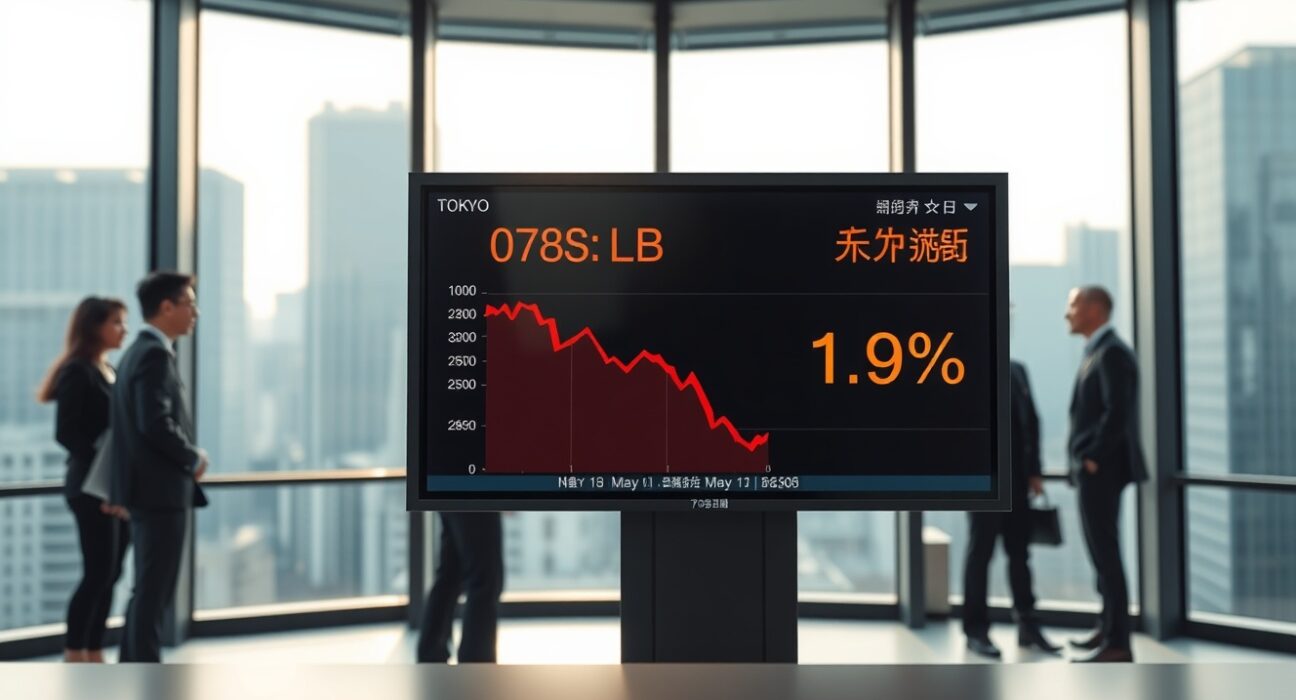
The Japanese Yen staged a dramatic recovery on [Day, Date], surging sharply from a 40-year low against the US Dollar. The move was widely attributed to a wave of short-covering triggered by heightened speculation that Japanese authorities may have intervened in the foreign exchange market to support the beleaguered currency.
Sudden Turnaround After Prolonged Weakness
The Yen had been under relentless selling pressure for months, driven by the widening interest rate differential between Japan and the United States. The Bank of Japan (BOJ) has maintained its ultra-loose monetary policy stance, keeping benchmark rates deeply negative, while the Federal Reserve has aggressively hiked rates to combat inflation. This divergence has made the Yen a primary target for carry trades, pushing USD/JPY to levels not seen since 1986.
However, the session saw an abrupt reversal. The pair, which had briefly traded above the 162.00 mark, collapsed by several hundred pips in a matter of minutes. Traders reported unusually volatile price action and a sharp drop in liquidity, fueling speculation that the Ministry of Finance (MOF) had stepped in to buy Yen, either directly or through coordinated market operations.
Intervention Speculation and Official Silence
As of the time of writing, Japanese officials have not confirmed any intervention. Finance Minister Shunichi Suzuki and Vice Finance Minister for International Affairs Masato Kanda have repeatedly stated they are watching currency moves with a high sense of urgency and are prepared to take appropriate action against excessive volatility. The lack of an immediate denial from officials is often interpreted as a sign that intervention has occurred.
The scale of the move was significant enough to liquidate a large number of leveraged short positions. According to data from the Tokyo Financial Exchange, margin trading positions betting against the Yen had been at elevated levels, making the market susceptible to a violent squeeze. The sudden price spike forced many retail and institutional speculators to close their shorts, amplifying the Yen’s gains.
Market Implications and What Comes Next
This sharp recovery carries several important implications for traders and the broader financial landscape. First, it signals that Japanese authorities are willing to act decisively to prevent disorderly currency depreciation, even if they prefer to keep markets guessing about their exact trigger points. Second, it introduces a new layer of uncertainty and risk for Yen short-sellers, who now face the possibility of sudden, intervention-driven losses.
The sustainability of this recovery remains in question. The fundamental drivers of Yen weakness—the interest rate differential and Japan’s persistent trade deficits—have not changed. Unless the BOJ signals a shift in its monetary policy stance, any gains from intervention may prove temporary. Market participants will be closely watching for any official confirmation or denial in the coming hours, as well as the next set of economic data from both Japan and the US.
Conclusion
The Yen’s sharp recovery from its 40-year low is a stark reminder of the latent power of official intervention in currency markets. While the move provided a dramatic reprieve for the Yen, it also highlights the deep structural challenges facing the Japanese economy. For now, the market remains on edge, with the potential for further volatility as traders weigh the risk of additional official action against the persistent pull of interest rate differentials.
FAQs
Q1: What is currency intervention?
Currency intervention occurs when a central bank or finance ministry buys or sells its own currency in the foreign exchange market to influence its value. In this case, Japan is suspected of buying Yen to halt its rapid depreciation.
Q2: Why is the Japanese Yen so weak?
The Yen is weak primarily because the Bank of Japan keeps interest rates very low, while the US Federal Reserve has raised rates significantly. This difference encourages investors to borrow Yen cheaply and invest in higher-yielding US assets, which sells the Yen and buys Dollars.
Q3: Will the Yen continue to recover?
The recovery’s longevity is uncertain. Intervention can provide a temporary boost, but for a sustained recovery, the fundamental drivers—particularly the interest rate gap—need to narrow. This would require either the BOJ to raise rates or the Fed to cut them, both of which are uncertain at this stage.
Disclaimer: The information provided is not trading advice, Bitcoinworld.co.in holds no liability for any investments made based on the information provided on this page. We strongly recommend independent research and/or consultation with a qualified professional before making any investment decisions.
