

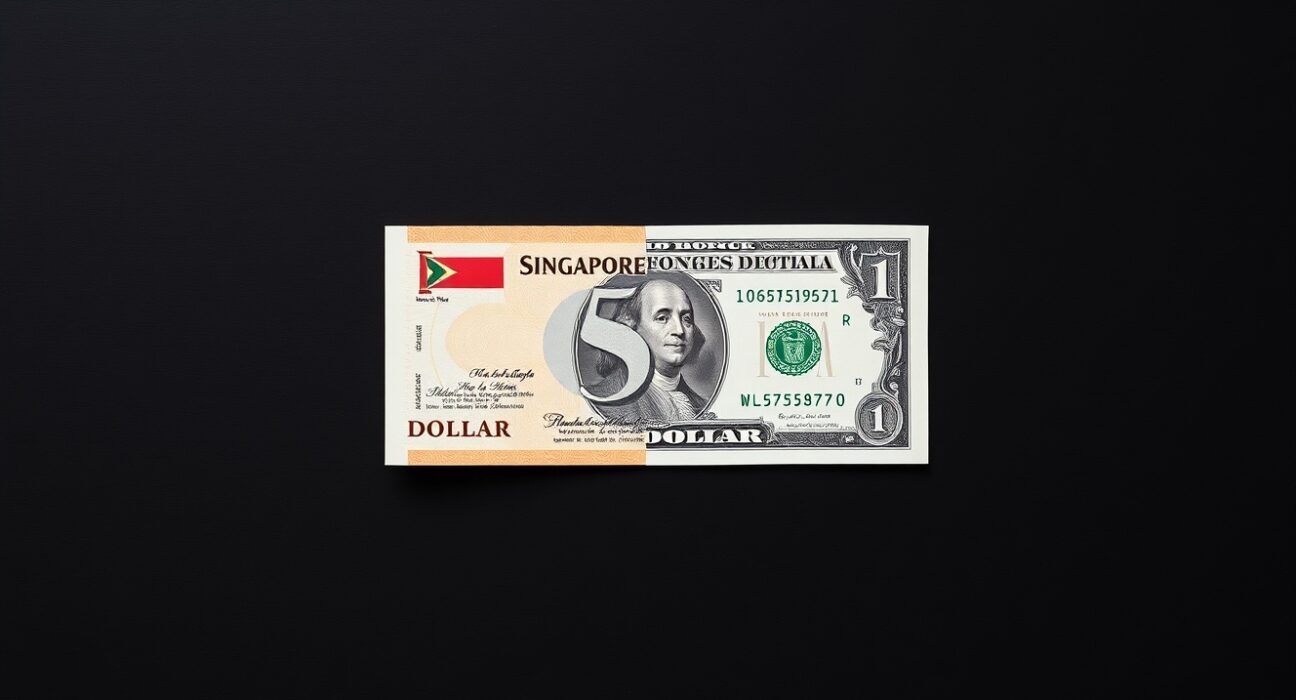
Analysts at Commerzbank have issued a forecast suggesting the Singapore dollar (SGD) is likely to trade within a defined range against the US dollar (USD) in the near term, rather than experiencing a clear directional breakout. The assessment, detailed in a recent client note, points to a confluence of factors that are expected to keep the currency pair range-bound.
Key Factors Behind the Range-Bound Outlook
The Commerzbank analysis centers on the contrasting monetary policy stances of the Monetary Authority of Singapore (MAS) and the US Federal Reserve. While the Fed has maintained a relatively hawkish posture to combat persistent inflation, the MAS, which manages the SGD through a trade-weighted exchange rate policy, is seen as having limited room for aggressive tightening given Singapore’s export-dependent economy and moderating growth prospects. This policy divergence, according to the bank, creates a balancing act that prevents a sustained appreciation or depreciation of the SGD against the USD.
Additionally, global risk sentiment and the trajectory of the Chinese economy—a key driver for regional trade flows—are cited as external variables that could influence the currency pair. However, Commerzbank’s base case is that these factors will largely offset each other, reinforcing the consolidation pattern.
Market Implications for Traders and Businesses
For currency traders, a range-bound market suggests opportunities for tactical, short-term trades based on technical support and resistance levels, rather than betting on a long-term trend. The forecast implies that the USD/SGD pair may oscillate between established boundaries, offering potential for profit from buying near the lower end of the range and selling near the upper end.
For businesses engaged in cross-border trade between Singapore and the United States, the outlook provides a measure of predictability for near-term currency exposure. Companies can potentially use the expected range to better plan their hedging strategies, reducing the risk of adverse currency movements impacting profit margins.
Understanding the MAS’s Unique Policy Framework
It is important to note that the MAS does not set a domestic interest rate. Instead, it manages the Singapore dollar’s exchange rate against a basket of currencies of its major trading partners. This policy framework means that the SGD’s value is directly influenced by the MAS’s interventions and policy statements, making it distinct from many other central banks. Commerzbank’s analysis takes this unique structure into account, focusing on the band within which the MAS allows the currency to fluctuate.
Conclusion
Commerzbank’s view that the Singapore dollar will consolidate in a range against the US dollar reflects a balanced assessment of current economic and policy dynamics. While external shocks could disrupt this outlook, the bank’s analysis provides a clear, data-driven perspective for market participants. The forecast underscores the importance of monitoring both US monetary policy and Singapore’s trade-sensitive economic indicators for any signs of a breakout from the predicted range.
FAQs
Q1: What does it mean when a currency is expected to trade in a range?
A range-bound currency means its exchange rate is expected to fluctuate between a specific high and low level, without breaking out into a sustained upward or downward trend. This often happens when opposing forces balance each other out.
Q2: How does the Monetary Authority of Singapore (MAS) differ from other central banks?
Unlike most central banks that use interest rates as their primary policy tool, the MAS manages the Singapore dollar’s exchange rate against a trade-weighted basket of currencies. This is because Singapore’s economy is highly dependent on trade, making exchange rate stability crucial for controlling inflation and maintaining competitiveness.
Q3: Why is the US dollar’s strength a key factor for the Singapore dollar?
The US dollar is the world’s primary reserve currency and a major component of the trade-weighted basket that the MAS uses. A strong US dollar, driven by Federal Reserve interest rate hikes, typically puts downward pressure on the SGD. Conversely, a weaker USD can allow the SGD to appreciate. Commerzbank’s analysis weighs this dynamic against Singapore’s domestic economic conditions.
Disclaimer: The information provided is not trading advice, Bitcoinworld.co.in holds no liability for any investments made based on the information provided on this page. We strongly recommend independent research and/or consultation with a qualified professional before making any investment decisions.
