

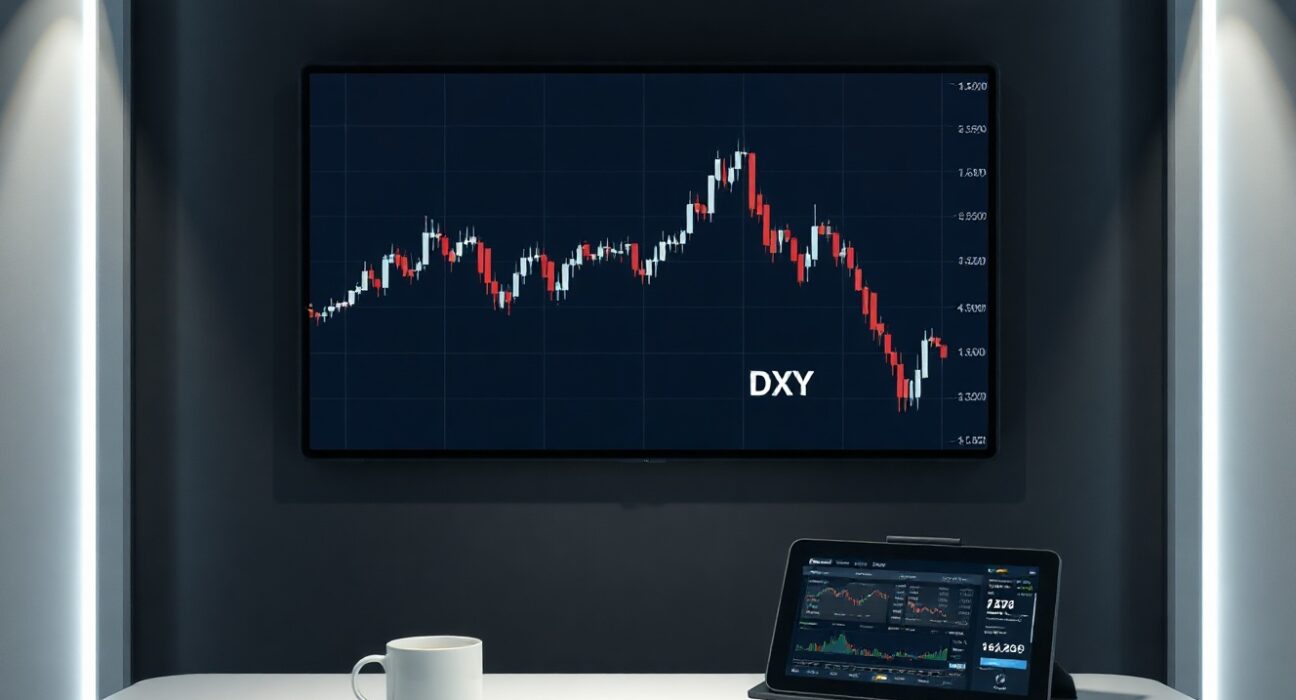
The United States Dollar Index (DXY) pared some of its recent gains on Tuesday, as shifting expectations around the Federal Reserve’s monetary policy path weighed on the greenback’s upward momentum. Market participants are increasingly pricing in a pause or end to the current rate-hiking cycle, reducing the dollar’s yield advantage over other major currencies.
Market Expectations Shift
Recent economic data, including softer-than-expected inflation readings and mixed labor market reports, have led traders to reassess the likelihood of further rate increases. According to CME Group’s FedWatch Tool, the probability of a rate hike at the Fed’s next meeting has declined sharply over the past week, reflecting a broader recalibration of interest rate expectations.
This shift has directly impacted the dollar’s performance. The DXY, which measures the greenback against a basket of six major currencies, had climbed in recent sessions on the back of safe-haven demand and resilient U.S. economic activity. However, the fading rate hike narrative has capped those gains, pushing the index lower during Tuesday’s trading session.
Broader Currency Market Implications
The dollar’s retreat has provided some relief to other major currencies. The euro, British pound, and Japanese yen all strengthened against the dollar on Tuesday, as traders adjusted their positions in response to the changing rate outlook. Emerging market currencies also benefited, with several posting gains against the greenback.
What This Means for Investors
For forex traders and global investors, the dollar’s trajectory remains a key driver of portfolio performance. A sustained decline in the dollar could boost the value of foreign assets and commodities priced in USD, such as gold and oil. Conversely, a prolonged period of dollar strength could continue to pressure export-oriented economies and emerging markets.
The Federal Reserve’s next policy meeting, scheduled for late July, will be closely watched for further clues on the interest rate path. Any hawkish commentary from Fed officials could reignite dollar buying, while dovish signals would likely accelerate the current pullback.
Conclusion
The US Dollar Index’s recent pullback reflects a market that is increasingly skeptical of further Federal Reserve rate hikes. While the dollar remains supported by a relatively strong U.S. economy and ongoing global uncertainties, the fading rate hike bets have introduced a new layer of volatility. Traders should remain vigilant as economic data releases and Fed communications continue to shape the near-term outlook for the greenback.
FAQs
Q1: What is the US Dollar Index (DXY)?
The US Dollar Index (DXY) measures the value of the US dollar relative to a basket of six major foreign currencies: the euro, Japanese yen, British pound, Canadian dollar, Swedish krona, and Swiss franc. It is a widely used benchmark for the dollar’s overall strength in global forex markets.
Q2: Why do fading Fed rate hike expectations affect the dollar?
When the Federal Reserve raises interest rates, the dollar typically strengthens because higher rates attract foreign capital seeking better returns. Conversely, when expectations of future rate hikes fade, the dollar’s yield advantage diminishes, reducing demand for the currency and causing it to weaken.
Q3: How does a weaker dollar impact other asset classes?
A weaker dollar can boost the value of commodities like gold and oil, which are priced in dollars. It also tends to benefit emerging market currencies and stocks, as well as multinational companies that earn revenue in foreign currencies. However, it can also increase import costs for U.S. consumers and businesses.
Disclaimer: The information provided is not trading advice, Bitcoinworld.co.in holds no liability for any investments made based on the information provided on this page. We strongly recommend independent research and/or consultation with a qualified professional before making any investment decisions.
