

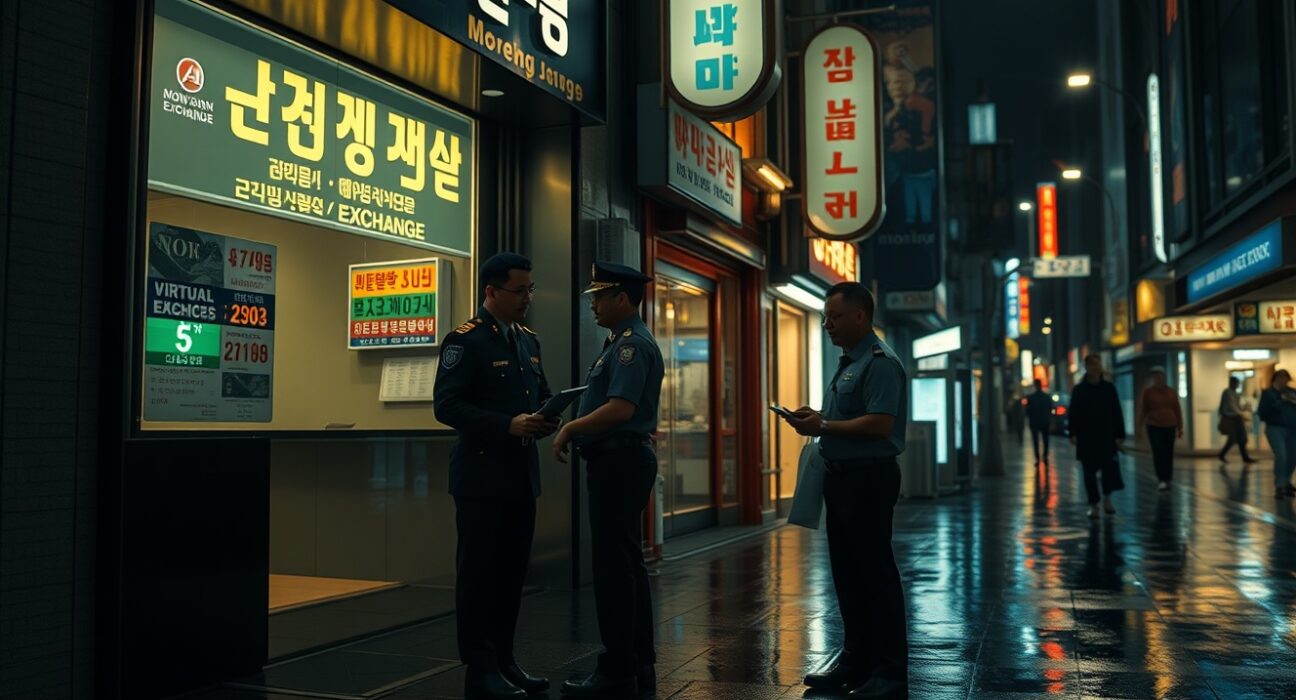
South Korea’s Korea Customs Service has uncovered 47 money exchange businesses engaged in illegal financial activities, including those handling virtual assets, according to a report by TV Chosun. The crackdown, which began in March, targeted 104 of the country’s 1,320 registered money exchange businesses, focusing on those located in areas with high concentrations of foreign residents and tourists.
Scope of the Crackdown
The customs agency selected the targeted businesses based on their geographic location and prior suspicion of involvement in illegal remittances using virtual assets. Violations cited include failure to maintain proper transaction ledgers and falsification of exchange records. The operation reflects a broader government effort to tighten oversight of financial channels that could be exploited for illicit fund transfers.
Diversifying Methods of Illegal Exchange
Cho Han-jin, head of the Foreign Exchange Investigation Division at the Korea Customs Service, stated that illegal virtual asset exchanges are spreading across Seoul, including in the Myeong-dong and Gangnam districts. He noted that methods for illegal currency swapping have become more sophisticated, now incorporating simple payment services such as WeChat Pay and Alipay. This diversification makes detection more challenging for authorities and increases the risk of cross-border financial crimes.
Implications for Financial Crime
The customs service warned that further investigations will be launched if funds from these illegal activities are found to be linked to tax evasion, money laundering, or capital flight. The crackdown signals South Korea’s determination to enforce its foreign exchange laws and curb the misuse of virtual assets for illegal remittances, which can undermine financial stability and facilitate organized crime.
Conclusion
The discovery of 47 illegal money exchangers handling virtual assets underscores the evolving nature of financial crime in South Korea. As authorities expand their investigative scope, the case serves as a warning to businesses operating outside legal frameworks. The focus on areas with high foreign traffic suggests that stricter compliance measures may be on the horizon for legitimate exchange operators.
FAQs
Q1: What specific violations were found among the 47 money exchange businesses?
The businesses were cited for failing to maintain exchange ledgers, falsifying records, and engaging in illegal remittances using virtual assets.
Q2: Why did the Korea Customs Service target specific areas like Myeong-dong and Gangnam?
These districts have high concentrations of foreign residents and tourists, making them hotspots for illegal currency exchange and virtual asset transactions.
Q3: Could these investigations lead to further legal action?
Yes. The customs service has stated that if the funds are linked to tax evasion, money laundering, or capital flight, additional investigations and charges will follow.
Disclaimer: The information provided is not trading advice, Bitcoinworld.co.in holds no liability for any investments made based on the information provided on this page. We strongly recommend independent research and/or consultation with a qualified professional before making any investment decisions.
