

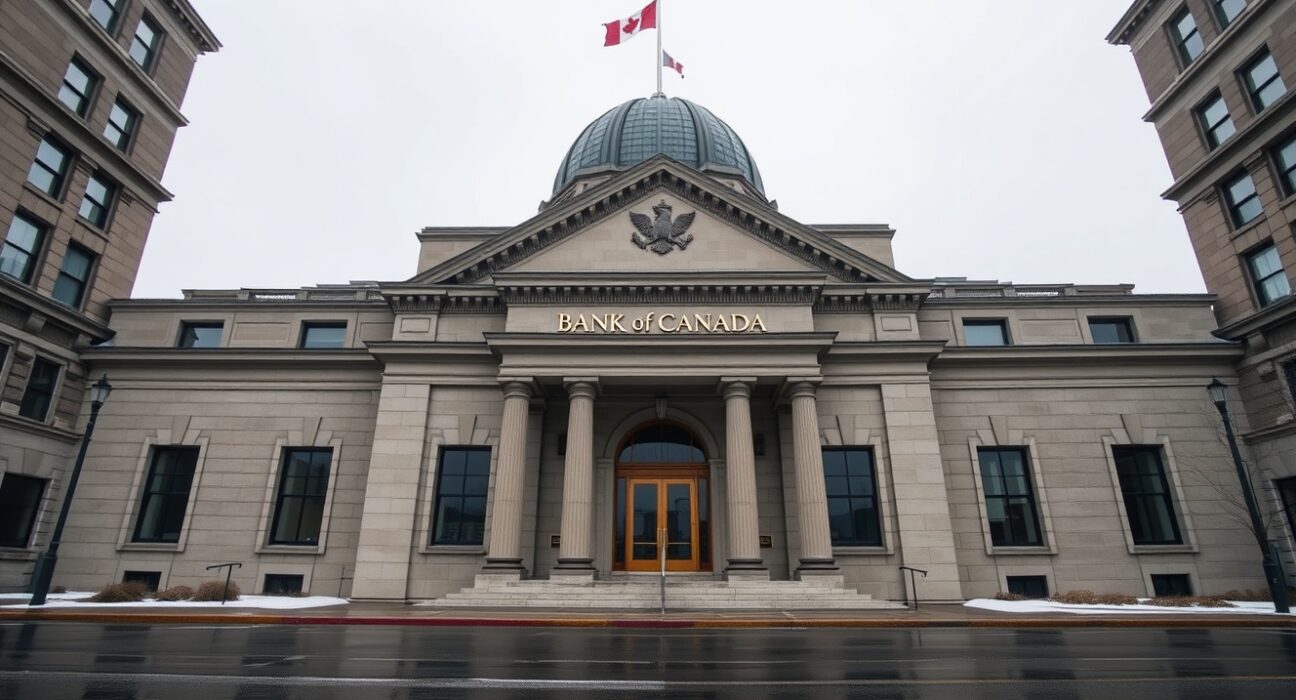
Canada’s central bank is likely to keep its benchmark interest rate unchanged through the end of 2026, according to a new forecast from RBC Economics. The projection signals that policymakers see the current level of borrowing costs as appropriate for balancing inflation control with economic growth.
RBC’s Rate Outlook
In its latest economic outlook, RBC anticipates the Bank of Canada will hold its overnight rate at its current level for an extended period. The forecast suggests the central bank will not cut rates in the near term, despite some market speculation about easing. RBC’s analysis points to persistent underlying inflation pressures and a resilient labor market as key reasons for the hold.
Inflation and Economic Context
Canada’s inflation rate has moderated from its peak but remains above the Bank of Canada’s 2% target. Core inflation measures, which strip out volatile items, have been stickier, giving the central bank reason to maintain a cautious stance. RBC economists note that the economy is still absorbing the effects of previous rate hikes, and that further easing could reignite price pressures.
What This Means for Borrowers and Investors
For homeowners with variable-rate mortgages and businesses with floating-rate debt, the RBC forecast implies that borrowing costs will remain elevated for the foreseeable future. Fixed-income investors, meanwhile, may see yields stabilize as the rate outlook becomes clearer. The Canadian dollar could also find support from a steady policy stance relative to other major central banks that may be cutting rates.
Conclusion
RBC’s projection of a steady Bank of Canada policy rate through 2026 underscores the central bank’s commitment to fully taming inflation before considering any monetary easing. While the outlook provides some certainty for markets, it also means that Canadian households and businesses should prepare for a prolonged period of higher interest rates.
FAQs
Q1: Why does RBC expect the Bank of Canada to hold rates through 2026?
RBC cites persistent core inflation and a strong labor market as reasons the central bank will maintain its current policy stance to ensure inflation returns sustainably to the 2% target.
Q2: What does this mean for my mortgage?
If you have a variable-rate mortgage, your payments will likely stay at their current level. Those with fixed-rate mortgages renewing in the near term may still face higher rates than they had previously.
Q3: Could the Bank of Canada still cut rates before 2026?
While RBC’s base case is for a hold, the forecast acknowledges that a significant economic downturn or a sharper-than-expected drop in inflation could prompt earlier easing. However, this is not the central scenario.
Disclaimer: The information provided is not trading advice, Bitcoinworld.co.in holds no liability for any investments made based on the information provided on this page. We strongly recommend independent research and/or consultation with a qualified professional before making any investment decisions.
