

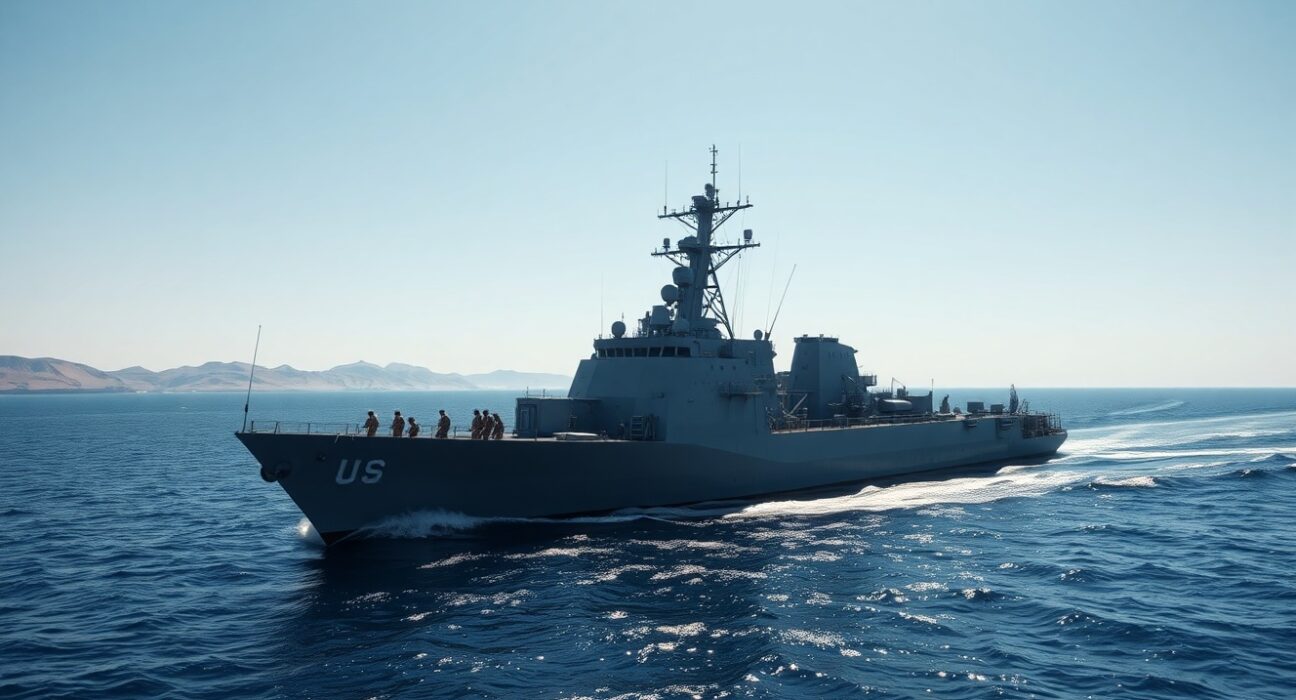
A senior U.S. official has confirmed that the American military is prepared to immediately resume a naval blockade of ships bound to and from Iranian ports, should the order be given. The statement, first reported by Fox News, signals a significant escalation posture in the ongoing tensions between Washington and Tehran.
Background and Context
The potential blockade is rooted in the United States’ maximum pressure campaign aimed at curtailing Iran’s nuclear program and its support for regional proxies. While the U.S. has historically enforced sanctions through naval patrols, a formal, comprehensive blockade would represent a more aggressive interdiction of all maritime trade, including oil exports, which are a primary source of revenue for the Iranian government. The U.S. Navy’s Fifth Fleet, based in Bahrain, is the primary force that would execute such an operation in the Persian Gulf and the Strait of Hormuz, a critical chokepoint for global oil shipments.
Implications for Global Markets and Security
The prospect of a renewed blockade carries significant implications. The Strait of Hormuz sees the transit of roughly 20% of the world’s oil supply. Any disruption, even the credible threat of one, can cause volatility in global energy prices. Furthermore, a blockade is widely considered an act of war under international law, potentially triggering a direct military confrontation between the U.S. and Iran. Iran has repeatedly threatened to close the strait in response to aggressive U.S. actions, creating a scenario of high risk for all parties involved.
What This Means for the Region
Regional allies, including Saudi Arabia and the United Arab Emirates, are likely to be closely monitoring the situation. A blockade would disrupt their shipping lanes as well, given their proximity. Meanwhile, European and Asian nations that rely on Iranian oil, or on the free passage of energy through the strait, may face diplomatic pressure to either support or oppose the U.S. move. The official’s statement appears designed to signal resolve, but it also opens the door to a period of intense diplomatic and military jockeying.
Conclusion
While no order has been given, the confirmation of military readiness underscores the fragile state of U.S.-Iran relations. The situation remains fluid, with the potential to rapidly escalate into a major international crisis affecting energy security and regional stability. Readers should monitor official statements from the Pentagon and the State Department for further developments.
FAQs
Q1: What exactly is a naval blockade?
A naval blockade is a military operation to prevent ships from entering or leaving the ports of a specific country. It is considered an act of war under international law and is used to cut off an adversary’s trade and military supplies.
Q2: Why would the US impose a blockade on Iran?
The stated goal would be to enforce existing economic sanctions more strictly, particularly regarding Iran’s oil exports, to pressure the government to halt its nuclear enrichment activities and support for militant groups in the region.
Q3: How would this affect global oil prices?
The Strait of Hormuz is a critical passage for global oil supply. Any blockade or credible threat of one typically leads to a spike in oil prices due to fears of supply shortages, affecting consumers and economies worldwide.
Disclaimer: The information provided is not trading advice, Bitcoinworld.co.in holds no liability for any investments made based on the information provided on this page. We strongly recommend independent research and/or consultation with a qualified professional before making any investment decisions.
