

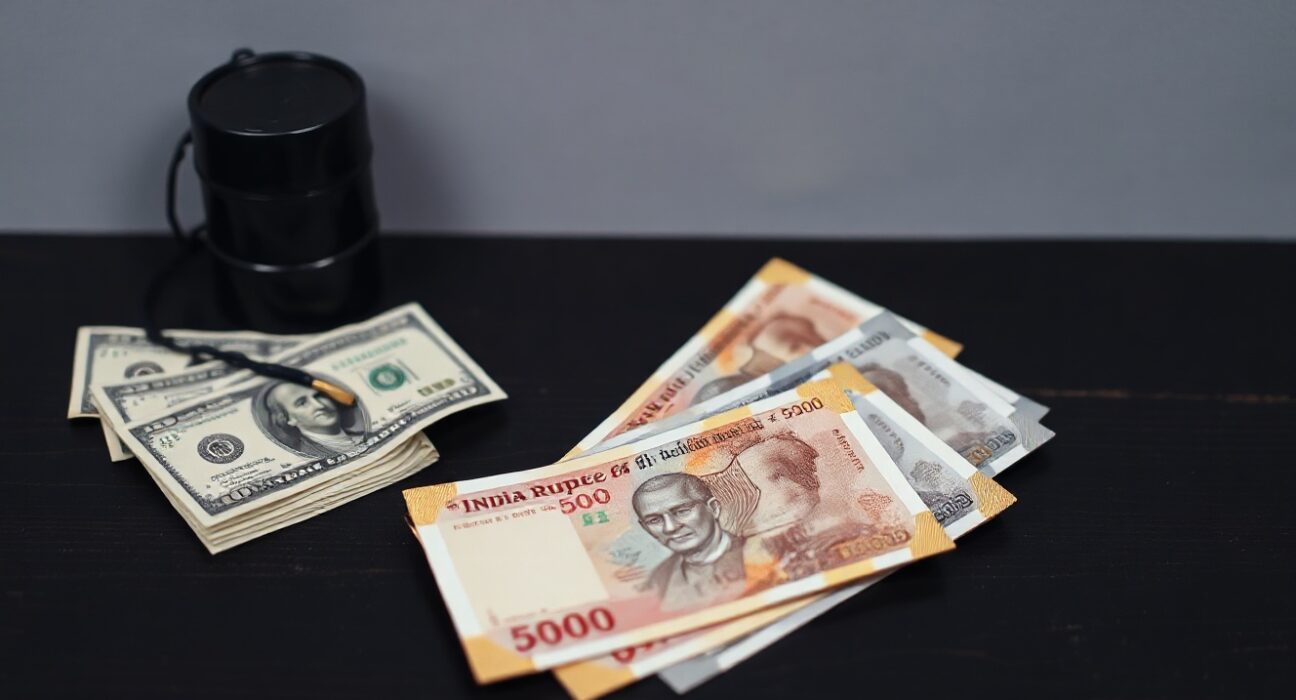
The Indian rupee staged a partial recovery against the US dollar on Wednesday, clawing back some of its recent losses as market participants reassessed the implications of persistently high crude oil prices on Asia’s third-largest economy. The local currency, which had slipped to a fresh low earlier in the week, found support from suspected intervention by the Reserve Bank of India (RBI) and a slight pullback in dollar demand from importers.
Oil Prices Remain the Dominant Headwind
The primary driver of recent rupee weakness has been the sustained rise in global crude benchmarks. Brent crude has held above $85 per barrel in recent sessions, stoking fears of a widening trade deficit for India, which imports over 85% of its oil needs. A higher import bill typically puts downward pressure on the rupee, as more dollars are required to pay for energy shipments.
While the recovery on Wednesday offered some respite, analysts caution that the underlying pressure remains intact. The currency’s trajectory will likely hinge on whether oil prices continue their upward march or stabilize in the coming weeks. Market participants are also watching for any shift in RBI policy, with the central bank expected to continue its strategy of smoothing volatility rather than defending any specific level.
RBI Intervention and Market Dynamics
Traders reported that state-run banks, acting on behalf of the RBI, were seen selling dollars in the onshore market, helping to arrest the rupee’s slide. This intervention, combined with a dip in US Treasury yields overnight, provided a brief window for the currency to recover. However, the recovery was modest, with the rupee still trading near its weakest levels in several months.
The broader macroeconomic backdrop remains challenging. India’s trade deficit widened to a record $31.5 billion in November, driven largely by a surge in gold and oil imports. This structural imbalance continues to weigh on the currency, and unless oil prices retreat meaningfully, the rupee is likely to remain under pressure.
What This Means for Investors and Consumers
For Indian consumers, a weaker rupee translates directly into higher costs for imported goods, including electronics, machinery, and edible oils. For investors, currency volatility adds an additional layer of risk to portfolio returns, particularly for those with exposure to foreign assets. The RBI’s ability to manage the currency without depleting its foreign exchange reserves will be a key theme to watch in the coming months.
India’s forex reserves, which stood at roughly $650 billion as of late December, provide a substantial buffer. However, sustained intervention to prop up the rupee could gradually erode this cushion, a factor that the central bank will weigh carefully.
Conclusion
The Indian rupee’s modest bounce reflects a temporary easing of pressure rather than a reversal of the broader trend. With crude oil prices likely to remain elevated amid geopolitical tensions and OPEC+ supply constraints, the currency faces a challenging road ahead. The RBI’s measured intervention provides a floor, but the path of least resistance remains tilted toward depreciation unless global oil dynamics shift significantly.
FAQs
Q1: Why does higher oil prices affect the Indian rupee?
India is a major oil importer, and higher crude prices increase the country’s import bill. This means more US dollars are needed to pay for oil, increasing demand for the dollar and putting downward pressure on the rupee.
Q2: How does the RBI intervene in the currency market?
The RBI typically intervenes by selling US dollars from its foreign exchange reserves through state-run banks. This increases the supply of dollars in the market, helping to support the rupee’s value.
Q3: Is the rupee likely to weaken further?
Much depends on the trajectory of oil prices and global risk sentiment. If crude remains above $85 per barrel, the rupee could test new lows. However, the RBI’s intervention and a potential pullback in oil prices could provide support.
Disclaimer: The information provided is not trading advice, Bitcoinworld.co.in holds no liability for any investments made based on the information provided on this page. We strongly recommend independent research and/or consultation with a qualified professional before making any investment decisions.
