

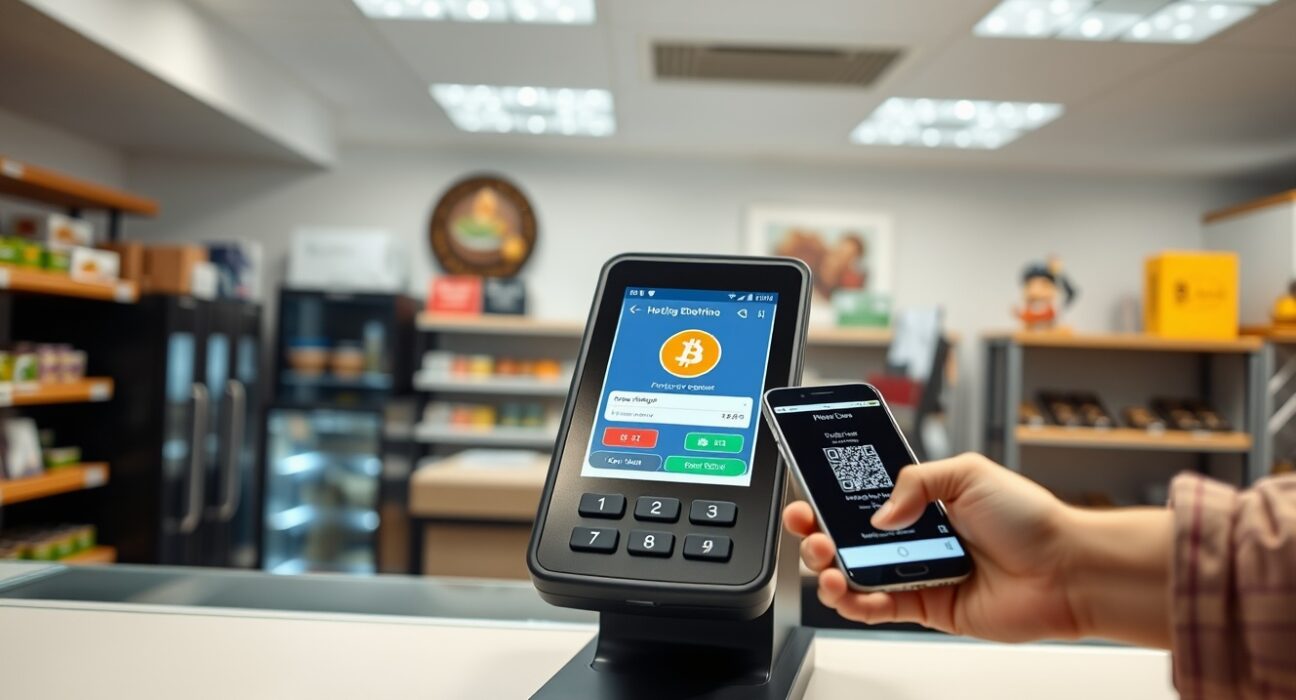
Binance Pay has taken a significant step into Central Asia by partnering with Kazakhstan’s Alatau City Bank to enable cryptocurrency payments at approximately 5,000 point-of-sale (POS) terminals across the country. The integration, first reported by Cointelegraph, allows merchants and consumers to process crypto transactions through existing retail infrastructure, marking one of the largest deployments of digital asset payment rails in the region.
How the Partnership Works
The collaboration leverages Binance Pay’s digital wallet technology alongside Alatau City Bank’s established POS network. Customers holding supported cryptocurrencies can initiate payments at participating merchants by scanning a QR code or using near-field communication (NFC) at checkout. The merchant receives settlement in fiat currency, minimizing exposure to crypto price volatility. This model mirrors similar integrations in other markets but is notable for its scale in Kazakhstan, where digital asset adoption has been growing under a regulated framework.
Regulatory and Market Context
Kazakhstan has emerged as a proactive jurisdiction for cryptocurrency oversight. The country introduced licensing requirements for crypto exchanges and custodians in 2022, and the Astana International Financial Centre (AIFC) provides a regulatory sandbox for blockchain-based financial services. Binance itself holds a license from the AIFC and has been expanding its presence in the region. This POS integration aligns with the government’s broader digitalization strategy, which includes promoting cashless payments and financial inclusion.
Implications for Merchants and Consumers
For merchants, the ability to accept crypto payments without direct exposure to market fluctuations lowers a key barrier to adoption. Settlement in fiat reduces accounting complexity and risk. For consumers, the service offers an alternative payment method, particularly for those already holding digital assets. However, usage will depend on merchant awareness, transaction fees, and the speed of settlement compared to traditional card payments. The 5,000-terminal rollout covers major urban centers, with potential expansion to smaller cities based on demand.
Broader Industry Trends
Binance Pay’s move in Kazakhstan is part of a wider trend of crypto payment platforms integrating with legacy banking infrastructure. Similar partnerships have been announced in Latin America, Southeast Asia, and parts of Europe. The key differentiator here is the regulatory clarity in Kazakhstan, which provides a more predictable operating environment compared to jurisdictions with ambiguous or hostile crypto policies. If successful, this model could serve as a template for other Central Asian markets exploring digital asset adoption.
Conclusion
The Binance Pay and Alatau City Bank partnership represents a practical step toward mainstream crypto utility in Kazakhstan. By bridging digital assets with existing POS terminals, the service lowers friction for both merchants and consumers. The success of this rollout will depend on execution, user education, and continued regulatory support. For now, it signals that Kazakhstan is positioning itself as a regional hub for regulated crypto innovation.
FAQs
Q1: Which cryptocurrencies are supported for payments through Binance Pay in Kazakhstan?
Specific supported assets have not been fully detailed, but Binance Pay typically supports major cryptocurrencies like Bitcoin, Ethereum, and Binance Coin, along with select stablecoins. Users should check the Binance app for the latest list.
Q2: Do merchants pay any fees for accepting crypto payments through this service?
Fee structures have not been publicly disclosed. Typically, Binance Pay charges merchants a processing fee, which may be comparable to or lower than traditional card network fees. Merchants should confirm terms directly with Alatau City Bank.
Q3: Is this service available throughout all of Kazakhstan or only in specific cities?
The initial rollout covers 5,000 POS terminals, primarily in major urban areas such as Almaty, Nur-Sultan, and Shymkent. Expansion to other regions will depend on merchant adoption and demand.
Disclaimer: The information provided is not trading advice, Bitcoinworld.co.in holds no liability for any investments made based on the information provided on this page. We strongly recommend independent research and/or consultation with a qualified professional before making any investment decisions.
