

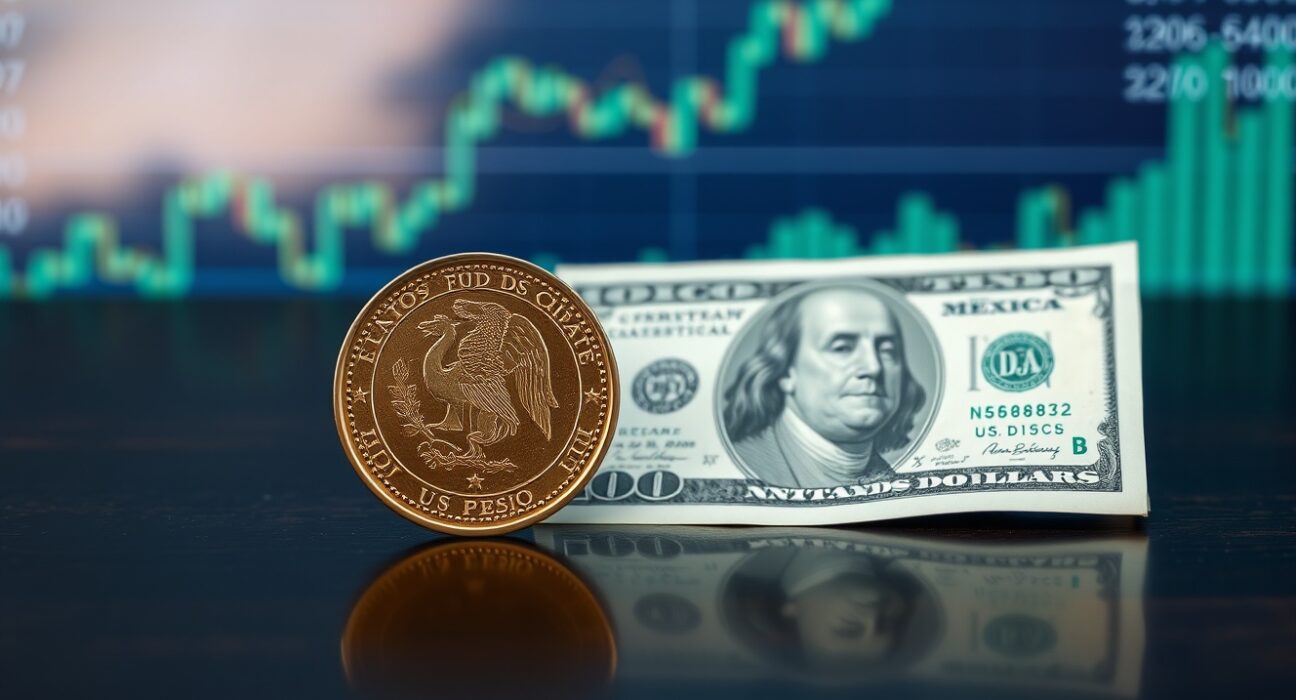
The Mexican peso strengthened against the US dollar on Monday, driven by a broad improvement in risk appetite across global financial markets. The USD/MXN pair retreated as investors moved away from safe-haven assets, favoring higher-yielding currencies tied to commodity exports and emerging economies.
What is Driving the Peso’s Rally?
The peso’s gains come amid a shift in market sentiment, fueled by expectations of stabilizing global growth and easing monetary policy from major central banks. Positive economic data from key trading partners, including the United States, has also supported demand for Mexican exports and, by extension, the peso.
Additionally, recent comments from Federal Reserve officials suggesting a more cautious approach to further interest rate hikes have weakened the dollar broadly. A softer USD creates a favorable environment for emerging market currencies like the peso, which benefit from carry trade flows.
Implications for Trade and Inflation
A stronger peso has direct implications for Mexico’s economy. It helps lower the cost of imported goods, which can ease inflationary pressures that have been a concern for the Bank of Mexico (Banxico). Lower import costs are particularly beneficial for manufacturers who rely on foreign components and raw materials.
However, a sustained appreciation of the peso could also weigh on export competitiveness, making Mexican goods more expensive for foreign buyers. This is a delicate balance for policymakers, who must weigh the benefits of lower inflation against potential headwinds for the export sector.
Market Outlook
Analysts suggest that the peso’s trajectory will remain closely tied to global risk sentiment and the path of US interest rates. If the Federal Reserve signals a definitive end to its tightening cycle, the peso could see further gains. Conversely, any resurgence of geopolitical tensions or unexpected economic weakness could quickly reverse the current trend.
Traders are also watching for domestic data, including Mexico’s GDP figures and Banxico’s policy decisions, for further direction. The central bank has maintained a hawkish stance to combat inflation, which has historically supported the peso.
Conclusion
The Mexican peso’s recent appreciation reflects a broader market shift toward risk-on assets, driven by optimism about global growth and a softer US dollar. While this benefits Mexico’s inflation outlook, it introduces complexity for export competitiveness. The coming weeks will be critical as markets digest further economic data and central bank guidance.
FAQs
Q1: Why does the Mexican peso strengthen when risk appetite improves?
Investors tend to move capital from safe-haven assets like the US dollar to higher-yielding, riskier assets in emerging markets during periods of optimism. The Mexican peso is a popular emerging market currency for carry trades, benefiting from higher interest rates in Mexico compared to the US.
Q2: How does a stronger peso affect Mexican consumers?
A stronger peso makes imported goods cheaper, which can help reduce inflation. This benefits consumers by lowering prices on electronics, vehicles, and other imported products. It also makes travel abroad more affordable.
Q3: What are the main risks to the peso’s rally?
The primary risks include a sudden shift in global risk sentiment due to geopolitical events, a more hawkish-than-expected Federal Reserve, or weaker-than-expected economic data from the US or Mexico. Any of these factors could lead to a reversal of the current trend.
Disclaimer: The information provided is not trading advice, Bitcoinworld.co.in holds no liability for any investments made based on the information provided on this page. We strongly recommend independent research and/or consultation with a qualified professional before making any investment decisions.
