

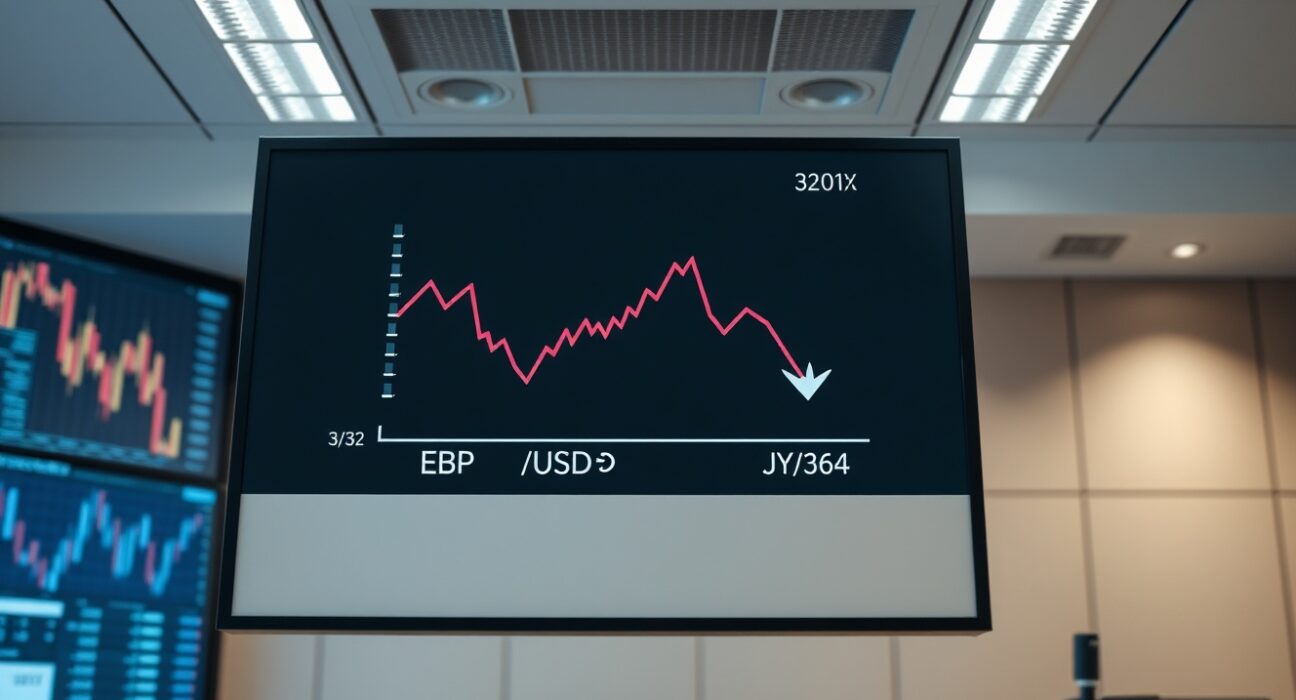
The British pound (GBP) experienced a significant retreat on [Date of article], pulling back sharply from highs not seen since January 2008 against the US dollar. The move was primarily attributed to a broad-based rally in the Japanese yen (JPY), which gained strength across major currency pairs, reshaping market dynamics in the forex space.
Yen Strength Drives Broader Market Shift
The Japanese yen surged against a basket of major currencies, including the pound, as shifting risk sentiment and expectations of a policy shift by the Bank of Japan (BOJ) drove demand for the safe-haven currency. The yen’s rally was broad, impacting GBP/JPY, EUR/JPY, and USD/JPY, with the pound losing ground most notably against the yen. This move comes after a period of sustained weakness for the yen, which had been pressured by the BOJ’s ultra-loose monetary policy.
GBP/USD Pulls Back from 2008 Levels
The GBP/USD pair, which had recently touched levels not seen since the financial crisis of 2008, reversed course sharply. The pair fell from a high of [Insert High Price] to [Insert Current Price], a drop of [Insert Percentage]% in a single trading session. Analysts pointed to a combination of profit-taking, yen strength, and a cautious outlook on the UK economy as contributing factors. The retreat highlights the volatile nature of the current forex market, where sudden shifts in sentiment can erase weeks of gains.
What This Means for Traders and the UK Economy
For forex traders, the pound’s retreat serves as a reminder of the risks associated with chasing breakouts. The rapid decline may trigger stop-loss orders and increase volatility in the short term. For the UK economy, a weaker pound could have mixed implications. On one hand, it may boost exports by making British goods cheaper abroad. On the other, it could fuel inflation by increasing the cost of imported goods and services, particularly energy and raw materials. The Bank of England will likely monitor the situation closely, as sustained weakness could complicate its fight against inflation.
Conclusion
The British pound’s sharp retreat from multi-year highs, driven by a broad-based yen rally, underscores the interconnected nature of global currency markets. While the move may offer trading opportunities, it also carries implications for the UK’s economic outlook. As the yen continues to strengthen and market sentiment remains fluid, traders and policymakers alike will be watching for further developments.
FAQs
Q1: Why did the British pound fall so sharply?
A1: The pound fell sharply due to a broad-based rally in the Japanese yen, which gained strength against major currencies. This was driven by shifting market sentiment and expectations of a policy change by the Bank of Japan.
Q2: What does a weaker pound mean for the UK economy?
A2: A weaker pound can boost exports by making UK goods cheaper abroad, but it can also increase inflation by raising the cost of imported goods and services, including energy and raw materials.
Q3: Is this a good time to trade GBP/USD?
A3: The current volatility in GBP/USD presents both opportunities and risks. Traders should be cautious and consider using stop-loss orders to manage potential losses, as sudden reversals are possible.
Disclaimer: The information provided is not trading advice, Bitcoinworld.co.in holds no liability for any investments made based on the information provided on this page. We strongly recommend independent research and/or consultation with a qualified professional before making any investment decisions.
