

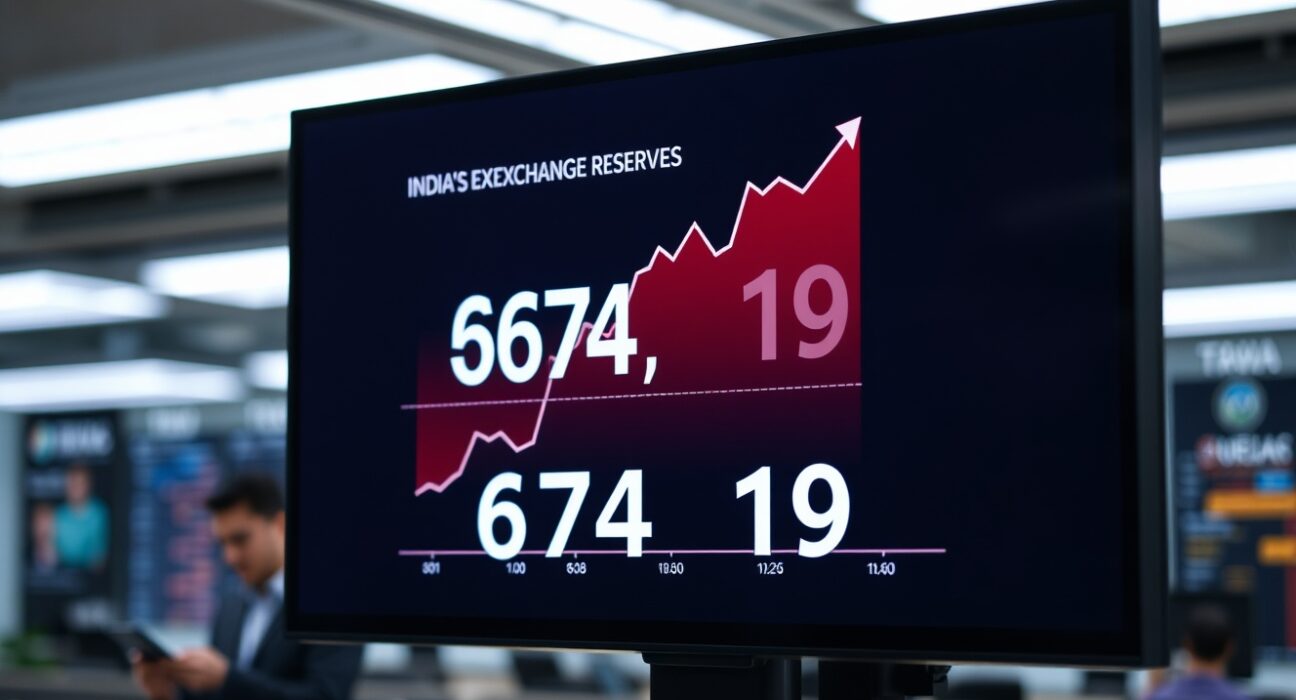
India’s foreign exchange reserves increased by $7.26 billion to reach $674.19 billion for the week ending June 29, 2024, according to data released by the Reserve Bank of India (RBI). This marks a notable rise from the previous week’s figure of $666.93 billion, reflecting continued strength in the country’s external financial position.
Factors Behind the Reserve Accumulation
The rise in reserves can be attributed to a combination of factors, including the RBI’s strategic interventions in the foreign exchange market to manage volatility, along with net portfolio inflows from foreign investors. During the period, the Indian rupee remained relatively stable against the US dollar, aided by these reserve management actions. The central bank often buys dollars when there is excess inflow to prevent excessive rupee appreciation and sells dollars to curb sharp depreciation, thereby building or drawing down reserves as needed.
Composition and Components of Reserves
Foreign currency assets (FCAs), the largest component of India’s forex reserves, saw a significant increase. FCAs are maintained in major currencies like the US dollar, euro, pound sterling, and Japanese yen. The RBI also holds gold reserves, Special Drawing Rights (SDRs) with the International Monetary Fund, and its reserve position in the IMF. While the exact breakdown for this reporting week is not immediately available, the overall growth suggests a broad-based increase across these categories. Gold reserves, which have been a growing part of India’s reserve strategy, also contribute to the total figure.
Implications for the Indian Economy
A rising forex reserve cushion provides several advantages for India. It enhances the country’s ability to service external debt obligations, stabilizes the rupee during global market turbulence, and boosts investor confidence. The current level of $674.19 billion is sufficient to cover over 11 months of imports, offering a strong buffer against external shocks. This is particularly important given the global economic uncertainties, including fluctuating commodity prices and monetary policy shifts in advanced economies. For businesses and investors, the reserve build-up signals economic resilience and reduces the risk of sudden currency depreciation.
Comparison with Previous Levels
India’s forex reserves have been on a generally upward trajectory since hitting a low in October 2022, when they dipped to around $524 billion following aggressive rate hikes by the US Federal Reserve. The reserves have since recovered steadily, crossing the $600 billion mark in 2023 and now approaching the all-time high of $645 billion recorded in September 2021. The current figure of $674.19 billion is a new high for the year, indicating robust foreign exchange management by the RBI.
Conclusion
The increase in India’s foreign exchange reserves to $674.19 billion as of June 29, 2024, underscores the strength of the country’s external sector and the effectiveness of the RBI’s monetary and intervention policies. This development provides a positive signal for the Indian economy, offering a buffer against global financial volatility and supporting sustained economic growth. Market participants will continue to monitor weekly data for trends in capital flows and central bank actions.
FAQs
Q1: Why did India’s forex reserves increase?
The increase was driven by RBI’s market interventions, including dollar purchases to manage volatility, and net inflows from foreign portfolio investors into Indian equities and debt markets.
Q2: What is the significance of India’s forex reserves crossing $674 billion?
A higher reserve level strengthens India’s ability to meet external financial obligations, stabilizes the rupee, and enhances investor confidence, providing a cushion against global economic shocks.
Q3: How often does the RBI release forex reserve data?
The RBI releases foreign exchange reserve data on a weekly basis, typically every Friday, covering the previous week’s figures.
Disclaimer: The information provided is not trading advice, Bitcoinworld.co.in holds no liability for any investments made based on the information provided on this page. We strongly recommend independent research and/or consultation with a qualified professional before making any investment decisions.
