

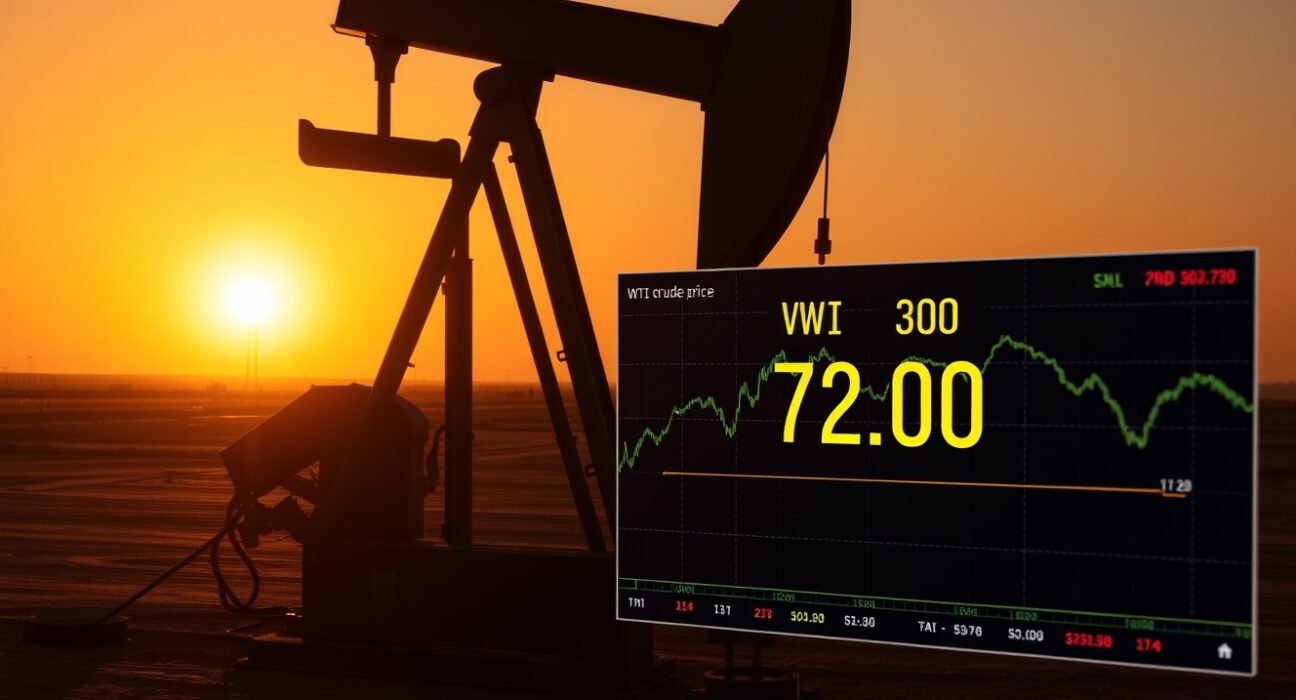
West Texas Intermediate (WTI) crude oil prices are holding steady near the $72 per barrel mark during Monday’s trading session, as market participants weigh the potential for a de-escalation in tensions between the United States and Iran. The benchmark has remained range-bound, reflecting a delicate balance between geopolitical risk premiums and broader macroeconomic headwinds.
Geopolitical Signals Weigh on Supply Premium
The recent price stabilization comes amid reports of renewed diplomatic channels between Washington and Tehran. While no formal agreements have been announced, any credible path toward reduced hostilities could ease concerns about supply disruptions in the strategically vital Strait of Hormuz. Analysts note that the market had priced in a significant risk premium following earlier escalations, and the current price action suggests a gradual unwinding of those bets.
However, the situation remains fluid. The lack of concrete progress in negotiations means the risk of sudden supply shocks has not been fully eliminated. Traders are closely monitoring any official statements from both capitals, as well as the response from other key producers in the region.
Broader Market Context
Beyond geopolitics, WTI prices are also being shaped by a complex set of fundamentals. On the demand side, concerns over a global economic slowdown, particularly in China and Europe, continue to cap upside potential. Recent manufacturing data from the world’s largest crude importer has shown signs of weakness, raising questions about near-term consumption.
On the supply side, OPEC+ production cuts remain a key support mechanism. The alliance’s ongoing output restraints have helped to tighten the physical market, preventing a more significant price decline. Additionally, US crude inventories have shown mixed signals in recent weeks, with draws in some regions offset by builds in others.
What This Means for Energy Markets
For energy traders and consumers, the current price level represents a crossroads. A confirmed US-Iran detente could push WTI toward the $68-$70 support zone, as the risk premium fully evaporates. Conversely, a breakdown in talks or a new military incident could quickly reignite fears, sending prices back above $75.
The broader implication is that oil markets remain highly sensitive to headline risk. This environment favors cautious positioning, with volatility likely to persist until a clearer directional catalyst emerges. For businesses reliant on fuel costs, the current stability may be temporary, underscoring the importance of hedging strategies.
Conclusion
WTI crude oil’s consolidation near $72 reflects a market in wait-and-see mode. The potential for US-Iran de-escalation is the dominant near-term factor, but it competes with lingering demand concerns and supply management by OPEC+. Traders should expect continued sensitivity to geopolitical news flow, with the $70-$75 range acting as the immediate trading band. A decisive break in either direction will likely require a clear, verifiable development on the diplomatic front.
FAQs
Q1: Why is WTI crude oil price stuck near $72?
WTI is trading in a narrow range as markets balance the potential for reduced geopolitical risk from US-Iran de-escalation against ongoing concerns about global oil demand and OPEC+ supply management.
Q2: How would a US-Iran deal affect oil prices?
A credible de-escalation agreement could remove a significant risk premium from prices, potentially pushing WTI toward the $68-$70 support level. However, any deal would need to be verifiable and sustained to have a lasting impact.
Q3: What are the main factors keeping oil prices from falling further?
Key support factors include ongoing OPEC+ production cuts, relatively tight physical supply in some regions, and the lingering possibility of supply disruptions in the Middle East.
Disclaimer: The information provided is not trading advice, Bitcoinworld.co.in holds no liability for any investments made based on the information provided on this page. We strongly recommend independent research and/or consultation with a qualified professional before making any investment decisions.
