

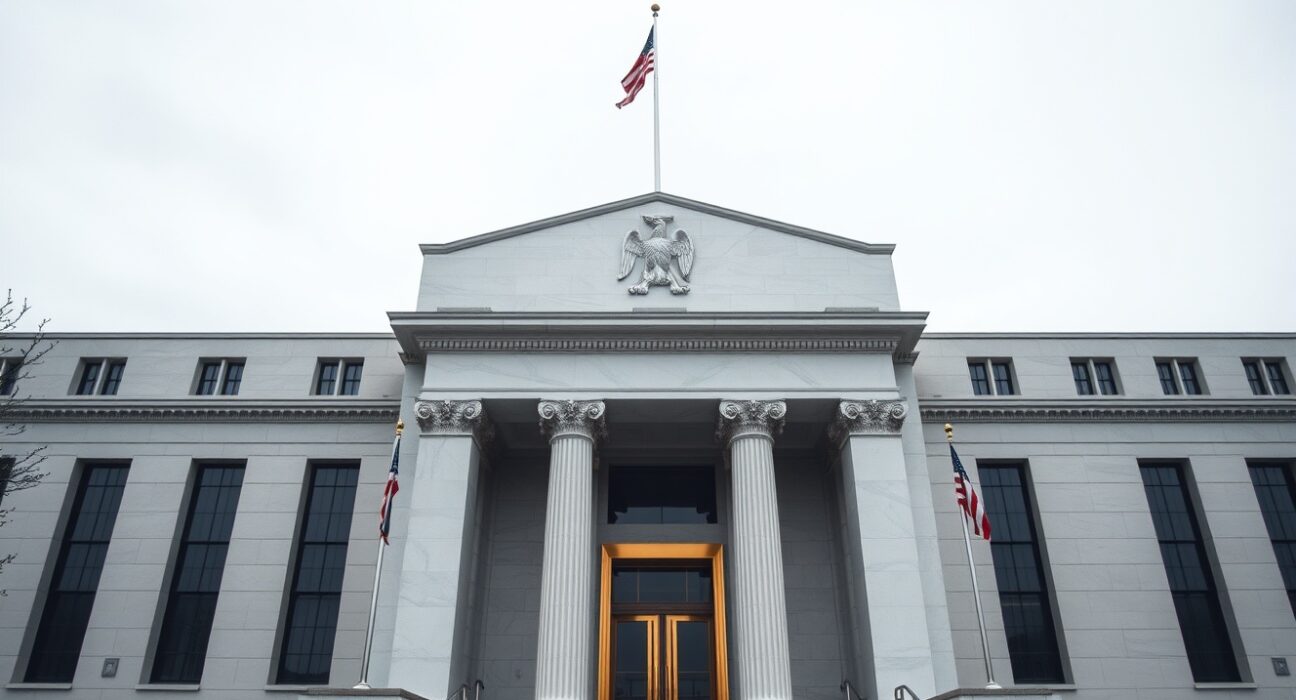
The Federal Reserve’s semi-annual report, released on July 10, 2026, paints a picture of a U.S. economy caught between robust technological expansion and significant geopolitical peril. While high-tech investment, particularly in artificial intelligence, is driving solid growth, the report identifies the ongoing war in Iran as the single biggest risk to the economic outlook.
AI Investment as a Primary Growth Engine
The report highlights a surge in capital spending on AI-related data centers as a major driver of manufacturing output. This investment wave is expanding production capacity across the tech sector, contributing to what the Fed describes as a ‘solid expansion’ in the first half of 2026. Government spending has also provided a tailwind, supporting overall economic activity. However, the benefits are not evenly distributed. The housing market remains stagnant, hampered by elevated interest rates and tight financing conditions that continue to challenge both builders and potential homebuyers.
External Headwinds and Labor Market Dynamics
Externally, the economy faces considerable drag. The conflict in the Middle East, coupled with the lingering effects of tariffs, has slowed global growth and created supply chain uncertainties. Domestically, the labor market is broadly stable, with wages and productivity rising in tandem. Yet, a notable slowdown in immigration has reduced the pool of available workers, tightening labor supply in several key sectors. Small businesses and households continue to report difficulty accessing credit, as financing conditions remain restrictive.
Inflation and Financial Stability Concerns
Inflation remains a persistent challenge. After easing earlier in the year, price pressures re-accelerated during the spring, keeping the Fed’s preferred inflation measures above the 2% target. Asset prices, including equities and real estate, are trading above their historical averages, raising concerns about potential overvaluation. The financial system itself is described as generally sound, with banks holding sufficient reserves and private credit markets functioning normally, despite some redemption pressures in certain funds. Long-term inflation expectations, however, remain anchored, providing some reassurance that the public trusts the Fed’s commitment to price stability.
Conclusion
The Federal Reserve’s latest report underscores a complex economic landscape where domestic strength from AI investment is increasingly overshadowed by global instability. The war in Iran is not just a humanitarian and geopolitical crisis; it is now the central variable in the U.S. economic outlook. For businesses and investors, the key takeaway is that while the engine of growth is running, the road ahead is fraught with risks that could quickly alter the trajectory.
FAQs
Q1: What is the main driver of U.S. economic growth according to the Fed’s report?
The report identifies investment in AI-related data centers as a primary driver, significantly boosting manufacturing output and expanding production capacity.
Q2: Why is the war in Iran considered the biggest risk?
The conflict creates uncertainty in global energy markets, disrupts supply chains, and dampens international trade, all of which pose a direct threat to the U.S. expansion.
Q3: How is inflation trending in the current economic environment?
Inflation remains high and has risen further in the spring of 2026, staying above the Federal Reserve’s 2% target, despite long-term expectations remaining anchored.
Disclaimer: The information provided is not trading advice, Bitcoinworld.co.in holds no liability for any investments made based on the information provided on this page. We strongly recommend independent research and/or consultation with a qualified professional before making any investment decisions.
