

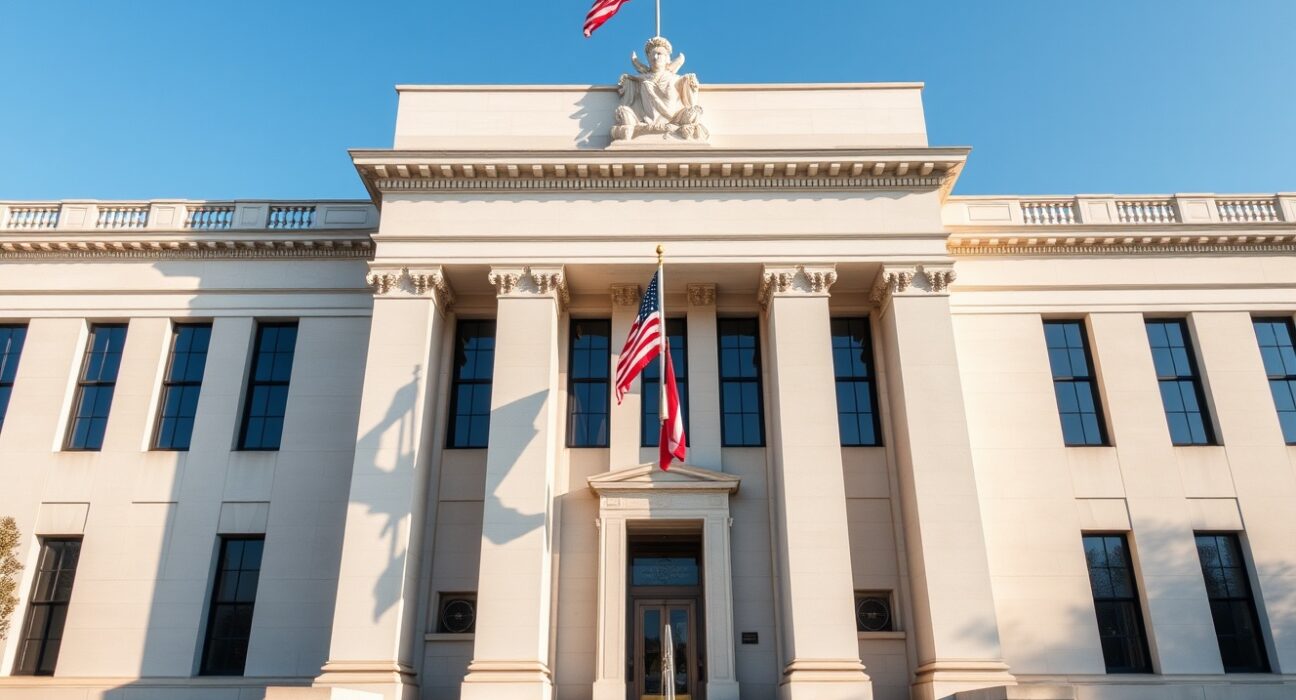
The Federal Reserve’s latest semiannual Monetary Policy Report, released this week, has placed a significant portion of the blame for persistent high inflation on the Biden administration’s tariff policies. The report, which provides a comprehensive overview of economic conditions and the central bank’s policy outlook, marks a notable shift in the Fed’s public attribution of inflationary pressures.
Tariffs Take Center Stage in Inflation Analysis
The report explicitly cites “the imposition of tariffs on a broad range of imported goods” as a contributing factor to the elevated inflation that has continued to exceed the Fed’s 2% target. While the central bank has previously acknowledged supply chain disruptions and strong consumer demand as drivers, this latest document gives greater weight to trade policy as a persistent source of price increases. The report notes that tariffs raise the cost of imported inputs for businesses, which are then passed on to consumers in the form of higher prices for finished goods. This analysis aligns with the views of many economists who have argued that tariffs act as a tax on consumers and businesses, fueling inflation rather than taming it.
Implications for Monetary Policy and Rate Cuts
The report’s frank assessment has immediate implications for the Fed’s interest rate trajectory. By identifying tariffs as a structural factor in the inflation equation, the central bank signals that it sees price pressures as less transitory and more deeply embedded in the economy. This suggests that the Fed may be less inclined to cut interest rates in the near term, even as some market participants have been hoping for relief. The report states that the Fed remains “highly attentive to inflation risks” and will require “greater confidence” that inflation is moving sustainably down toward 2% before adjusting policy. The acknowledgment of tariff-driven inflation complicates this calculus, as trade policy is a tool of the executive branch, not the central bank.
Market and Consumer Impact
For investors and consumers, the Fed’s stance translates into a higher-for-longer interest rate environment. Mortgage rates, credit card APRs, and business loan costs are likely to remain elevated, dampening economic activity. The report’s findings also add a layer of political complexity, as the Biden administration has defended its tariff policies as necessary for protecting American industries and jobs. The Fed’s independent analysis now provides a central bank-backed counterpoint, potentially influencing the public debate on trade policy. The report does not, however, offer a specific forecast for inflation or interest rates, emphasizing the uncertainty inherent in the current economic environment.
Conclusion
The Federal Reserve’s latest Monetary Policy Report represents a significant editorial shift, explicitly linking high inflation to tariff policy. This acknowledgment has direct consequences for the outlook on interest rates, suggesting that rate cuts are unlikely in the immediate future. The report reinforces the view that trade policy is now a central variable in the inflation equation, one that the Fed cannot control but must navigate. For readers, the key takeaway is that inflation is being sustained by policy choices, not just market forces, and that the path to lower prices may be longer and more politically charged than previously anticipated.
FAQs
Q1: What is the Federal Reserve’s Monetary Policy Report?
The Monetary Policy Report is a semiannual document submitted to Congress that details the Fed’s assessment of economic conditions, financial stability, and the outlook for monetary policy. It provides a comprehensive overview of the central bank’s thinking.
Q2: How do tariffs cause inflation?
Tariffs are taxes on imported goods. When the government imposes tariffs, importers pay more, and those costs are typically passed on to businesses and consumers as higher prices for finished products. This can lead to broad-based price increases across the economy.
Q3: Will the Fed cut interest rates soon?
Based on the latest report, a rate cut appears unlikely in the near term. The Fed has stated it needs greater confidence that inflation is sustainably moving toward its 2% target. The report’s identification of tariffs as a persistent inflation driver suggests the central bank sees a longer path to achieving that confidence.
Disclaimer: The information provided is not trading advice, Bitcoinworld.co.in holds no liability for any investments made based on the information provided on this page. We strongly recommend independent research and/or consultation with a qualified professional before making any investment decisions.
