

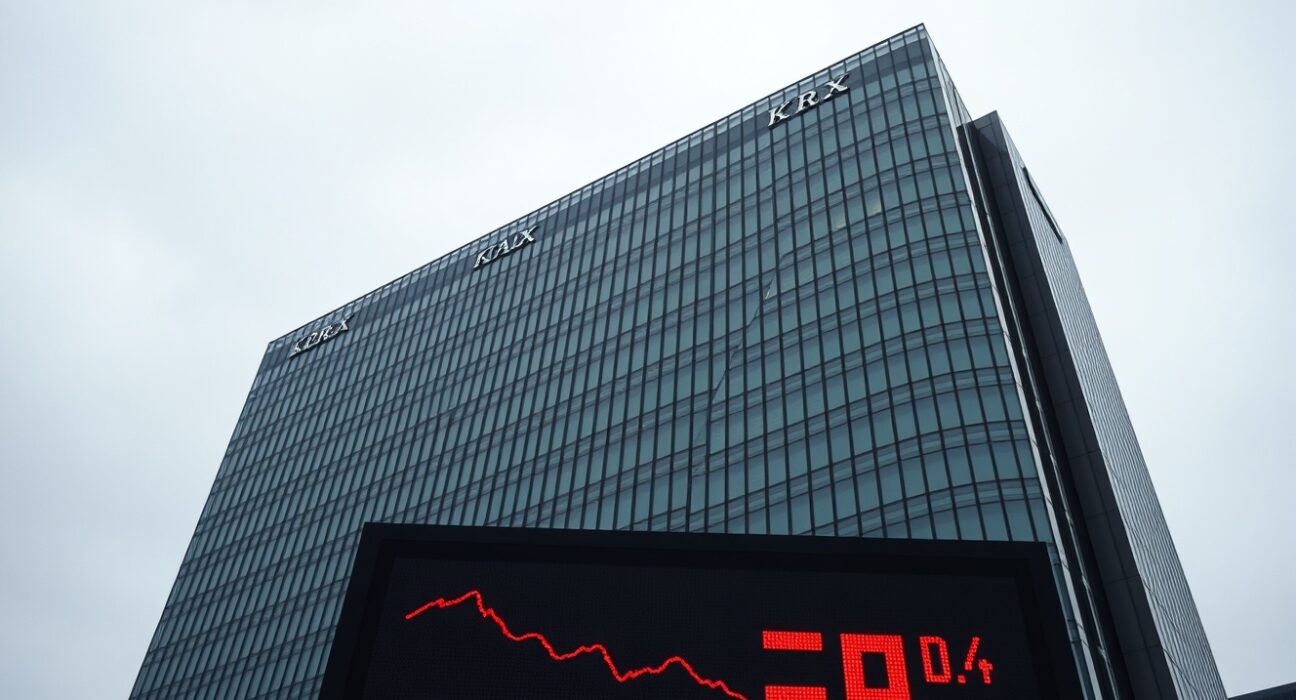
South Korea’s benchmark KOSPI index fell sharply on Thursday, dropping more than 6% to breach the 7,000-point level during intraday trading for the first time since May 4. The index was last trading at 6,980.63, down approximately 6.63%, as selling pressure intensified across nearly all sectors.
Market-Wide Decline Triggers Circuit Breakers
The steep decline triggered temporary trading halts in some large-cap stocks as circuit breakers kicked in to curb excessive volatility. Analysts pointed to a combination of global risk aversion, weaker-than-expected export data, and renewed concerns over geopolitical tensions as key drivers behind the sell-off. The KOSPI had previously held above the 7,000 mark since early May, making this drop a notable psychological breach for investors.
Global Factors and Domestic Pressures
The sell-off mirrored broader weakness in Asian equity markets, with Japan’s Nikkei and Hong Kong’s Hang Seng also posting significant losses. On the domestic front, South Korea’s export-dependent economy faces headwinds from slowing global demand and a weakening won, which has added to inflationary pressures. The Bank of Korea has maintained a cautious stance on interest rates, but market participants are now pricing in a higher probability of an emergency policy response.
Impact on Retail Investors and Key Sectors
Retail investors, who have been active buyers in the Korean market this year, faced substantial paper losses as technology, semiconductor, and automobile stocks led the downturn. Samsung Electronics and SK Hynix, two of the largest components of the KOSPI, both fell more than 5%. The broader market rout erased billions of dollars in market capitalization within hours.
Conclusion
The KOSPI’s fall below 7,000 marks a significant milestone in what has been a volatile year for South Korean equities. With global uncertainty persisting and domestic economic indicators softening, market participants will be closely watching for any policy signals from financial authorities in the coming days. The index’s ability to recover above this psychological level will likely determine short-term investor sentiment.
FAQs
Q1: What caused the KOSPI to fall below 7,000?
The decline was driven by a combination of global risk aversion, weaker export data, geopolitical concerns, and broad selling across major sectors like technology and semiconductors.
Q2: Is this drop similar to previous market crashes in South Korea?
While the percentage decline is significant, it is not as severe as the 2008 financial crisis or the 2020 pandemic crash. However, breaching the 7,000 level is a notable psychological event for investors.
Q3: What should retail investors do during such volatility?
Financial advisors typically recommend avoiding panic selling and reviewing long-term portfolio allocations. Investors should monitor official statements from the Bank of Korea and financial regulators for potential policy responses.
Disclaimer: The information provided is not trading advice, Bitcoinworld.co.in holds no liability for any investments made based on the information provided on this page. We strongly recommend independent research and/or consultation with a qualified professional before making any investment decisions.
