

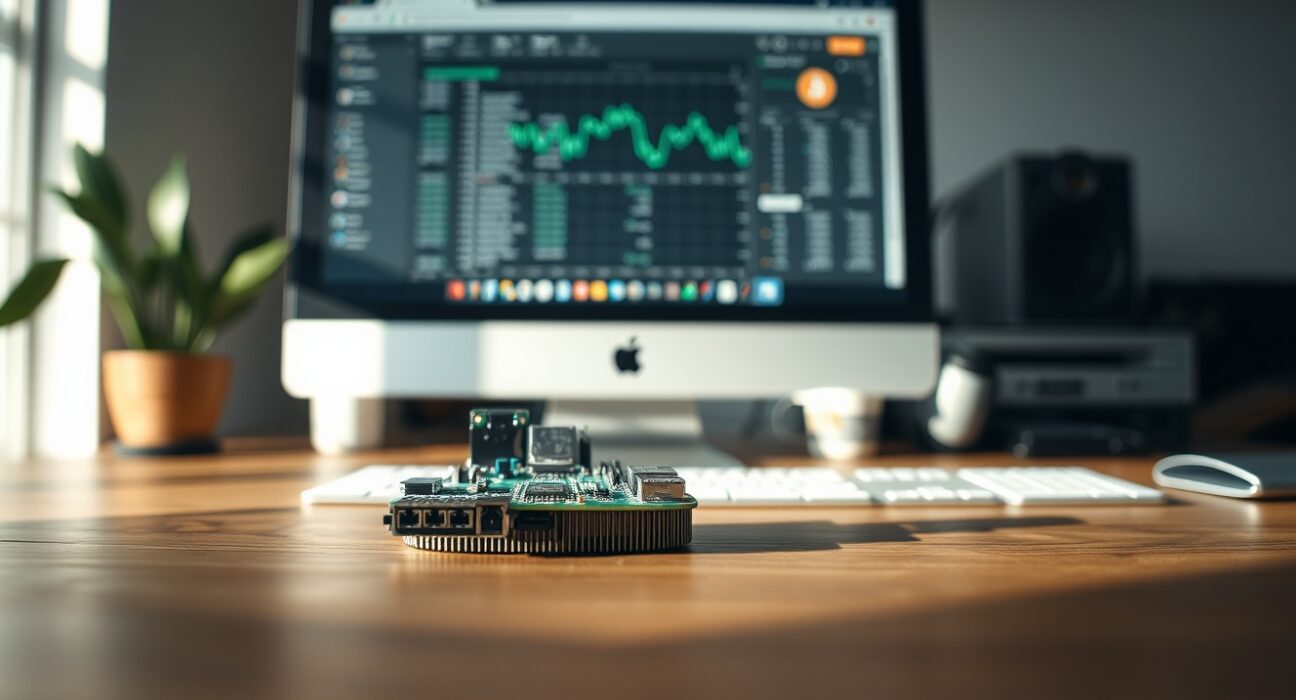
A solo Bitcoin miner has defied astronomical odds by successfully processing a block using a modest $250 Bitaxe ASIC miner, securing a reward of 3.138 Bitcoin—worth roughly $200,000 at current market prices. The event, first reported by Cointelegraph, has reignited discussions about the viability of home mining in an era dominated by industrial-scale operations.
The Hardware and the Achievement
The miner used a Bitaxe, an open-source, single-chip ASIC miner that typically operates at a hashrate of around 400–500 gigahashes per second (GH/s). For context, the Bitcoin network’s total hashrate currently exceeds 600 exahashes per second (EH/s). This means the solo miner’s contribution represented less than 0.0000001% of the network’s total computational power.
Finding a valid block hash with such limited hardware is akin to winning a multi-state lottery twice in a row. Solo mining pools like CKPool, which facilitate these attempts by allowing individual miners to submit shares without pooling rewards, confirmed the block was mined by a single Bitaxe device.
Why This Matters for Home Miners
While this outcome is extraordinarily rare, it provides a tangible counterpoint to the narrative that Bitcoin mining is exclusively for large data centers. The event highlights the continued, albeit slim, possibility for individual participants to directly earn block rewards without joining a large pool.
Financial and Operational Realities
It is crucial to contextualize this win within the broader economics of mining. The Bitaxe consumes roughly 15–20 watts of power. Even at low electricity rates, the probability of solving a block solo is so low that the expected time to find one is measured in millennia, not days or years. The miner’s success was a statistical anomaly, not a replicable strategy.
Nevertheless, the event has driven a surge of interest in the Bitaxe and similar ultra-low-cost miners. Enthusiasts view them as educational tools and a way to participate in network security directly, rather than as serious profit-generating machines.
Implications for the Mining Landscape
This incident does not signal a shift in the industrial nature of Bitcoin mining. Large mining firms continue to deploy tens of thousands of next-generation ASICs in facilities with negotiated power rates. However, the story reinforces a core Bitcoin principle: permissionless participation. Anyone, anywhere, with a small device and an internet connection can attempt to mine a block.
The broader takeaway for readers is one of perspective. Bitcoin’s security model remains robust, but it also occasionally produces moments of remarkable individual fortune. For most, solo mining remains a hobby with a near-zero expected return, but for one lucky operator, it turned a $250 investment into a life-changing payday.
Conclusion
The solo mining success using a $250 Bitaxe ASIC is a captivating story of improbable luck within the Bitcoin ecosystem. While it does not alter the fundamental economics of mining, it serves as a powerful reminder of the network’s open nature and the long-shot possibilities that still exist for individual participants.
FAQs
Q1: Is it realistic to mine Bitcoin solo with a $250 device?
No. The odds of successfully mining a block solo with a Bitaxe are extremely low—comparable to winning a major lottery. This event was a rare statistical outlier and not a viable income strategy.
Q2: What is a Bitaxe ASIC miner?
The Bitaxe is an open-source, single-chip Bitcoin ASIC miner designed for hobbyists and educational purposes. It operates at a very low hashrate (400–500 GH/s) and power consumption (15–20W), making it unsuitable for profitable mining under normal circumstances.
Q3: How much did the solo miner earn?
The miner earned 3.138 Bitcoin, which includes the standard block subsidy (3.125 BTC at the time) plus transaction fees. At current market prices, this is worth approximately $200,000.
Disclaimer: The information provided is not trading advice, Bitcoinworld.co.in holds no liability for any investments made based on the information provided on this page. We strongly recommend independent research and/or consultation with a qualified professional before making any investment decisions.
