

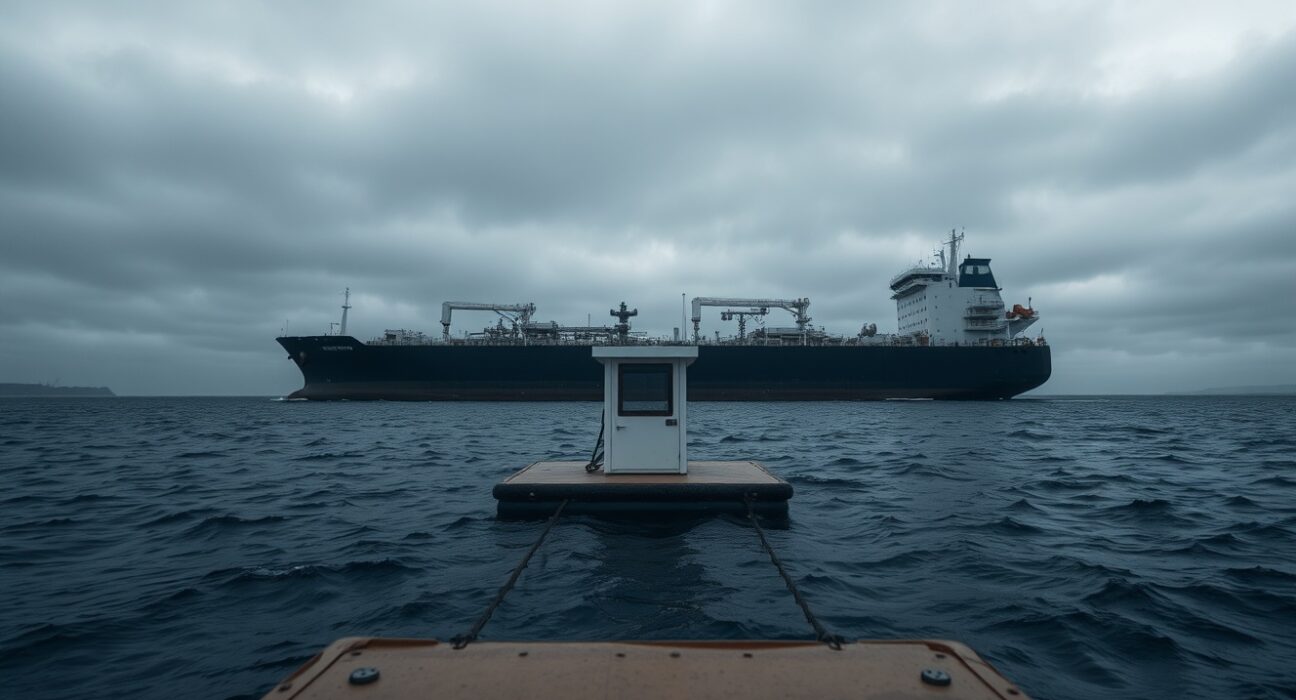
The fragile hopes for a ceasefire in a key geopolitical region have been dealt a fresh blow, sending ripples through the crude oil market. What was once a potential pathway to de-escalation and stable supply routes has now become a new point of contention, described by analysts as a ‘toll booth’ where transit and trade face fresh hurdles.
Ceasefire Progress Stalls, Supply Fears Return
For weeks, market participants had priced in a degree of stability, anticipating that ongoing negotiations would lead to a reduction in hostilities and the reopening of critical energy transit chokepoints. However, recent developments indicate that a key party has introduced new conditions—effectively a ‘toll’ for passage—that have stalled the process. This has reintroduced a significant risk premium into the price of crude, as traders recalibrate the likelihood of sustained supply disruptions.
Market Impact and Volatility
The immediate reaction in futures markets was a sharp uptick in volatility. Brent crude, the global benchmark, saw intraday swings widen as the news broke. The uncertainty is not just about the physical flow of oil but also about the credibility of future negotiations. The introduction of a ‘toll booth’ metaphor underscores a shift from a binary conflict/ceasefire scenario to a more complex, transactional environment where access is negotiated rather than guaranteed.
What This Means for Consumers and Businesses
For end-users, from motorists to airlines, the implication is clear: the path to lower fuel prices has become more complicated. The ‘toll’—whether in the form of financial demands, regulatory barriers, or security guarantees—adds a layer of cost and uncertainty that will likely be passed down the supply chain. Energy-intensive industries may need to hedge more aggressively against price spikes in the coming months.
Conclusion
The crude oil market is now navigating a period where traditional ceasefire dynamics have given way to a more unpredictable, toll-based system of access. While the underlying supply and demand fundamentals remain relatively balanced, the geopolitical risk premium is likely to persist until the nature of this new barrier is clarified. Traders and policymakers alike will be watching closely for any signs of movement, but for now, the toll booth remains manned.
FAQs
Q1: What does ‘toll booth’ mean in the context of crude oil?
It refers to a new barrier—such as a financial demand, regulatory checkpoint, or security condition—that has replaced a potential ceasefire, making the transit of oil more costly and uncertain.
Q2: How does this affect global oil prices?
It introduces a new risk premium, increasing volatility and potentially pushing prices higher as traders account for the possibility of sustained supply disruptions.
Q3: Which region is primarily affected by this development?
While the article focuses on the general principle, such dynamics typically involve key maritime chokepoints like the Strait of Hormuz or the Suez Canal, where geopolitical tensions directly impact global energy flows.
Disclaimer: The information provided is not trading advice, Bitcoinworld.co.in holds no liability for any investments made based on the information provided on this page. We strongly recommend independent research and/or consultation with a qualified professional before making any investment decisions.
