

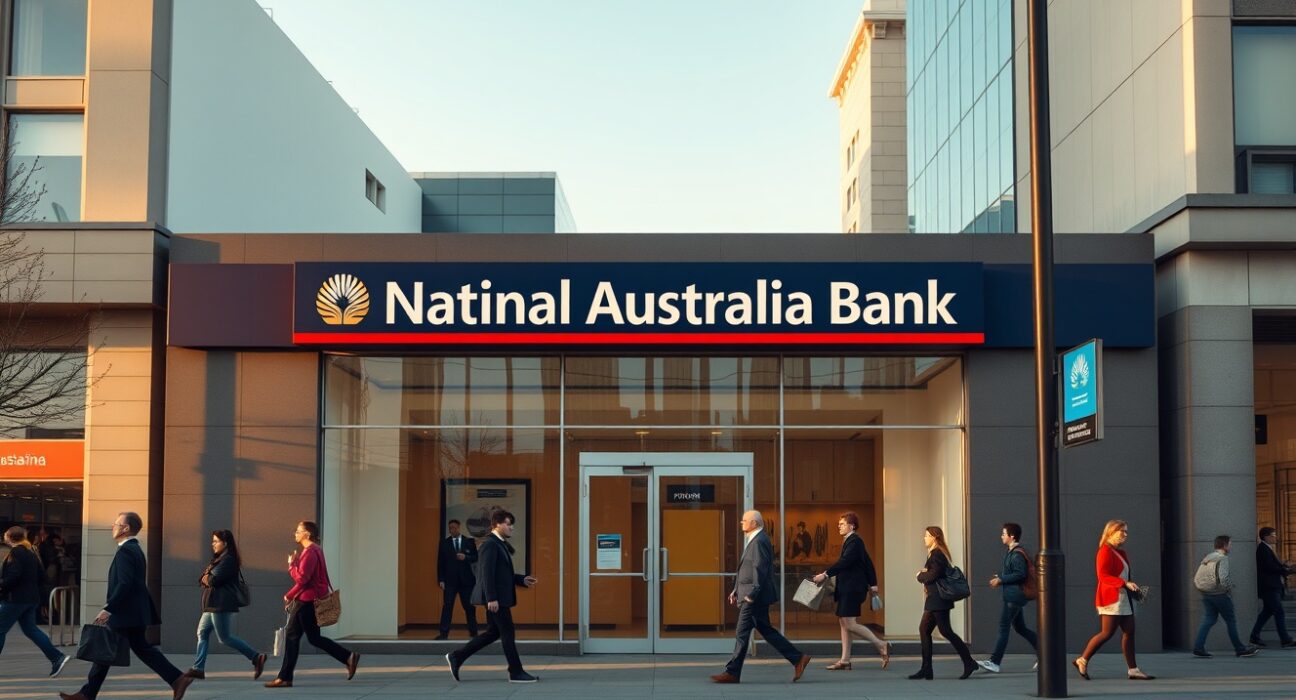
Australia’s National Australia Bank (NAB) monthly business survey for June revealed that the business conditions index remained unchanged at 3, indicating a continuation of subdued but stable economic activity across the country. The reading, which was released on [Insert Release Date if known, otherwise omit], suggests that the non-mining sectors of the economy are navigating a period of modest growth amid persistent cost pressures and elevated interest rates.
Stability Amidst Headwinds
The headline business conditions index, which measures a composite of trading conditions, profitability, and employment, held its ground at 3 index points. This is below the long-run average, reflecting the impact of the Reserve Bank of Australia’s (RBA) aggressive monetary tightening cycle, which has slowed consumer demand and business investment. However, the fact that the index did not deteriorate further provides some reassurance that the economy is not sliding into a sharp downturn.
Breaking down the components, the trading conditions sub-index remained relatively robust, while profitability and employment indicators showed minor fluctuations. The stability in the employment component is particularly noteworthy, as it suggests that the labor market remains tight, supporting household incomes despite the broader economic slowdown.
Business Confidence Remains Fragile
While business conditions held steady, the survey’s confidence index continued to languish in negative territory. This divergence between current conditions and forward-looking sentiment is a classic sign of an economy facing headwinds. Businesses are reporting that while their current operations are holding up, they are increasingly cautious about the outlook, citing high input costs, rising wages, and uncertainty around consumer spending.
The persistent gap between conditions and confidence is a key indicator for the RBA. It suggests that while the economy is not contracting, the risk of a sharper slowdown remains if confidence continues to erode. This data point will be closely scrutinized by policymakers ahead of the next RBA board meeting.
Implications for the RBA and Interest Rates
The NAB survey provides a critical, real-time snapshot of the non-mining economy, which is the primary focus for the RBA. The steady conditions reading reduces the immediate pressure on the central bank to cut rates, but it also reinforces the view that the economy is operating below its potential. The survey’s findings support the narrative that the RBA may need to begin easing monetary policy later this year to prevent conditions from deteriorating further, provided inflation continues to moderate.
Conclusion
The NAB’s June business survey paints a picture of an Australian economy that is stable but not thriving. The unchanged conditions index at 3 confirms that the economy is treading water, avoiding a recession but failing to generate strong momentum. For businesses and investors, this signals a period of cautious management, with a focus on cost control and efficiency. For the RBA, it provides a data point that supports a patient approach to monetary policy, balancing the need to curb inflation against the risk of stifling growth.
FAQs
Q1: What is the NAB Business Conditions Index?
The NAB Monthly Business Survey is a key economic indicator in Australia. The Business Conditions Index is a composite measure of trading conditions, profitability, and employment. A reading above zero indicates that conditions are improving, while a reading below zero indicates deterioration.
Q2: Why is the business conditions index important?
It provides a timely and reliable snapshot of the health of the non-mining business sector, which accounts for the vast majority of economic activity and employment in Australia. It is closely watched by the Reserve Bank of Australia and financial markets.
Q3: What does a reading of 3 mean for the Australian economy?
A reading of 3 is below the long-run average (which is typically around 6-7 index points). It indicates that while business conditions are positive, growth is modest and below the economy’s potential. It suggests the economy is growing slowly under the weight of high interest rates and cost pressures.
Disclaimer: The information provided is not trading advice, Bitcoinworld.co.in holds no liability for any investments made based on the information provided on this page. We strongly recommend independent research and/or consultation with a qualified professional before making any investment decisions.
