

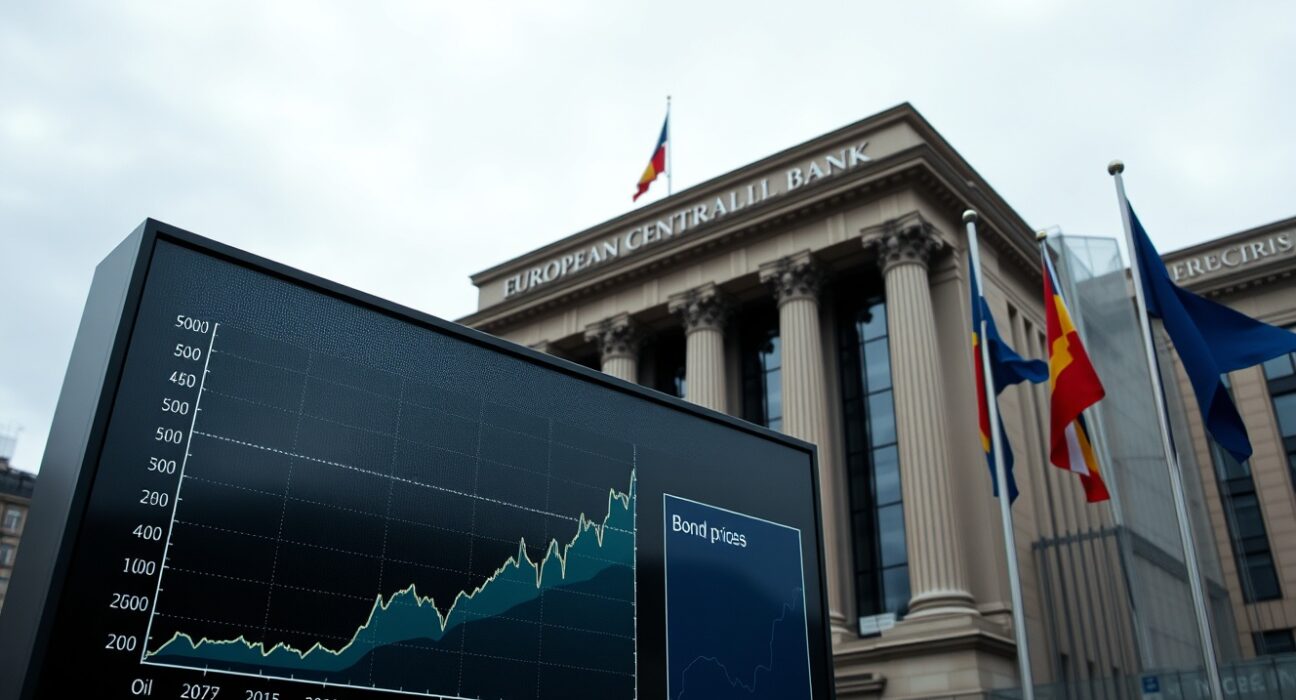
Eurozone government bond yields rose sharply on Tuesday, as a significant spike in global oil prices intensified market expectations that the European Central Bank will maintain a hawkish monetary policy stance for longer than previously anticipated.
Oil Price Surge Drives Rate Expectations
The recent rally in crude oil prices, driven by supply concerns and geopolitical tensions, has injected a new variable into the ECB’s inflation outlook. Higher energy costs are expected to keep headline inflation elevated, complicating the central bank’s efforts to bring price growth back to its 2% target. This has led traders to reprice the likelihood of further interest rate hikes or a delayed start to rate cuts, directly pushing yields on benchmark government debt higher.
Market Reaction Across the Eurozone
Germany’s 10-year Bund yield, the benchmark for the region, rose by several basis points, reflecting the broad shift in sentiment. Yields on French, Italian, and Spanish bonds also climbed, with the spread between Italian and German bonds widening slightly, indicating some investor caution regarding the fiscal positions of higher-debt nations in a higher-rate environment. The move represents a reversal from recent weeks when markets had been pricing in a more dovish ECB path.
Implications for Borrowers and Investors
The rise in yields translates to higher borrowing costs for eurozone governments, corporations, and households. For investors, it signals a period of continued volatility in fixed-income markets. The ECB’s next policy decision, scheduled for later this month, will be closely scrutinized for any shift in language regarding the balance between controlling inflation and supporting economic growth, especially as the oil price shock adds a layer of complexity to the economic outlook.
Conclusion
The combination of rising oil prices and hawkish ECB expectations has created a fresh headwind for eurozone bond markets. While the central bank has signaled data-dependency, the persistence of energy-driven inflation pressures suggests that monetary policy will remain restrictive in the near term, keeping upward pressure on yields. Investors are now adjusting their portfolios to account for a higher-for-longer interest rate scenario.
FAQs
Q1: Why do oil prices affect Eurozone bond yields?
A1: Higher oil prices increase inflation expectations. To combat this, the ECB may keep interest rates higher or raise them further, making newly issued bonds more attractive and pushing up yields on existing bonds.
Q2: What does a hawkish ECB mean for bond investors?
A2: A hawkish ECB signals a preference for tighter monetary policy (higher rates) to control inflation. This typically leads to falling bond prices and rising yields, which can result in short-term losses for existing bondholders but higher future income for new investors.
Q3: Which Eurozone bonds are most sensitive to these changes?
A3: Bonds from higher-debt countries like Italy and Spain are often more sensitive, as their yields include a risk premium. German Bunds, considered the safest, are also affected but tend to see smaller relative moves.
Disclaimer: The information provided is not trading advice, Bitcoinworld.co.in holds no liability for any investments made based on the information provided on this page. We strongly recommend independent research and/or consultation with a qualified professional before making any investment decisions.
