

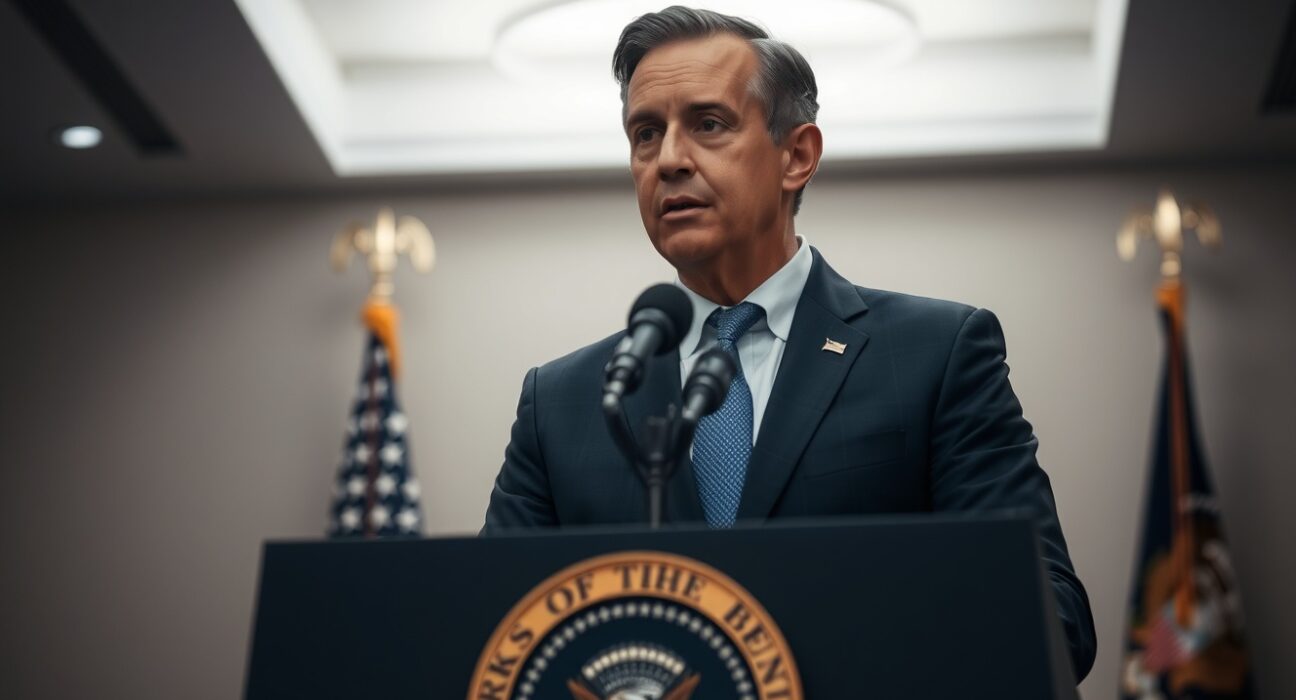
Patrick Witt, the executive director of the White House crypto council, has pushed back against Democratic criticism of the CLARITY bill, characterizing the objections as politically motivated rather than substantive policy concerns. Witt specifically addressed two lines of Democratic argument targeting the bill’s ethics provisions.
Witt Responds to Criticism of Ethics Provisions
During a recent briefing, Witt argued that claims the ethics provisions lack enforcement authority for state attorneys general effectively reject the broader framework of current federal ethics law. He maintained that the bill’s design aligns with existing legal structures and does not require additional state-level enforcement to be meaningful.
Witt also addressed arguments that the provisions are flawed because they cannot punish President Donald Trump for past cryptocurrency activity. He noted that any measure attempting to retroactively target a sitting president would violate the U.S. Constitution, making such criticism impractical and legally unsound.
Background on the CLARITY Bill
The CLARITY bill, formally known as the Crypto Legal and Regulatory Integrity Transparency Act, aims to establish a clearer federal framework for digital asset regulation. It has been a focal point of debate between lawmakers and the administration, with Democrats raising concerns about insufficient safeguards against conflicts of interest and potential abuses.
The bill’s ethics provisions are designed to prevent government officials from leveraging insider knowledge for personal gain in cryptocurrency markets. However, critics argue that without robust enforcement mechanisms, the provisions are largely symbolic.
Why This Matters
The exchange highlights the deepening partisan divide over cryptocurrency regulation in the United States. As digital assets become more mainstream, the legal and ethical frameworks governing them will have significant implications for investors, consumers, and the broader financial system. The White House’s position signals a push for a more streamlined regulatory approach, while Democrats seek stronger accountability measures.
For industry participants, the outcome of this debate could shape compliance requirements, market stability, and the overall trajectory of crypto adoption in the U.S.
Conclusion
Patrick Witt’s remarks underscore the administration’s stance that the CLARITY bill’s ethics provisions are sufficient within existing legal parameters. The debate continues as Congress weighs the balance between innovation and oversight in the rapidly evolving cryptocurrency space.
FAQs
Q1: What is the CLARITY bill?
The CLARITY bill is proposed U.S. legislation aimed at creating a comprehensive federal regulatory framework for cryptocurrencies and digital assets, including provisions for market oversight and ethics rules for government officials.
Q2: Why are Democrats criticizing the bill’s ethics provisions?
Democrats argue that the ethics provisions lack strong enforcement mechanisms, particularly for state attorneys general, and that they do not adequately address potential conflicts of interest involving past cryptocurrency activities of public officials.
Q3: What did Patrick Witt say in response?
Witt stated that the Democratic criticism is political, not substantive. He argued that the provisions are consistent with federal ethics law and that any attempt to retroactively penalize a president would be unconstitutional.
Disclaimer: The information provided is not trading advice, Bitcoinworld.co.in holds no liability for any investments made based on the information provided on this page. We strongly recommend independent research and/or consultation with a qualified professional before making any investment decisions.
