

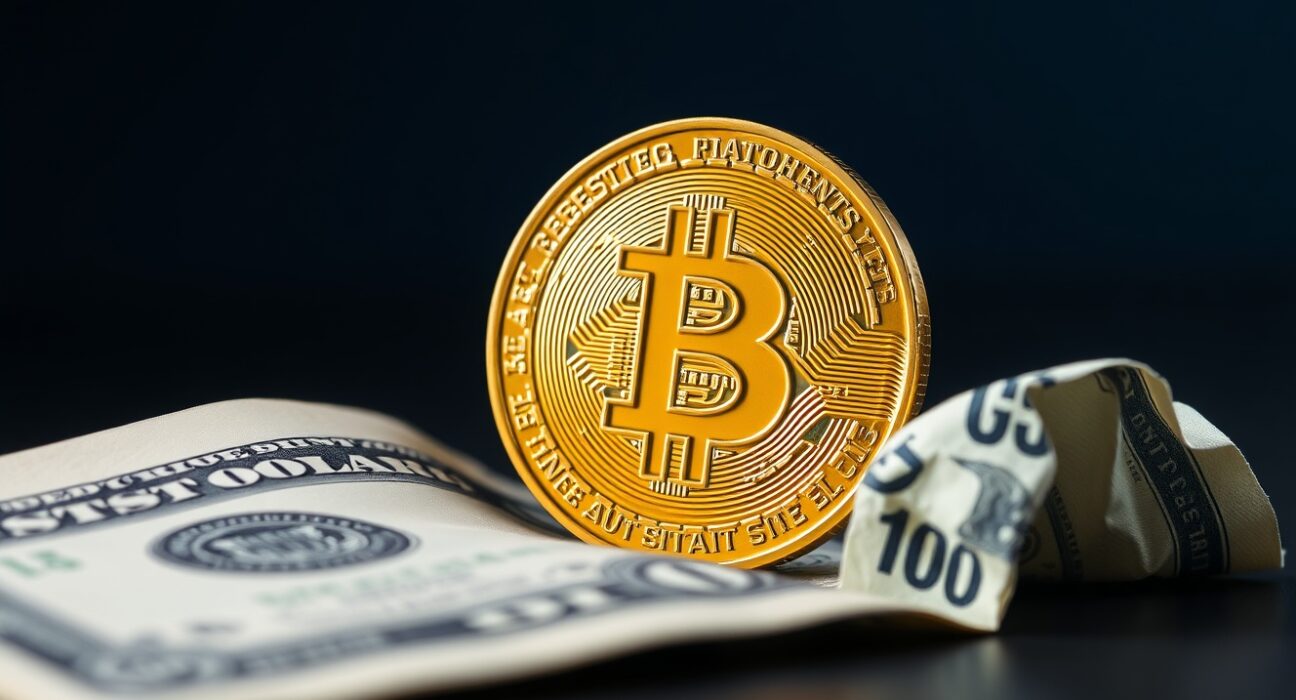
Cryptocurrency markets showed notable resilience on Wednesday, with major digital assets holding steady even as the U.S. dollar index (DXY) climbed to its highest level in over two months. The move suggests a potential shift in the relationship between crypto prices and traditional macro pressures, which have historically weighed on risk assets during periods of dollar strength.
Dollar Strength Fails to Dent Crypto Sentiment
The U.S. dollar index, which measures the greenback against a basket of six major currencies, rose by approximately 0.4% in early trading, extending its recent upward trend. A stronger dollar typically makes dollar-denominated assets more expensive for international buyers and often correlates with a pullback in risk-on investments, including cryptocurrencies. However, Bitcoin (BTC) remained above the $63,000 mark, while Ethereum (ETH) held near $3,400, indicating that traders were not immediately spooked by the currency move.
Market analysts pointed to several factors that may be insulating crypto from the dollar’s rally. Increased institutional adoption, a growing base of long-term holders, and a shift in narrative toward digital assets as a hedge against fiat currency debasement are all cited as possible reasons for the decoupling. The crypto market’s total capitalization stayed above $2.3 trillion, reflecting a broad-based stability that surprised some observers expecting a sharper reaction.
Macro Context and Market Implications
The dollar’s recent strength has been driven by a combination of factors, including resilient U.S. economic data and comments from Federal Reserve officials suggesting that interest rates may remain higher for longer. Historically, such conditions have created headwinds for speculative assets. Yet the muted response in crypto markets this week suggests that the asset class may be maturing beyond its reputation as a high-beta risk trade.
This resilience is not without precedent. In late 2023 and early 2024, crypto markets also showed periods of relative independence from macro moves, particularly during episodes of dollar strength tied to geopolitical uncertainty. Some analysts argue that digital assets are increasingly being viewed as a separate asset class with its own supply-and-demand dynamics, rather than a simple proxy for risk appetite.
What This Means for Traders and Investors
For traders, the current environment presents a potential opportunity to reassess correlation assumptions. If crypto continues to shrug off dollar strength, it could signal that the market is pricing in a longer-term structural shift. For long-term investors, the stability may reinforce confidence in crypto’s role as a portfolio diversifier. However, caution remains warranted: the decoupling is not yet confirmed, and a sudden shift in macro sentiment — such as a liquidity crunch or a surprise Fed move — could still trigger volatility.
Conclusion
While a single day’s price action does not confirm a lasting trend, the crypto market’s ability to hold its ground against a strengthening U.S. dollar is a notable development. It suggests that digital assets may be gaining a degree of macro independence, driven by maturing infrastructure and shifting investor narratives. Whether this decoupling holds will depend on continued institutional interest, regulatory clarity, and broader economic conditions.
FAQs
Q1: Why does a stronger dollar usually hurt crypto prices?
A stronger dollar makes risk assets, including cryptocurrencies, less attractive to international investors. It also tends to tighten financial conditions, reducing liquidity available for speculative investments.
Q2: Is this decoupling permanent?
Not necessarily. While crypto has shown periods of independence from macro moves, correlations can shift quickly. The current resilience is notable but should not be assumed as a permanent change without further evidence.
Q3: What should investors watch next?
Key indicators include the DXY trend, Fed policy signals, and crypto-specific metrics like exchange inflows, spot ETF flows, and on-chain activity. A sustained break in the inverse correlation would be a significant signal for the market.
Disclaimer: The information provided is not trading advice, Bitcoinworld.co.in holds no liability for any investments made based on the information provided on this page. We strongly recommend independent research and/or consultation with a qualified professional before making any investment decisions.
