

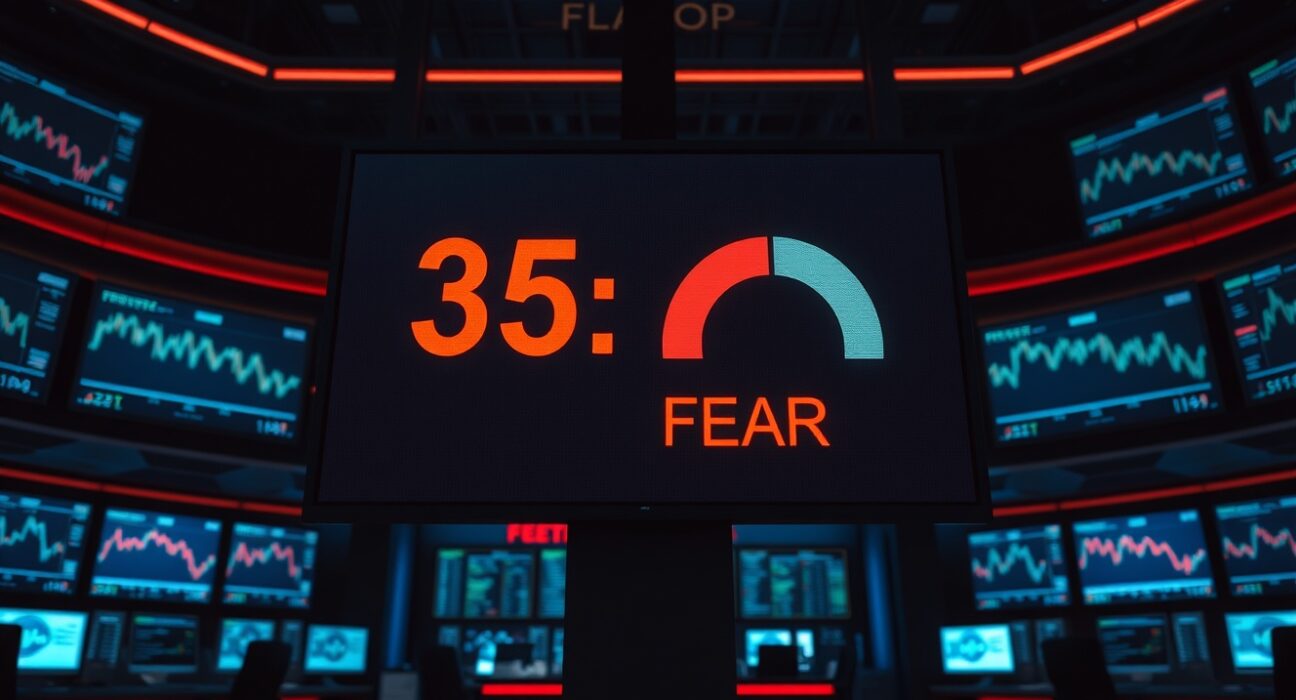
The Crypto Fear and Greed Index, a widely followed barometer of market sentiment, has fallen to 35, marking a two-point decline from the previous day and keeping the indicator firmly within the fear zone. The reading signals that investors are currently cautious, with sentiment leaning toward pessimism rather than optimism.
What the Fear and Greed Index Measures
CoinMarketCap’s proprietary index aggregates several data points to produce a single numeric score between 0 and 100. A reading near zero indicates extreme fear, while a score approaching 100 reflects extreme greed. The index is calculated using price movements from the top 10 cryptocurrencies by market capitalization, market volatility, derivatives-market data such as the put-to-call ratio, the stablecoin supply ratio (SSR), and CoinMarketCap’s own search data.
The current reading of 35 suggests that market participants are pricing in uncertainty, possibly driven by recent price corrections, regulatory developments, or broader macroeconomic headwinds. The fear zone historically coincides with periods of increased selling pressure and lower trading volumes, though it has also preceded market recoveries when sentiment becomes excessively pessimistic.
Context and Implications for Traders
The index has remained in the fear zone for several consecutive days, reflecting a sustained period of caution. This contrasts sharply with the greed and extreme greed readings seen during bull runs, when investor enthusiasm often drives prices higher regardless of fundamentals.
For traders, the fear zone can present both risks and opportunities. Prolonged fear may indicate that the market is oversold, potentially setting the stage for a bounce. However, it can also signal that negative sentiment is deeply entrenched, making further declines possible. The index is best used as a contrarian indicator in conjunction with other technical and fundamental analysis.
Why This Matters
Market sentiment is a powerful driver of short-term price action in cryptocurrency markets, which are often more influenced by emotion than traditional asset classes. A sustained fear reading can lead to lower liquidity and wider bid-ask spreads, making it harder for large traders to enter or exit positions without affecting prices. For retail investors, understanding the current sentiment regime can help in making more informed decisions about entry and exit points.
Conclusion
The Crypto Fear and Greed Index at 35 confirms that market sentiment remains bearish in the short term. While the index alone does not predict future price movements, it provides a useful snapshot of the emotional state of the market. Traders and investors should monitor the index alongside other indicators to gauge whether fear is deepening or beginning to subside.
FAQs
Q1: What does a Fear and Greed Index reading of 35 mean?
A reading of 35 indicates that the market is in a state of fear. It suggests that investors are cautious and that negative sentiment is prevalent, which can lead to selling pressure and lower prices.
Q2: How is the Crypto Fear and Greed Index calculated?
CoinMarketCap calculates the index using several factors: price momentum and volume for the top 10 cryptocurrencies, market volatility, derivatives data including the put-to-call ratio, the stablecoin supply ratio (SSR), and search data from CoinMarketCap itself.
Q3: Is a fear reading a buy signal?
Not necessarily. While extreme fear can sometimes indicate an oversold market and a potential buying opportunity, it can also precede further declines. The index is a sentiment indicator, not a predictive tool, and should be used alongside other forms of analysis.
Disclaimer: The information provided is not trading advice, Bitcoinworld.co.in holds no liability for any investments made based on the information provided on this page. We strongly recommend independent research and/or consultation with a qualified professional before making any investment decisions.
