

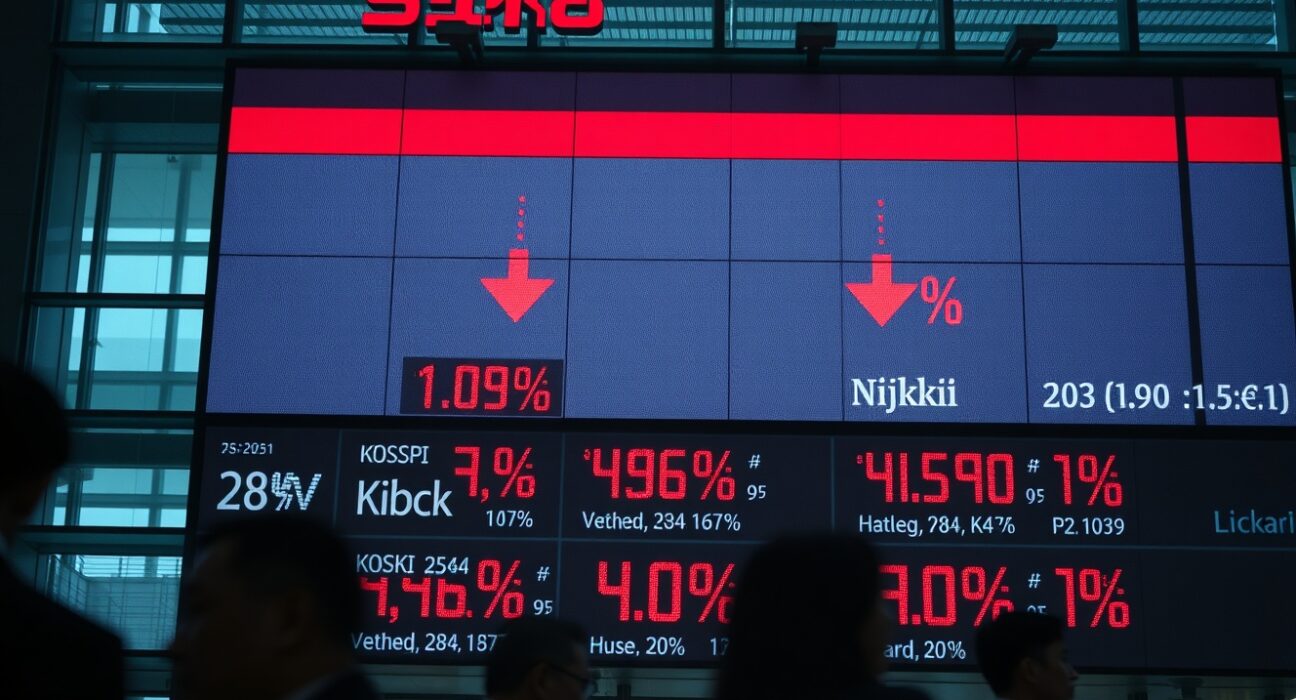
Asian stock markets, led by South Korea’s KOSPI index, experienced a broad decline on [Date of Event, e.g., Monday] as renewed doubts over the artificial intelligence sector’s near-term profitability triggered a sell-off in major chipmaker stocks. The downturn reflects growing investor caution following mixed signals from key industry players and broader macroeconomic uncertainties.
KOSPI and Regional Markets Feel the Pressure
South Korea’s benchmark KOSPI index fell by [e.g., 1.5%] in afternoon trading, with heavyweight semiconductor stocks bearing the brunt of the selling. Samsung Electronics and SK Hynix, two of the world’s largest memory chip manufacturers, saw their shares drop by [e.g., 2.1%] and [e.g., 3.4%] respectively. The decline was mirrored across the region, with Japan’s Nikkei 225 shedding [e.g., 1.2%] and Taiwan’s Taiex index falling by [e.g., 1.8%], pressured by losses in TSMC and other chip-related stocks.
Why AI Doubts Are Hitting Chipmakers
The current sell-off is primarily attributed to a reassessment of the AI investment cycle. While demand for AI-specific chips, such as graphics processing units (GPUs) and high-bandwidth memory (HBM), has surged over the past year, recent commentary from some tech executives and analysts suggests that the pace of return on investment may be slower than initially projected. This has led to fears of a potential inventory correction or a slowdown in capital expenditure from major cloud service providers. The semiconductor sector, being the primary enabler of AI infrastructure, is directly exposed to these shifts in sentiment.
Impact on Investor Sentiment and Market Outlook
For investors, the current volatility underscores the high-risk nature of the AI trade. The sector, which has driven much of the global market rally in 2023 and early 2024, is now facing its first major test of narrative. The key question is whether this is a temporary pullback driven by profit-taking and short-term noise, or the beginning of a more sustained correction. The performance of chipmaker stocks in the coming weeks will be a critical indicator of market confidence in the AI growth story. Analysts advise that while the long-term potential of AI remains intact, near-term price swings are likely to persist as the market digests new data on earnings and forward guidance.
Conclusion
The slide in Asian stocks, particularly the KOSPI and major chipmaker shares, reflects a significant shift in market sentiment toward the AI sector. Driven by doubts over the immediate profitability of massive AI investments, the sell-off highlights the fragility of the current bull market in tech stocks. Investors are now closely watching for any further signals from industry leaders and upcoming earnings reports to gauge the true health of the AI demand cycle.
FAQs
Q1: Why did Asian chipmaker stocks fall?
A1: The decline is primarily due to growing investor doubts about the near-term profitability and return on investment from the artificial intelligence sector, leading to a broad sell-off in semiconductor stocks like Samsung Electronics and SK Hynix.
Q2: Which Asian markets were most affected?
A2: South Korea’s KOSPI index was notably affected, alongside Japan’s Nikkei 225 and Taiwan’s Taiex index, all of which saw declines driven by losses in their respective chipmaking heavyweights.
Q3: Is this the end of the AI-driven market rally?
A3: Not necessarily. While the sell-off indicates a short-term correction in sentiment, the long-term growth potential for AI remains a central theme. The current downturn is seen as a reassessment of valuation and timelines, rather than a fundamental rejection of the AI industry’s prospects.
Disclaimer: The information provided is not trading advice, Bitcoinworld.co.in holds no liability for any investments made based on the information provided on this page. We strongly recommend independent research and/or consultation with a qualified professional before making any investment decisions.
