

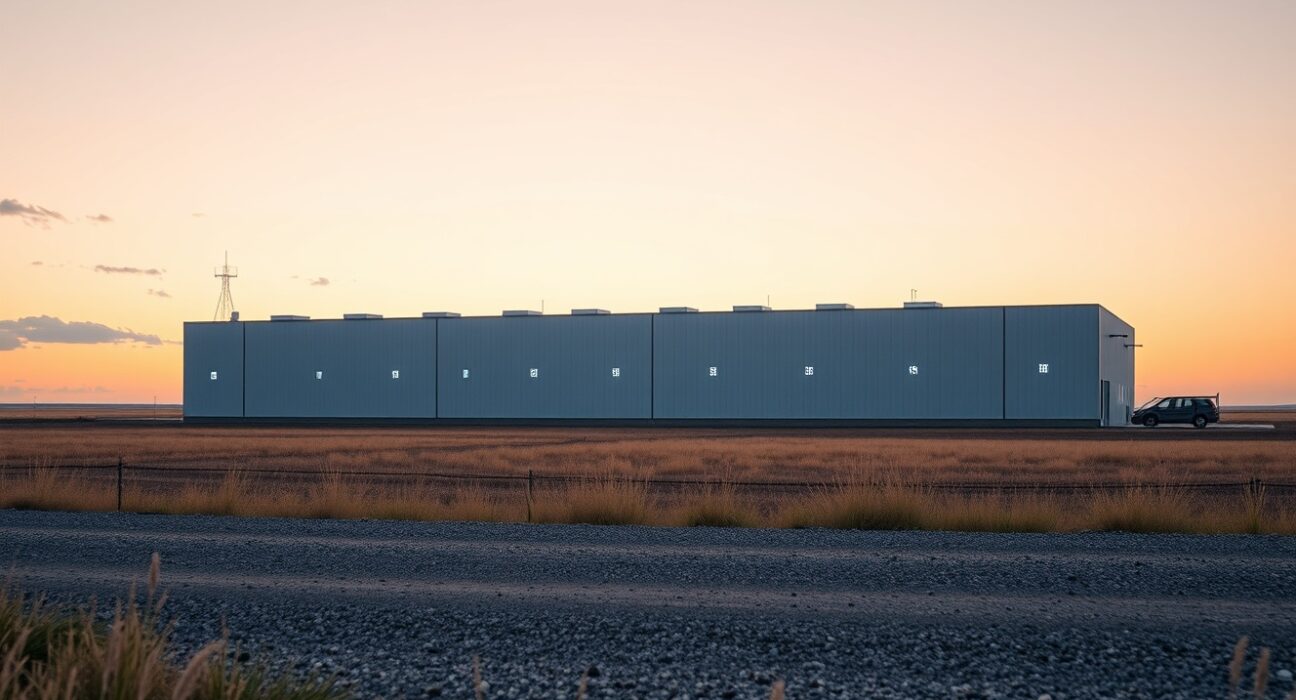
Fortitude, the mining subsidiary of Digital Currency Group (DCG), has powered up its first greenfield mining facility — a 12 MW site in Grand Island, Nebraska. The company confirmed that construction is complete and the facility is now operational, bringing Fortitude’s total operating power capacity to 60 MW.
Strategic Expansion in the Heartland
Greenfield facilities — built from the ground up on previously undeveloped land — represent a significant capital commitment compared to acquiring or retrofitting existing infrastructure. Fortitude’s choice of Nebraska is notable: the state offers competitive industrial electricity rates and a regulatory environment that has been generally accommodating to data center and industrial operations.
The Grand Island site adds to Fortitude’s existing portfolio, which includes facilities in Texas and other locations. The company has not disclosed the total capital expenditure for the Nebraska project, but industry estimates for similar-scale greenfield builds typically range from $10 million to $15 million, depending on electrical infrastructure and cooling requirements.
Industry Context and Timing
The energization comes at a pivotal moment for Bitcoin mining. The network’s next halving, expected in April 2024, will reduce block rewards from 6.25 BTC to 3.125 BTC, compressing margins for miners with higher power costs. Fortitude’s expansion into lower-cost regions like Nebraska positions it to maintain operational efficiency post-halving.
Publicly traded miners such as Marathon Digital and Riot Platforms have similarly been expanding into regions with favorable power agreements, including Texas and the Midwest. Fortitude’s private status within DCG allows it to operate with less quarterly earnings pressure, potentially enabling longer-term infrastructure plays.
Implications for the Regional Energy Grid
Grand Island is served by the Nebraska Public Power District, which relies heavily on coal and nuclear generation. Large-scale mining operations can provide stable, interruptible load that helps utilities balance grid demand — a relationship that has drawn both praise and criticism in other states. Fortitude has not publicly disclosed any demand-response agreements with local utilities.
Conclusion
Fortitude’s Nebraska facility marks a measured but meaningful step in DCG’s mining infrastructure strategy. By building new capacity in a low-cost energy market, the company is preparing for the post-halving environment while expanding its geographic footprint. The project also highlights the ongoing industrialization of Bitcoin mining, with purpose-built facilities increasingly replacing ad-hoc operations.
FAQs
Q1: What is a greenfield mining facility?
A greenfield facility is built on undeveloped land, as opposed to a brownfield site that reuses existing infrastructure. Greenfield projects typically involve higher upfront costs but allow for purpose-built design optimized for efficiency.
Q2: Why did Fortitude choose Nebraska for this facility?
Nebraska offers competitive industrial electricity rates and a stable regulatory environment. The state’s central location also provides access to diverse energy sources, including coal, nuclear, and growing wind capacity.
Q3: How does this expansion affect Fortitude’s overall capacity?
The 12 MW Nebraska site brings Fortitude’s total operating power capacity to 60 MW. For context, 60 MW can support roughly 18,000 to 20,000 latest-generation ASIC miners, depending on their efficiency and power draw.
Disclaimer: The information provided is not trading advice, Bitcoinworld.co.in holds no liability for any investments made based on the information provided on this page. We strongly recommend independent research and/or consultation with a qualified professional before making any investment decisions.
