

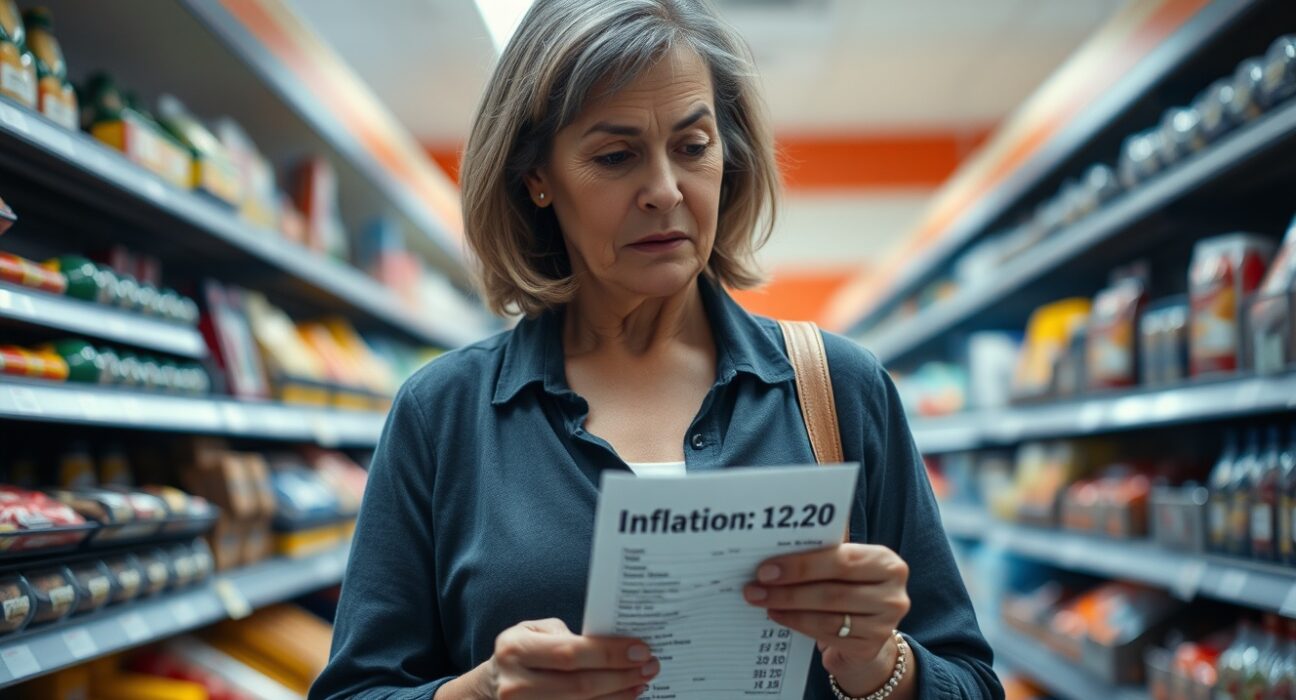
The official Consumer Price Index (CPI) may show inflation cooling, but for millions of American households, the real cost of living continues to climb at a pace that government statistics fail to capture. As of mid-2025, the CPI registers an annual inflation rate of roughly 3.4%, a significant drop from the 9.1% peak in June 2022. Yet, a growing body of evidence suggests that the average consumer’s experience with price increases remains far more painful than the headline number implies.
The Growing Gap Between CPI and Consumer Reality
The CPI is designed to measure the average change in prices paid by urban consumers for a representative basket of goods and services. However, this “average” masks significant disparities. The basket’s composition—heavily weighted toward items like rent, medical care, and transportation—does not always reflect the spending patterns of lower- and middle-income households, who spend a larger share of their income on necessities.
Recent data from the Bureau of Labor Statistics (BLS) shows that while durable goods prices have fallen (used car prices are down 8.2% year-over-year as of May 2025), services inflation remains stubbornly high. Shelter costs, which account for over one-third of the CPI, rose 5.1% annually in May 2025, while food-at-home prices increased 4.2%. For a family spending $1,200 a month on groceries and $2,000 on rent, these percentages translate into hundreds of dollars in additional monthly costs that the 3.4% headline figure simply does not convey.
Why the CPI Understates the Pain
Several structural factors contribute to the disconnect. First, the CPI uses a process called “substitution”—if beef becomes too expensive, the model assumes consumers switch to chicken, potentially masking the true cost increase. Second, the index is slow to capture new price increases at the checkout counter; it often lags real-time transaction data by weeks. Third, the CPI’s “owner’s equivalent rent” component, which estimates what homeowners would pay if they rented their own homes, can smooth out actual rent spikes.
Alternative measures paint a starker picture. The “Everyday Price Index” from the American Institute for Economic Research, which tracks prices on frequently purchased items like gasoline, groceries, and utilities, has consistently run 1 to 2 percentage points higher than the CPI over the past year. Similarly, the Bureau of Economic Analysis’s Personal Consumption Expenditures (PCE) index, the Federal Reserve’s preferred gauge, shows core inflation (excluding food and energy) at 3.1% in April 2025, but the “sticky-price” PCE—which tracks items that change price slowly, like services and rent—stands at 4.5%.
What This Means for Household Budgets
For the typical American household, the practical impact is a persistent erosion of purchasing power. While wage growth has averaged 4.0% over the past year, according to the Atlanta Fed’s Wage Growth Tracker, real wage gains disappear when measured against the actual cost of necessities. A family earning $75,000 a year may see a $3,000 raise, but if their rent has increased by $200 a month and their grocery bill by $100, that raise is effectively neutralized.
Consumer sentiment surveys reflect this reality. The University of Michigan’s Index of Consumer Sentiment for May 2025 registered 69.1, still well below the pre-pandemic average of 85-90, despite the CPI falling by more than half from its peak. This suggests that consumers are voting with their feelings: they trust their own pocketbook more than the government’s spreadsheets.
Conclusion
The CPI remains a useful tool for macroeconomic analysis, but it is an increasingly unreliable guide to the lived experience of inflation. For households, the pain is real, persistent, and poorly captured by the official numbers. Until measures like the CPI better reflect actual spending patterns—especially for rent, food, and services—the disconnect between data and reality will continue to fuel public frustration and skepticism. Policymakers and financial planners should treat the headline CPI with caution and look to alternative indices for a more honest picture of the cost of living.
FAQs
Q1: Why does the CPI seem lower than what I’m paying at the store?
The CPI uses a fixed basket of goods that may not match your personal spending. It also uses substitution assumptions and lags real-time prices, which can understate the cost increases for necessities like rent and groceries.
Q2: Is there a more accurate measure of inflation for households?
Yes. The American Institute for Economic Research’s “Everyday Price Index” and the Bureau of Economic Analysis’s “sticky-price PCE” both track prices more closely tied to daily consumer spending and often show higher inflation than the CPI.
Q3: How does the CPI affect my personal finances?
The CPI is used to adjust Social Security benefits, tax brackets, and some wages. If it understates inflation, these adjustments may not fully protect your purchasing power, meaning you effectively lose money over time.
Disclaimer: The information provided is not trading advice, Bitcoinworld.co.in holds no liability for any investments made based on the information provided on this page. We strongly recommend independent research and/or consultation with a qualified professional before making any investment decisions.
