

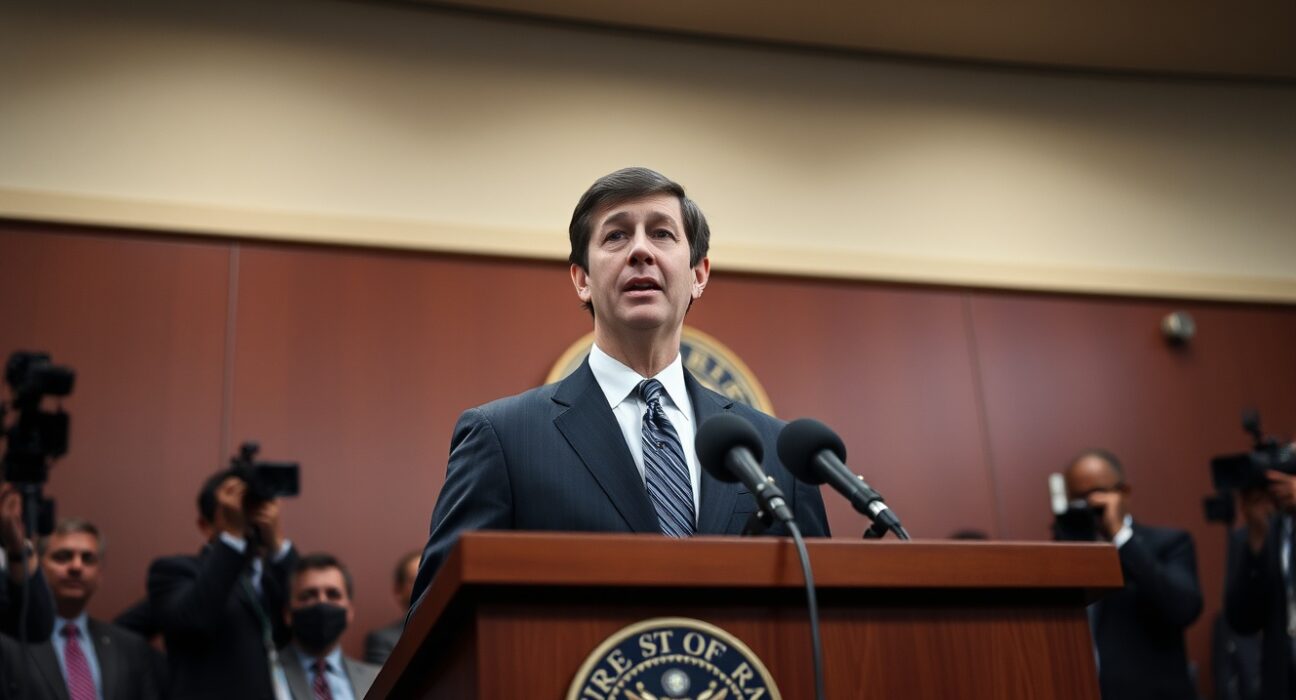
Federal Reserve Chairman Kevin Warsh stated clearly on Wednesday that the central bank will not allow market pricing to dictate its interest-rate decisions. Speaking at a press conference following the Federal Open Market Committee meeting, Warsh emphasized that while financial markets provide useful data, they will not determine the Fed’s policy path.
Warsh: Markets Are Informative, Not Decisive
Warsh told reporters that the Fed considers market signals as one of many inputs in its decision-making process. “Markets can be a useful source of information, but they are not a decisive one,” he said. The remarks come amid heightened volatility in bond and equity markets, where traders have been pricing in aggressive rate cuts later this year. Warsh’s comments suggest the Fed intends to maintain its independence from short-term market fluctuations, a stance consistent with the central bank’s dual mandate of maximum employment and stable prices.
Households and Businesses Losing Patience
The Fed chair also acknowledged growing frustration among households and businesses. “I am hearing that households and businesses are losing patience,” Warsh said, without elaborating on specific sectors. This admission reflects the broader economic strain from elevated borrowing costs, which have persisted despite easing inflation data. The Fed has held its benchmark rate at 5.25% to 5.50% since July 2024, and recent economic indicators show mixed signals—cooling consumer spending alongside a still-tight labor market.
Outside Working Groups: Advisory Role Only
Warsh clarified that while the Fed will consult outside working groups for diverse perspectives, their views will not override the committee’s own judgment. “Our final decisions are not determined by external groups,” he said. This statement underscores the Fed’s commitment to data-dependent policymaking, insulating it from political or market pressure. Analysts interpret this as a signal that rate cuts are not imminent, despite market expectations.
Why This Matters for Investors and the Economy
Warsh’s remarks carry significant implications for financial markets and the broader economy. By pushing back against market pricing, the Fed is effectively warning investors not to anticipate a rapid easing cycle. This could lead to a repricing of assets, including stocks and bonds, as traders adjust their expectations. For consumers, the message suggests that borrowing costs—from mortgages to credit cards—may remain elevated for longer, potentially dampening spending and economic growth.
Conclusion
Chairman Warsh’s press conference reaffirmed the Federal Reserve’s independent approach to monetary policy, prioritizing economic data over market sentiment. With households and businesses showing signs of strain, the Fed faces a delicate balancing act: curbing inflation without triggering a recession. For now, Warsh’s message is clear—the Fed will not be rushed by market pricing.
FAQs
Q1: What did Fed Chair Kevin Warsh say about market pricing?
Warsh said the Federal Reserve will not be constrained by market pricing in making interest-rate decisions, emphasizing that markets are informative but not decisive.
Q2: Why are households and businesses losing patience according to Warsh?
Warsh noted growing frustration due to persistent high borrowing costs, which have strained consumer spending and business investment despite cooling inflation.
Q3: Will the Fed consult outside groups for rate decisions?
Yes, the Fed will refer to outside working groups for input, but Warsh clarified that final judgments will be made independently by the committee.
Disclaimer: The information provided is not trading advice, Bitcoinworld.co.in holds no liability for any investments made based on the information provided on this page. We strongly recommend independent research and/or consultation with a qualified professional before making any investment decisions.
