

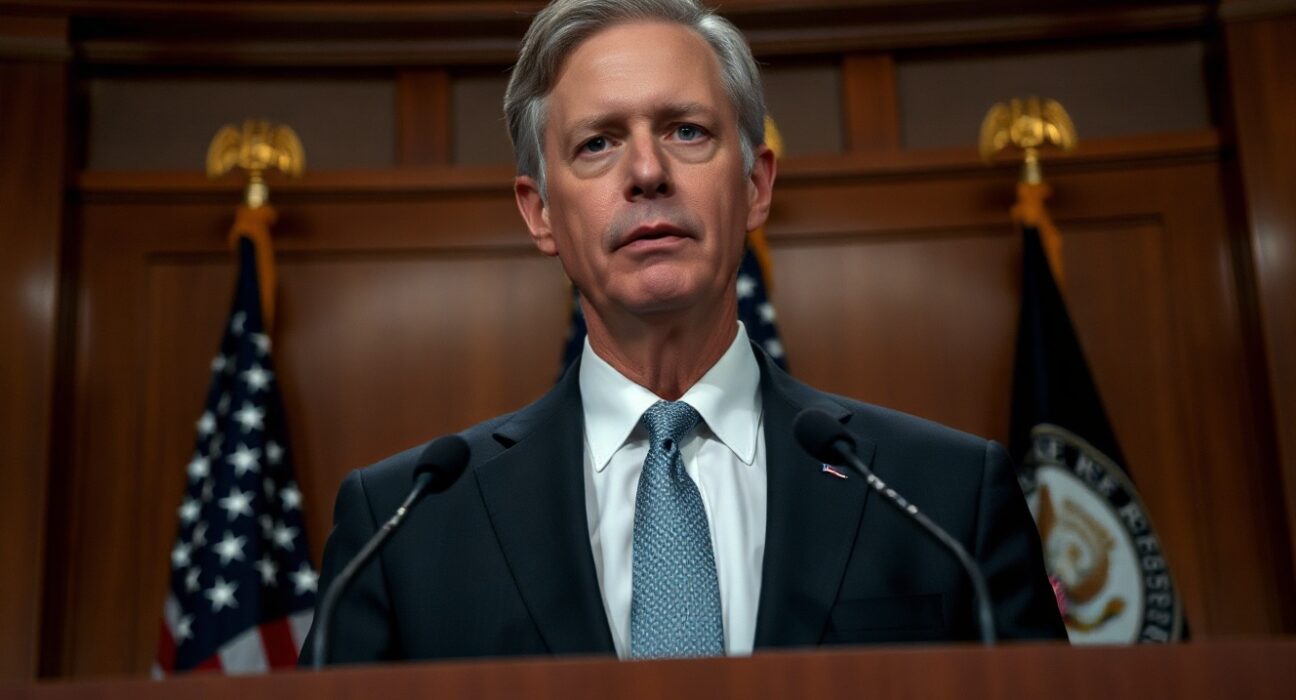
Federal Reserve Chair Jerome Powell delivered a firm commitment on Tuesday, vowing to return inflation to the central bank’s 2% target, pushing back against growing market speculation that interest rate cuts could begin as early as mid-2026. Speaking at the Economic Club of New York, Powell emphasized that the Fed’s work is not yet complete, despite recent progress in cooling price pressures.
Powell’s Firm Stance on Inflation
Powell’s remarks were unambiguous: the Federal Reserve will not consider easing monetary policy until it has “greater confidence” that inflation is sustainably moving toward the 2% goal. He noted that while inflation has fallen from its peak of 9.1% in June 2022 to a current annual rate of 3.2% as of February 2026, the final leg of the journey is proving the most challenging. “We are not declaring victory,” Powell stated. “The path forward is uncertain, and we remain data-dependent.”
Market Reaction and Implications
Financial markets reacted swiftly to Powell’s comments. The S&P 500 fell 1.2% in afternoon trading, while the yield on the 10-year Treasury note rose to 4.35%. Investors had priced in a 60% probability of a rate cut at the Fed’s June meeting, but those odds dropped to 35% following the speech. The central bank has maintained its benchmark interest rate at a range of 5.25% to 5.50% since July 2023, the highest level in 23 years.
What This Means for Borrowers and Savers
For consumers, Powell’s commitment to a 2% inflation target means that borrowing costs for mortgages, car loans, and credit cards are likely to remain elevated for longer than previously expected. Savers, however, continue to benefit from high yields on savings accounts and certificates of deposit. The Fed’s stance reflects a broader concern that premature rate cuts could reignite inflationary pressures, undermining the progress made over the past two years.
Conclusion
Jerome Powell’s latest remarks reinforce the Federal Reserve’s determination to see its inflation fight through to the end, even at the risk of disappointing financial markets. The central bank’s data-dependent approach suggests that any policy easing will be gradual and carefully calibrated, with the 2% target remaining the sole focus. For now, the message is clear: the Fed will not be swayed by market expectations or political pressure.
FAQs
Q1: What is the Federal Reserve’s current inflation target?
The Federal Reserve’s target is a 2% annual inflation rate, as measured by the Personal Consumption Expenditures (PCE) price index. As of February 2026, the PCE inflation rate stands at 3.2%.
Q2: When is the next Federal Reserve meeting?
The next Federal Open Market Committee (FOMC) meeting is scheduled for May 5-6, 2026. Market participants will closely watch for any changes in the Fed’s policy statement or economic projections.
Q3: How does the Fed’s interest rate policy affect everyday consumers?
Higher interest rates increase borrowing costs for mortgages, auto loans, and credit cards, making it more expensive to finance large purchases. Conversely, they boost returns on savings accounts and other deposit products.
Disclaimer: The information provided is not trading advice, Bitcoinworld.co.in holds no liability for any investments made based on the information provided on this page. We strongly recommend independent research and/or consultation with a qualified professional before making any investment decisions.
