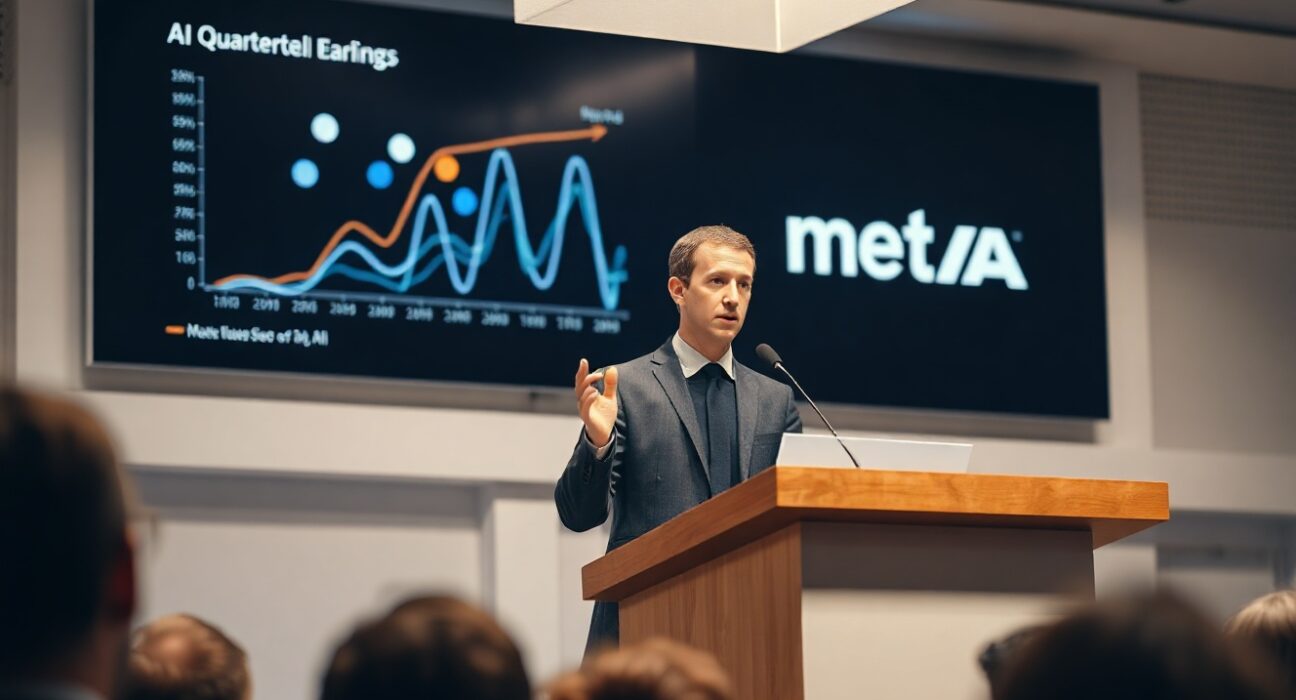
Meta founder and CEO Mark Zuckerberg told investors on Wednesday that he expects billions of people to use personal AI agents within the next five years, a prediction that comes as the company faces mounting costs and a sharp drop in free cash flow.
Zuckerberg’s vision for AI agents
Speaking on Meta’s quarterly earnings call, Zuckerberg described a future where personal AI agents work around the clock on behalf of users, managing finances, health, relationships, and household tasks. “I think that it’s extremely unlikely if you look out five years from now … that you don’t have billions of people with a personal agent that understands your goals,” he said. He emphasized that WhatsApp and Meta’s other messaging platforms will play a central role in this shift, noting that WhatsApp is already the leading platform for interactions with Meta AI.
Meta’s massive AI spending spooks investors
Despite Zuckerberg’s optimism, Meta’s stock fell nearly 10% after the earnings report. The company’s Reality Labs division, responsible for AR glasses and VR headsets, lost approximately $4.6 billion this quarter, bringing its cumulative losses to around $88 billion since 2021. Meta’s free cash flow dropped to $784 million this quarter, down 91% from $8.55 billion in the same period last year, largely due to heavy investments in AI infrastructure. This week, Meta and BlackRock announced a partnership to build a $14 billion data center in El Paso, Texas.
Why this matters for consumers and the industry
Zuckerberg believes that personal AI agents will become “the foundation for our next wave of products and revenue lines.” However, the path to billions of users remains uncertain. Meta’s business agents, rolled out globally on WhatsApp and Messenger this quarter, have been adopted by more than one million businesses — but convincing consumers to adopt personal AI agents is a different challenge. Meta is not alone in pursuing this vision: Google has emphasized custom AI agents in its Search overhaul, and Anthropic’s Claude Code has seen surging subscriptions among developers. The key question is whether Meta can sustain its spending long enough to deliver on Zuckerberg’s prediction without further eroding investor confidence.
Conclusion
Mark Zuckerberg’s prediction of billions of personal AI agents within five years reflects a broader industry push toward agentic AI. However, Meta’s soaring infrastructure costs and declining free cash flow raise questions about the sustainability of its strategy. While the company’s enterprise AI agents have gained early traction, the consumer market remains untested. The next few years will determine whether Zuckerberg’s vision becomes reality — or another costly bet.
FAQs
Q1: What did Mark Zuckerberg say about personal AI agents?
He predicted that within five years, billions of people will use personal AI agents that work autonomously to help with finances, health, relationships, and household management.
Q2: How much is Meta spending on AI and Reality Labs?
Meta’s Reality Labs division lost $4.6 billion this quarter, bringing total losses to $88 billion since 2021. The company is also investing heavily in AI infrastructure, including a $14 billion data center partnership with BlackRock.
Q3: Why did Meta’s stock drop after the earnings call?
Investors reacted negatively to Meta’s rising costs and a 91% year-over-year drop in free cash flow, which fell to $784 million. The market is concerned about the sustainability of Meta’s AI spending.
Disclaimer: The information provided is not trading advice, Bitcoinworld.co.in holds no liability for any investments made based on the information provided on this page. We strongly recommend independent research and/or consultation with a qualified professional before making any investment decisions.