

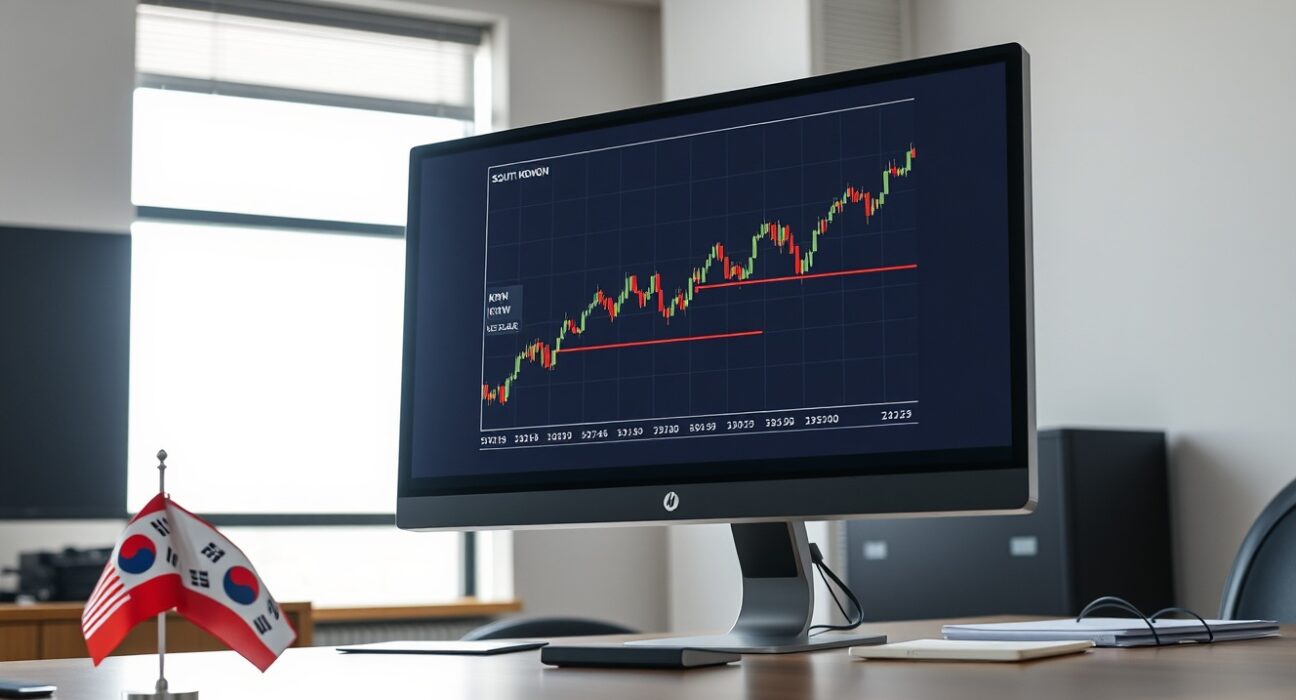
The South Korean Won (KRW) strengthened against the US Dollar (USD) on Wednesday, driven by growing expectations of monetary policy tightening by the Bank of Korea (BOK), according to a note from Commerzbank analysts. The currency pair, which had been under pressure in recent weeks, reversed course as market participants priced in a higher probability of interest rate hikes to combat persistent inflationary pressures.
Policy Expectations Fueling Won Strength
Commerzbank’s analysis highlights that the KRW’s recent appreciation is largely attributable to shifting market sentiment regarding the BOK’s policy trajectory. Data released earlier this week showed consumer price inflation in South Korea remaining above the central bank’s target range, reinforcing the view that further tightening measures may be necessary. The bank’s economists noted that the market is now pricing in a potential rate increase at the next BOK meeting, a scenario that had been largely discounted just a month ago. This repricing has made the Won more attractive to yield-seeking investors, particularly as the US Federal Reserve signals a potential pause in its own rate hiking cycle.
Market Context and Implications
The KRW’s move comes against a backdrop of broader regional currency dynamics. While many Asian currencies have struggled against a resilient US Dollar, the Won’s outperformance reflects a unique domestic catalyst. The BOK has been one of the more proactive central banks in the region, having already raised rates several times since late 2021. However, recent economic data, including robust export figures and a tight labor market, suggests that the central bank may have room to continue tightening without severely damaging growth. Commerzbank’s note also pointed out that the KRW’s strength could provide some relief for South Korean importers, particularly those reliant on energy and raw materials priced in USD, but may pose challenges for exporters by making their goods more expensive in foreign markets.
Expert Insight and Forward View
Analysts at Commerzbank caution that the Won’s gains may be capped in the near term by external factors, including global risk appetite and the trajectory of US interest rates. However, they maintain that the fundamental case for a stronger KRW is supported by the BOK’s commitment to price stability. The bank’s currency strategists are closely watching upcoming economic data releases, including the next BOK policy meeting scheduled for late next month, for further directional cues. For traders and investors, the key takeaway is that the KRW is likely to remain sensitive to domestic policy signals, potentially offering opportunities for those positioned for further tightening.
Conclusion
The South Korean Won’s recent appreciation against the US Dollar is a direct response to heightened expectations of further monetary policy tightening by the Bank of Korea. As Commerzbank’s analysis indicates, this move is grounded in domestic economic fundamentals and a shift in market pricing. While external headwinds remain, the KRW’s trajectory will likely be dictated by the BOK’s actions and communications in the weeks ahead, making it a key currency to watch for Asia-focused investors.
FAQs
Q1: Why is the South Korean Won strengthening against the US Dollar?
The Won is strengthening primarily due to increased market expectations that the Bank of Korea will raise interest rates further to combat inflation, making the currency more attractive to investors.
Q2: What did Commerzbank say about the KRW?
Commerzbank analysts noted that policy tightening expectations are lifting the KRW, and they highlighted the domestic economic data supporting this view, while also acknowledging potential external risks.
Q3: How might a stronger Won affect the South Korean economy?
A stronger Won can benefit importers by reducing costs for foreign goods and raw materials, but it can also make South Korean exports more expensive, potentially impacting trade competitiveness.
Disclaimer: The information provided is not trading advice, Bitcoinworld.co.in holds no liability for any investments made based on the information provided on this page. We strongly recommend independent research and/or consultation with a qualified professional before making any investment decisions.
