

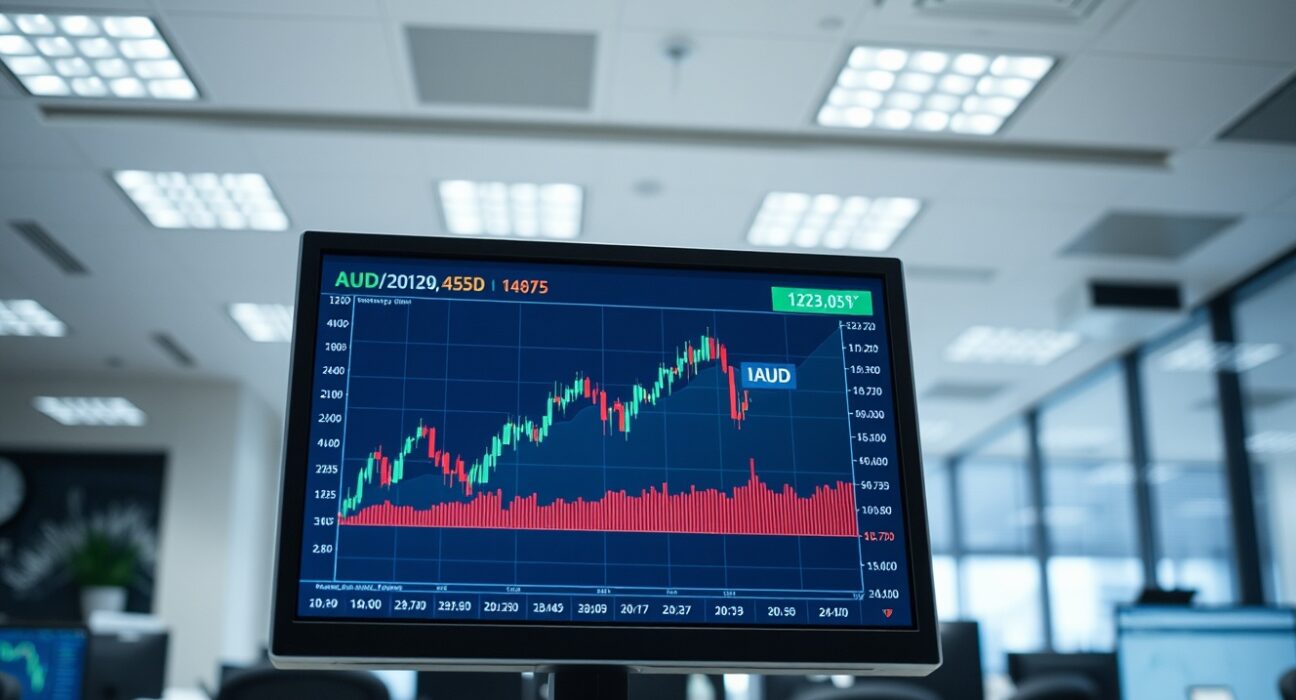
The Australian Dollar (AUD) is trading firmly above the 0.7000 level against the US Dollar (USD) as of [current date], supported by a softer-than-expected US GDP report that has pressured the greenback across the board. The AUD/USD pair is hovering near 0.7050, reflecting a modest gain for the day, as investors reassess the Federal Reserve’s policy path in light of slowing US economic growth.
Why is the US Dollar weakening?
The latest US GDP data, released on [date], showed the economy expanded at an annualized rate of [X]% in the [Q] quarter, below market expectations of [Y]%. This softer reading has fueled speculation that the Fed may be nearing the end of its tightening cycle, reducing the yield advantage that has supported the dollar for much of the year. As a result, the USD index has slipped, providing a tailwind for risk-sensitive currencies like the Australian Dollar.
Additionally, Treasury yields have eased following the GDP release, with the 10-year yield dropping to [Z]%. Lower yields typically diminish the appeal of the dollar, further aiding AUD/USD’s upward momentum.
Australian Dollar Drivers: Commodities and RBA Outlook
The Australian Dollar is also benefiting from firmer commodity prices, particularly iron ore and coal, which are key exports for Australia. Prices have stabilized after a volatile period, offering some support to the currency. Moreover, the Reserve Bank of Australia (RBA) has maintained a hawkish stance, with Governor [Name] reiterating that further rate hikes may be necessary to bring inflation back to target. This contrasts with the Fed’s more cautious tone, making the AUD relatively attractive.
However, traders remain wary of global growth risks, particularly from China’s slowdown, which could weigh on Australian exports and cap AUD gains. The pair’s ability to sustain levels above 0.7000 will depend on upcoming economic data and central bank commentary.
Key Levels to Watch
For the near term, the 0.7000 psychological level is crucial support. A decisive break below could open the door to further downside, while resistance is seen at 0.7100, followed by the 200-day moving average near 0.7150. Technical indicators suggest the pair is in an overbought condition in the short term, which may prompt a consolidation before the next leg higher.
Market Implications and What to Expect
The softer US GDP data has broader implications beyond the forex market. It reinforces the view that the US economy is slowing, which could influence the Fed’s rate decisions in the coming months. For traders, this means increased volatility in USD pairs, with AUD/USD likely to remain sensitive to data releases and central bank speeches.
Investors should also monitor geopolitical developments and risk sentiment, as any escalation in trade tensions or unexpected economic shocks could quickly reverse the current trend. The Australian Dollar’s fate is closely tied to global risk appetite, making it a barometer for market confidence.
Conclusion
The Australian Dollar’s resilience above 0.7000 reflects a combination of weaker US economic data and supportive domestic factors. While the short-term outlook appears constructive, the pair faces significant hurdles, including global growth concerns and potential shifts in central bank policies. Traders should stay informed and adaptable, as the forex market remains highly responsive to evolving economic signals.
FAQs
Q1: What does the 0.7000 level mean for AUD/USD?
The 0.7000 level is a key psychological support. A sustained break below could signal further weakness, while holding above it suggests buyers remain in control.
Q2: How does US GDP data affect the Australian Dollar?
US GDP data influences expectations for Federal Reserve policy. A weaker GDP reading can reduce the likelihood of rate hikes, which tends to weaken the USD and support AUD/USD.
Q3: What are the main risks to the AUD/USD outlook?
Key risks include a slowdown in China’s economy, which could reduce demand for Australian commodities, and any surprise hawkish shift from the Fed that could strengthen the dollar.
Disclaimer: The information provided is not trading advice, Bitcoinworld.co.in holds no liability for any investments made based on the information provided on this page. We strongly recommend independent research and/or consultation with a qualified professional before making any investment decisions.
