

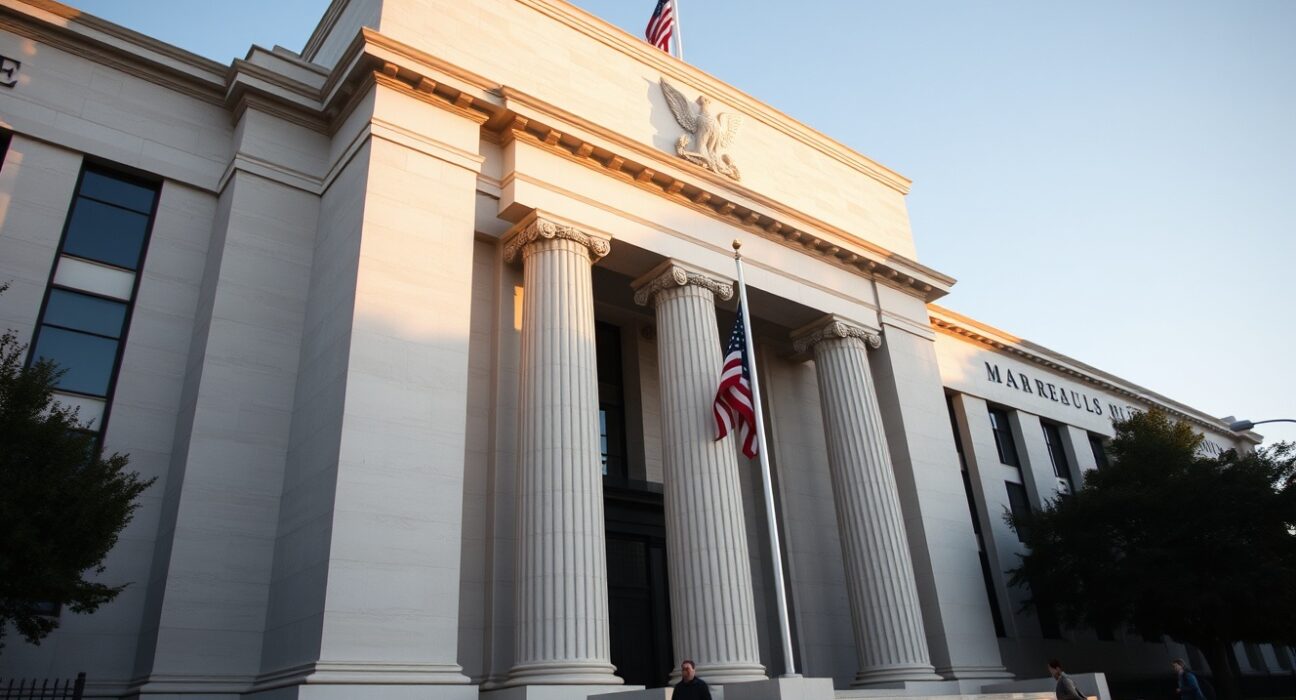
The Federal Reserve left interest rates unchanged at its January policy meeting, but market participants are increasingly questioning whether Fed Chair Kevin Warsh is fully committed to the central bank’s inflation-fighting mandate, given recent signals of political pressure and policy ambiguity.
What the Fed’s Decision Means
The Federal Open Market Committee (FOMC) voted to hold the federal funds rate at its current target range, a decision widely expected by economists. This marks the third consecutive meeting without a rate change, as policymakers weigh stubborn inflation against signs of economic softening.
However, the accompanying statement omitted a previous reference to “balanced risks,” a subtle shift that some analysts interpret as a nod to the White House’s desire for lower rates. This change has fueled speculation that the Fed’s independence may be eroding under political pressure, a concern that has intensified since Warsh took the helm.
Why Markets Are Skeptical of Warsh
Kevin Warsh, a former Fed governor known for his hawkish stance, has publicly emphasized the importance of price stability. Yet his recent public comments have been notably less forceful on inflation than his past record would suggest. In his first press conference as chair, Warsh avoided committing to a specific policy path, instead stressing “flexibility” and “data dependence.”
Market participants have taken note. According to a recent survey by a major financial data firm, the share of investors who believe the Fed will cut rates by mid-2026 has risen to 60%, up from 45% a month ago. This shift reflects a growing belief that Warsh may capitulate to political pressure, despite his hawkish reputation.
Political Pressure and Fed Independence
The current administration has repeatedly called for lower interest rates, arguing that high borrowing costs stifle economic growth. President’s public statements, including a recent social media post demanding “big rate cuts,” have put the Fed in an uncomfortable spotlight. Warsh, who was appointed by the President, now faces a credibility test: can he maintain the Fed’s independence while navigating political expectations?
Historically, Fed chairs have guarded their independence fiercely. Paul Volcker’s aggressive rate hikes in the early 1980s, despite political opposition, are often cited as a benchmark. However, Warsh’s relatively narrow confirmation vote and his previous role as a White House adviser have raised questions about his willingness to defy the administration.
Market Reaction and Economic Implications
Following the Fed’s announcement, Treasury yields edged lower, and the dollar weakened slightly, reflecting market bets on future rate cuts. The S&P 500 and Nasdaq both posted modest gains, as investors welcomed the prospect of cheaper borrowing costs.
Yet some economists warn that premature rate cuts could reignite inflation. The latest Consumer Price Index (CPI) report, released in December, showed annual inflation at 3.4%, still above the Fed’s 2% target. Core inflation, which excludes food and energy, remained sticky at 3.9%.
What This Means for Consumers and Businesses
For consumers, the Fed’s stance directly affects mortgage rates, credit card interest, and auto loans. If the Fed cuts rates later this year, borrowing costs could ease, providing relief to households and businesses. However, if inflation remains elevated, the Fed may be forced to keep rates higher for longer, prolonging financial strain.
Businesses, particularly in interest-sensitive sectors like real estate and manufacturing, are watching closely. A clear signal on the Fed’s policy path would help with investment planning, but the current uncertainty is causing some to delay expansion decisions.
Conclusion
The Fed’s decision to hold rates steady was expected, but the growing skepticism about Warsh’s commitment to fighting inflation introduces a new layer of uncertainty. With political pressure mounting and inflation still above target, the central bank faces a delicate balancing act. Markets will be closely monitoring Warsh’s upcoming testimony to Congress and the next FOMC meeting in March for clearer signals.
FAQs
Q1: Why did the Fed hold rates steady?
The Fed held rates steady to assess economic conditions, with inflation still above its 2% target and mixed signals on growth. The decision was widely expected by economists.
Q2: Who is Kevin Warsh and why does his stance matter?
Kevin Warsh is the current Federal Reserve Chair, appointed by the President. His public comments and policy decisions are crucial because markets are questioning whether he will maintain the Fed’s independence in fighting inflation amid political pressure.
Q3: How could this affect interest rates for consumers?
If the Fed cuts rates later this year, consumers could see lower borrowing costs on mortgages, credit cards, and auto loans. However, if inflation remains high, rates may stay elevated, keeping borrowing expensive.
Disclaimer: The information provided is not trading advice, Bitcoinworld.co.in holds no liability for any investments made based on the information provided on this page. We strongly recommend independent research and/or consultation with a qualified professional before making any investment decisions.
