

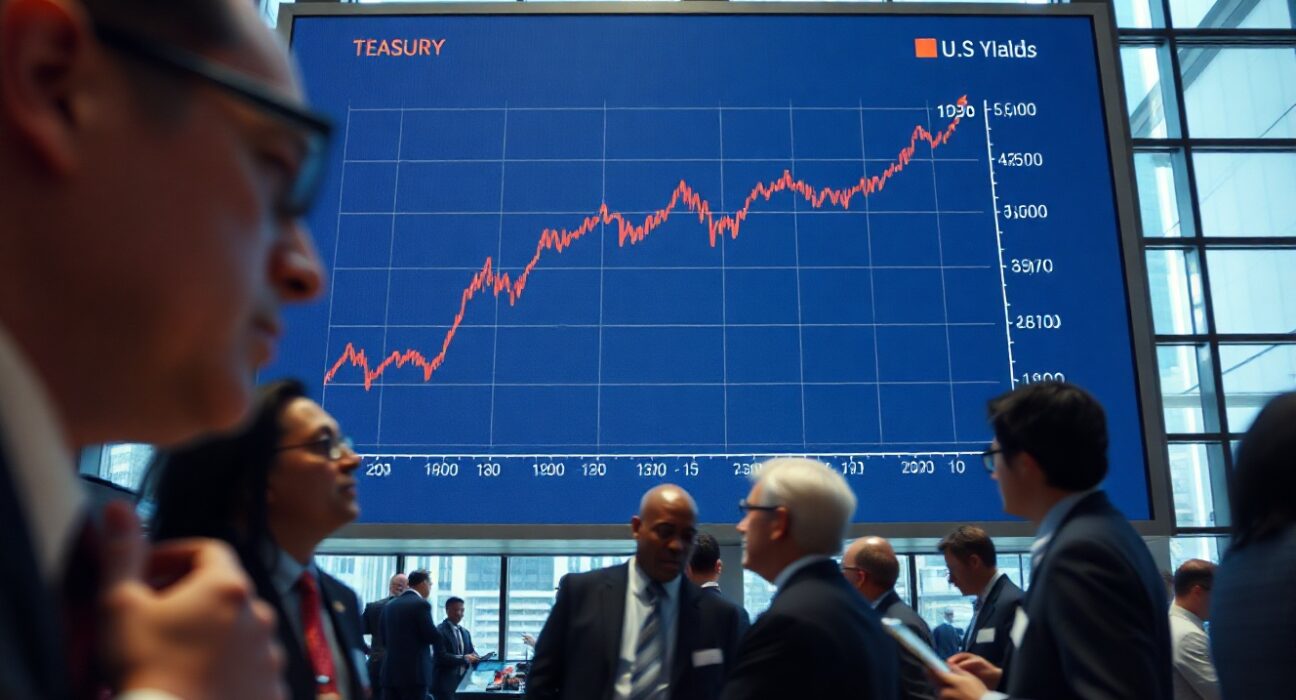
U.S. Treasury yields pushed higher on July 31, capping a turbulent month as escalating Middle East tensions and conflicting signals from the Federal Reserve kept investors on edge. The 10-year Treasury yield rose to 4.20% by mid-session, up from 4.10% at the start of the week, while the 2-year yield climbed to 4.65% as traders recalibrated rate-cut expectations.
What drove the latest yield spike?
The yield increase reflects a dual shock: geopolitical risk and monetary policy ambiguity. On the geopolitical front, the assassination of Hamas political leader Ismail Haniyeh in Tehran on July 31 heightened fears of a broader Middle East war, prompting a flight to safety that typically lowers yields. However, the move was offset by stronger-than-expected U.S. economic data and hawkish comments from Fed officials, which reduced the likelihood of aggressive rate cuts in September.
According to CME FedWatch, as of July 31, futures markets priced in a 68% chance of a 25-basis-point cut in September, down from 80% a week earlier. This repricing pushed short-term yields up, as investors demanded higher compensation for the possibility of a prolonged hold.
How the Middle East conflict is influencing bonds
Geopolitical shocks typically drive demand for safe-haven assets like Treasuries, but this time the effect was muted. Analysts note that the market’s focus remains on inflation and the Fed’s path, with geopolitical events providing only temporary volatility. “The reaction function has changed,” said Tom Porcelli, chief U.S. economist at RBC Capital Markets. “Investors are more concerned about the inflation outlook than about conflict headlines, unless the conflict directly disrupts oil supplies.”
Oil prices did edge up on the news, with Brent crude climbing 2% to $82 per barrel, but the move was not enough to trigger a sustained safe-haven bid. Instead, traders sold bonds in anticipation of a potentially higher term premium, as the U.S. Treasury prepares to increase coupon auction sizes in the coming quarters.
Fed policy confusion adds to market jitters
The Federal Reserve’s communication has added another layer of uncertainty. On July 30, Fed Chair Jerome Powell said the central bank is “closely watching” the labor market and could cut rates as soon as September if inflation continues to cool. But just a day later, Fed Governor Michelle Bowman argued that inflation risks remain “elevated” and that more evidence is needed before easing. This mixed messaging left investors guessing, amplifying yield swings.
The confusion is evident in the options market, where the expected range for the 10-year yield over the next month has widened to its highest level since March. “We’re seeing a classic policy fog,” said Priya Misra, portfolio manager at J.P. Morgan Asset Management. “The market is struggling to price a clear path, and that’s leading to higher volatility and higher yields.”
What this means for investors
For everyday investors, the yield move has direct implications. Higher Treasury yields translate to higher borrowing costs for mortgages, auto loans, and corporate debt, potentially slowing economic growth. Conversely, they offer better returns on savings accounts and government bonds, which could attract more retail money into fixed income.
Market strategists advise caution. “Don’t chase yields at these levels,” said Ellen Zentner, chief economist at Morgan Stanley. “The Fed is likely to cut eventually, but the timing is uncertain. Locking in long-term yields now might be premature.”
Conclusion
As July closes, the bond market remains hostage to two forces: geopolitical flashpoints and Fed policy uncertainty. While the immediate yield spike reflects a reassessment of rate-cut odds, the broader trend will depend on upcoming economic data, including the July jobs report due August 2, and any further escalation in the Middle East. For now, investors are bracing for more volatility, with the 10-year yield likely to remain in a 4.10%–4.30% range in the near term.
FAQs
Q1: Why do Treasury yields rise when there is geopolitical tension?
Typically, geopolitical tension drives demand for safe-haven assets like Treasuries, which lowers yields. However, if the tension also threatens to disrupt oil supplies or global growth, it can fuel inflation expectations, leading investors to sell bonds and push yields up. In this case, the muted safe-haven bid was offset by inflation concerns.
Q2: How does the Federal Reserve’s communication affect Treasury yields?
Fed statements and projections directly influence market expectations for future interest rates. If the Fed signals a delay in rate cuts, yields on shorter-term Treasuries rise, as investors demand higher compensation for holding bonds that are sensitive to policy changes. Conflicting signals from different Fed officials can increase uncertainty and volatility.
Q3: What should investors do in this environment?
Financial advisors recommend staying diversified and avoiding timing the market. For income-focused investors, shorter-duration bonds may offer a better risk-reward, as they are less sensitive to rate swings. Those with a longer horizon might consider locking in current yields if they believe the Fed will eventually cut rates, but it’s essential to monitor economic data and geopolitical developments.
Disclaimer: The information provided is not trading advice, Bitcoinworld.co.in holds no liability for any investments made based on the information provided on this page. We strongly recommend independent research and/or consultation with a qualified professional before making any investment decisions.
