

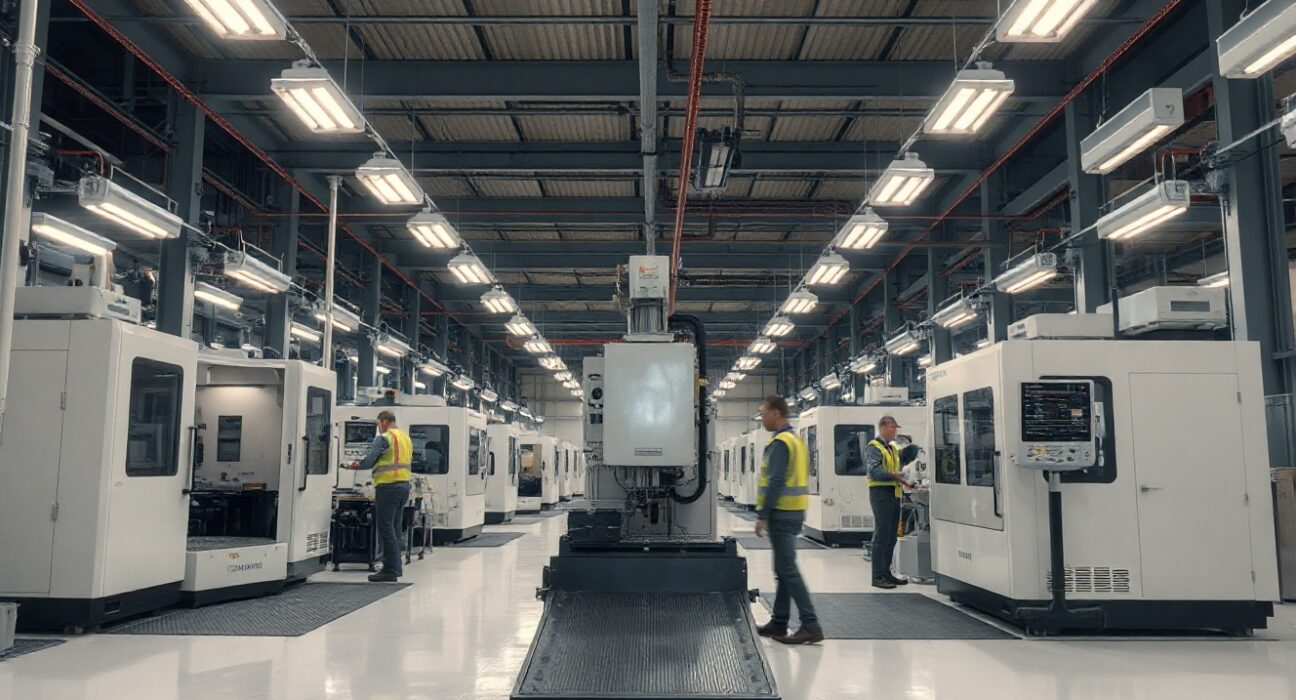
The US manufacturing sector is expected to report continued solid growth in July, with the Institute for Supply Management (ISM) Manufacturing PMI forecast to remain in expansion territory, according to economists’ consensus estimates. The data, scheduled for release on August 1, 2025, will provide a key snapshot of factory activity and broader economic momentum.
What to expect from the July ISM Manufacturing PMI
Economists surveyed by major financial data providers project the ISM Manufacturing PMI to come in at around 49.5, slightly below the 50.0 threshold that separates expansion from contraction, but reflecting a modest improvement from June’s reading of 48.5. While a reading below 50 indicates contraction, the expected uptick suggests that the manufacturing sector is stabilizing after a period of softness.
Key subindexes to watch include new orders, production, employment, and supplier deliveries. New orders, a forward-looking component, are expected to remain subdued but show signs of recovery, while production may have been supported by easing supply chain pressures and steady consumer demand for goods.
Why this report matters for the economy and markets
The ISM Manufacturing PMI is one of the most closely watched indicators of US economic health because it surveys purchasing managers across a wide range of industries, providing an early read on business conditions. A stronger-than-expected reading could bolster confidence in the manufacturing sector’s resilience, while a weaker number might reignite concerns about a broader slowdown.
For financial markets, the report can influence expectations for Federal Reserve policy. A robust manufacturing figure could reduce the likelihood of near-term interest rate cuts, whereas a disappointing print might reinforce the case for easing. Investors and policymakers alike will scrutinize the details for clues about inflation pressures and labor market tightness.
Regional and global context
The US manufacturing sector has faced headwinds from high borrowing costs, slowing global demand, and lingering geopolitical uncertainties. However, recent data from other major economies, including China and the Eurozone, have shown mixed but slightly improving trends, suggesting that global manufacturing may be bottoming out. This could provide some support to US exporters and help stabilize the domestic factory sector in the second half of the year.
Conclusion
The July ISM Manufacturing PMI will offer a critical update on the health of US factories. While the consensus forecast points to a slight improvement, the actual figure will carry significant weight for economic sentiment and policy expectations. Investors and businesses should watch the report closely, as it will provide valuable signals about the trajectory of manufacturing activity heading into the fall.
FAQs
Q1: What is the ISM Manufacturing PMI?
The ISM Manufacturing PMI is a monthly index based on surveys of purchasing managers at more than 400 companies in the manufacturing sector. It measures changes in new orders, production, employment, supplier deliveries, and inventories. A reading above 50 indicates expansion, while below 50 signals contraction.
Q2: When is the July ISM Manufacturing PMI released?
The report is typically released on the first business day of the following month. For July data, the ISM is scheduled to publish the report on August 1, 2025, at 10:00 AM ET.
Q3: How does the ISM PMI affect the stock market?
A stronger-than-expected PMI can boost investor confidence in economic growth, potentially lifting stock prices, especially in industrial and cyclical sectors. Conversely, a weak reading may raise fears of a recession, leading to market declines. The report also influences expectations for Federal Reserve interest rate decisions, which affect bond yields and equity valuations.
Disclaimer: The information provided is not trading advice, Bitcoinworld.co.in holds no liability for any investments made based on the information provided on this page. We strongly recommend independent research and/or consultation with a qualified professional before making any investment decisions.
