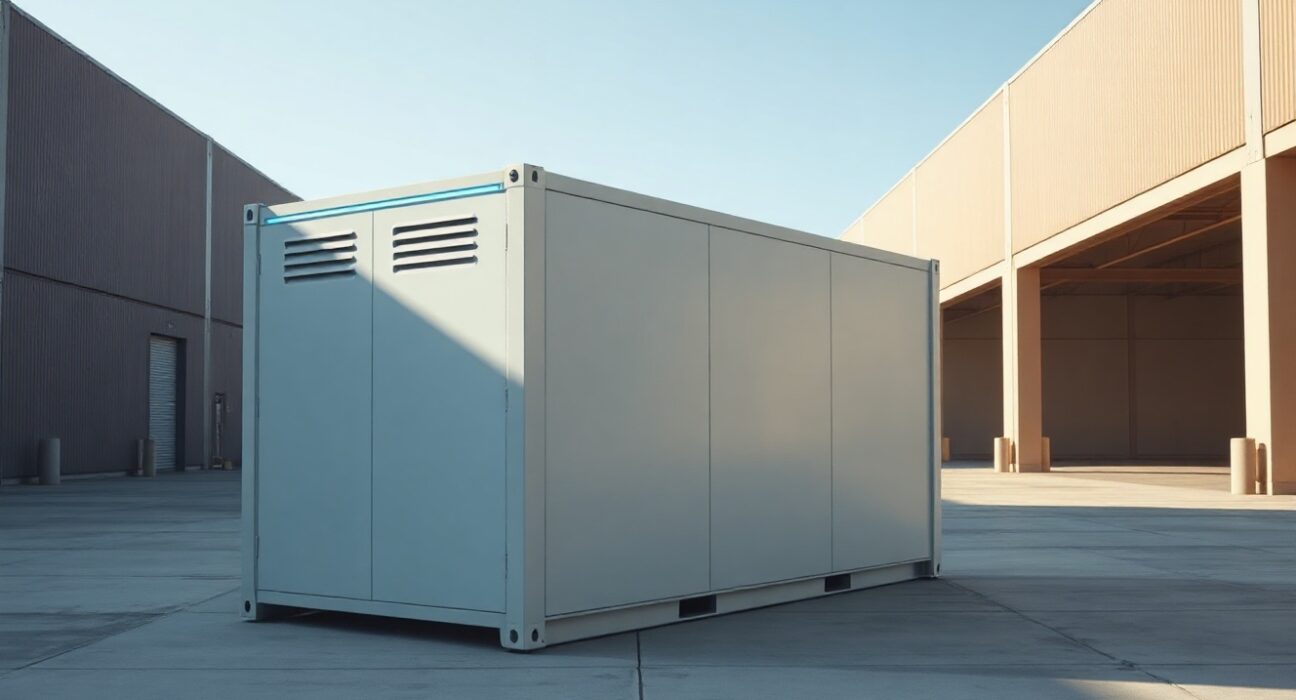
AI infrastructure company Runware has introduced a modular data center solution called the Sonic Inference Pod, a transportable unit designed to provide flexible compute capacity that can be deployed quickly and positioned closer to end users.
What is the Sonic Inference Pod?
Announced on Tuesday, the Sonic Inference Pod is a single, transportable unit that contains the necessary hardware for AI inference tasks. Unlike traditional data centers that require years of construction, these pods can be deployed in days, according to the company. Runware claims the pods offer higher quality inference at a lower cost than other serverless platforms and GPU clouds, and they can be added incrementally to scale capacity without expanding a fixed facility.
Why modular data centers are gaining traction
The demand for AI inference is growing rapidly, and traditional data center construction has not kept pace. Modular solutions like Runware’s pods aim to address this by using existing power infrastructure and avoiding the need for new grid capacity. The pods also use a closed-loop cooling system that does not require water, a significant advantage in regions facing water scarcity. Runware says it has 10 pods in deployment across the U.S., Europe, and Asia-Pacific, with 160 sites available for future installations.
Impact on the AI infrastructure market
Runware’s approach represents a shift toward distributed compute, which can reduce latency by placing processing closer to users. This model also offers resilience: if one pod fails, traffic can be rerouted to others in the network. While hyperscalers continue to build massive data centers, Runware’s CEO Flaviu Radulescu sees the pods as complementary, not competitive. He emphasizes the flexibility and speed of deployment as key differentiators.
Environmental and community considerations
Data centers have faced criticism for their high energy and water usage, which can strain local resources. Runware’s pods are designed to use existing power and no water, potentially reducing their environmental footprint. However, Radulescu acknowledges that AI power consumption will rise regardless of the supplier, and the focus should be on how that demand is met. The company is not yet running on renewable power, but sees that as a future goal.
Conclusion
Runware’s Sonic Inference Pods offer a new option for AI compute that is faster to deploy, more flexible, and potentially more sustainable than traditional data centers. As AI demand continues to surge, modular solutions like these could play an increasingly important role in meeting infrastructure needs.
FAQs
Q1: What is a modular data center?
A modular data center is a prefabricated unit that contains computing infrastructure, which can be deployed quickly and scaled by adding more units, as opposed to building a permanent facility.
Q2: How does the Sonic Inference Pod differ from traditional data centers?
The pod is transportable, can be set up in days, uses no water for cooling, and can be placed closer to users to reduce latency. It also allows for incremental capacity expansion.
Q3: Is Runware’s approach environmentally friendly?
Runware’s pods use existing power and avoid water cooling, which can reduce their environmental impact. However, they still consume electricity, and the company has not yet transitioned to renewable energy sources.
Disclaimer: The information provided is not trading advice, Bitcoinworld.co.in holds no liability for any investments made based on the information provided on this page. We strongly recommend independent research and/or consultation with a qualified professional before making any investment decisions.