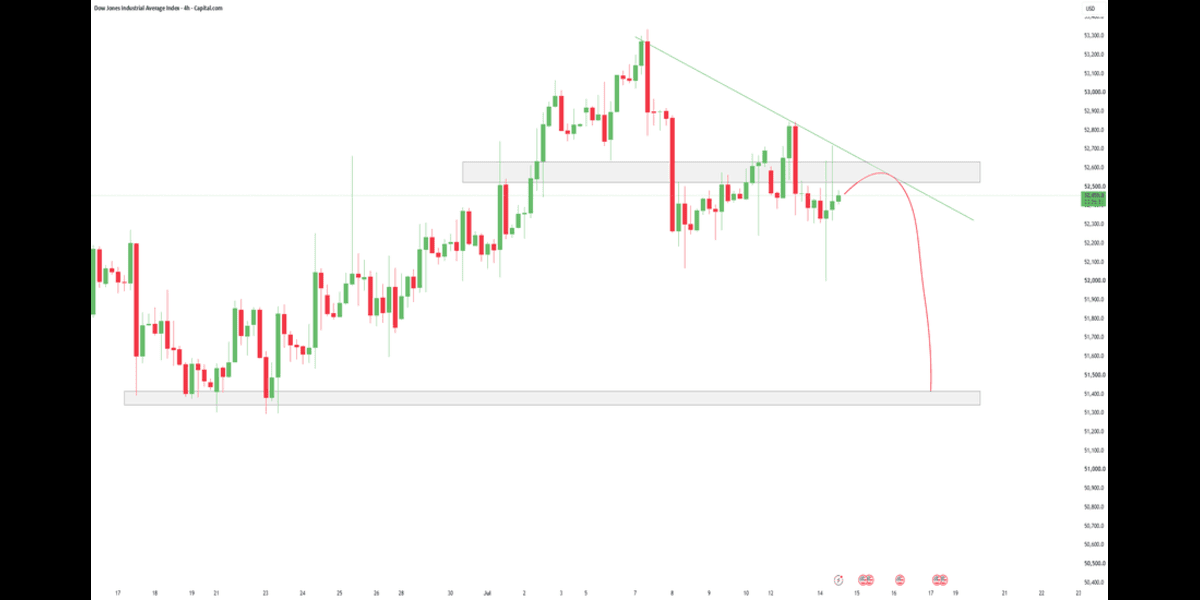
Picture two investors reading the same headline: “Stocks Close Higher Today.” One assumes the entire market rallied. The other knows the number might have been driven by a single company having an unusually good day, not a broad-based move at all. That second investor understands something most people never learn: the Dow Jones Industrial Average doesn’t measure “the market” the way most assume. It tracks just 30 companies, weighted by share price rather than size, which means one high-priced stock can outweigh dozens of larger businesses combined. The gap between perception and reality here is worth closing.
A Quick Origin Story
The index traces back to 1896, when it tracked just 12 industrial companies as a rough gauge of American business health. Railroads, steel, and manufacturing dominated the economy then, and the original list reflected that reality. Over more than a century, the roster expanded to 30 companies and shifted entirely away from its industrial-only roots, now spanning technology, finance, healthcare, and consumer goods. Not a single original member remains on the list today, a detail that says as much about how the American economy has transformed as it does about the index itself.
What Determines Membership Today
A committee reviews the list periodically, deciding which companies still represent leading sectors of the economy and which have been overtaken by newer, more significant businesses. Changes aren’t frequent, but they aren’t rare either. When a member company’s relevance fades, or when an emerging industry becomes too significant to ignore, the committee makes a substitution.
This selectivity is intentional. Rather than attempting to capture every publicly traded company, the index aims for a curated snapshot of established, large-cap businesses considered broadly representative of the economy, even though thousands of other public companies sit outside its 30 slots.
The Calculation Method That Sets It Apart
Here’s where the index becomes genuinely unusual. Most modern benchmarks weight companies by market capitalization, meaning a company’s total value determines its influence. This one is price-weighted instead, meaning a company’s share price, not its overall size, determines how much it moves the index.
A Simple Example
Imagine two companies of roughly equal total value. One trades at $250 per share, the other at $25. A $10 move in the first company’s stock will shift the index far more than the same $10 move in the second, purely because of the price difference, even though both companies are worth about the same amount in total. This structural quirk means a handful of high-priced stocks can occasionally dominate the daily headline number.
The Divisor: Keeping History Comparable
Stock splits, spinoffs, and periodic membership changes would normally distort a simple average beyond usefulness. To prevent that, the index relies on an adjusted figure called the divisor, recalculated many times since 1896. This adjustment allows today’s reading to remain meaningfully comparable to levels from decades past, despite an entirely different roster of companies and countless corporate actions along the way.
Strengths and Limitations Worth Understanding
The index’s greatest strength is also its clearest limitation: simplicity. A single number is easy to report, easy to remember, and easy to compare across time, which explains its staying power in daily financial coverage. But that same simplicity means it captures only a narrow slice of the market, weighted in a way most other benchmarks abandoned long ago.
Broader, cap-weighted indexes generally offer a more statistically representative view of overall market performance, since they account for company size rather than share price alone. Relying solely on this narrower index to judge broader market health can create a distorted picture, particularly on days when one or two member companies move sharply while the rest of the market stays flat.
Practical Ways to Use the Index Wisely
Rather than treating the daily number as a complete verdict on market health, it helps to check which specific companies actually drove a given day’s move. A significant swing caused by a single high-priced stock tells a very different story than a broad-based rally or selloff across most member companies.
Pairing this index with a broader, cap-weighted benchmark also provides useful context, offering a fuller picture of market conditions than any single number can provide on its own. For long-term investors especially, understanding these mechanics prevents overreacting to headline swings that may not reflect the market’s actual overall direction.
How the Index Reacts to Real-World Events
Economic data releases, corporate earnings, interest rate decisions, and geopolitical developments all leave a visible mark on the index, though not always evenly. Because of its price-weighted structure, news affecting a high-priced member company can move the headline number noticeably more than similar news affecting a lower-priced one, even when the underlying economic significance is comparable.
This means the index sometimes tells a slightly misleading story about how broadly a piece of news actually affected the market. A trader or investor who only checks the headline figure, without looking deeper at which companies moved and why, risks drawing conclusions that don’t hold up once the full picture becomes clear.
Conclusion
More than a century after its creation, the index remains one of the most recognized figures in finance, not because its methodology is the most statistically sound, but because its long history and simplicity have made it a lasting reference point across generations of market cycles. Its price-weighted structure sets it apart from newer benchmarks, occasionally producing headline swings driven by a single stock rather than the market as a whole. Understanding how the Dow Jones Industrial Average is actually built turns a familiar daily headline into a genuinely useful signal, rather than a number taken at face value.
Disclaimer: The information provided is not trading advice, Bitcoinworld.co.in holds no liability for any investments made based on the information provided on this page. We strongly recommend independent research and/or consultation with a qualified professional before making any investment decisions.