

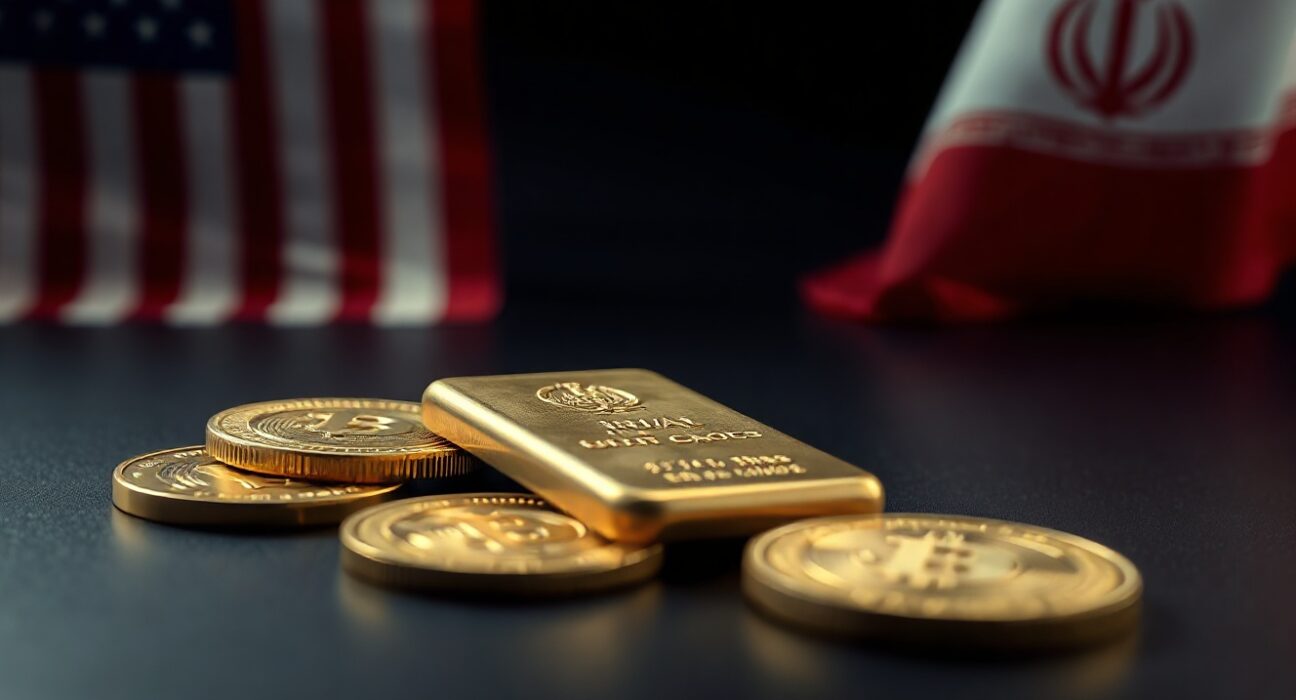
Gold prices extended their rally on Wednesday as reports suggested that a nuclear deal between Iran and the United States may be closer than previously thought, while investors awaited the upcoming U.S. nonfarm payrolls (NFP) report for further direction.
Geopolitical Developments Support Safe-Haven Demand
According to multiple diplomatic sources, indirect talks between Tehran and Washington have made significant progress over the past week, raising hopes of a renewed agreement that could ease tensions in the Middle East. The prospect of a deal has increased uncertainty among investors, who often turn to gold as a hedge against geopolitical and economic instability.
“The market is pricing in a higher probability of a diplomatic breakthrough, but the outcome remains uncertain,” said a senior commodities analyst at a European bank. “In such an environment, gold tends to attract safe-haven flows.”
Focus Shifts to U.S. Nonfarm Payrolls
Market participants are now looking ahead to the release of the U.S. nonfarm payrolls report, scheduled for Friday. Economists expect the economy to have added around 180,000 jobs in the previous month, with the unemployment rate holding steady at 3.8%.
Stronger-than-expected job growth could prompt the Federal Reserve to maintain higher interest rates for longer, which would typically weigh on gold, as the metal yields no interest. Conversely, a weaker report could reinforce expectations of rate cuts later this year, providing additional support for bullion.
Impact on Gold Prices and Market Outlook
As of Wednesday morning, spot gold was trading at $2,380 per ounce, up 0.8% on the day. The metal has gained approximately 4% over the past two weeks, driven by a combination of geopolitical tensions, central bank buying, and persistent inflation concerns.
“The immediate direction for gold will largely depend on the NFP data,” noted a strategist at a major investment firm. “If the report comes in weak, we could see gold test recent highs above $2,400. A strong report, however, could trigger a short-term correction.”
Technical analysts point to key support at $2,350 and resistance at $2,420, with a breakout above the latter potentially opening the door to new record highs.
Conclusion
Gold’s recent rally reflects a complex interplay of geopolitical developments and macroeconomic data expectations. While a potential Iran-US deal adds an element of uncertainty, the upcoming NFP report is likely to be the primary driver for gold prices in the short term. Investors should monitor both geopolitical headlines and economic indicators to gauge the metal’s next move.
FAQs
Q1: Why does gold react to geopolitical news?
Gold is considered a safe-haven asset, meaning investors buy it during times of uncertainty, such as geopolitical tensions, to protect their wealth. The potential for a deal between Iran and the US creates uncertainty about the future, which can boost demand for gold.
Q2: What is the nonfarm payrolls report?
The nonfarm payrolls report is a monthly statistic released by the U.S. Bureau of Labor Statistics that shows the number of jobs added or lost in the economy, excluding farm workers and a few other categories. It is a key indicator of economic health and influences Federal Reserve monetary policy decisions.
Q3: How does the NFP report affect gold prices?
If the NFP report shows strong job growth, it may signal a robust economy and lead the Federal Reserve to keep interest rates higher, which is negative for gold. Conversely, weak job growth could prompt the Fed to cut rates, which is positive for gold because it reduces the opportunity cost of holding non-yielding assets.
Disclaimer: The information provided is not trading advice, Bitcoinworld.co.in holds no liability for any investments made based on the information provided on this page. We strongly recommend independent research and/or consultation with a qualified professional before making any investment decisions.
