

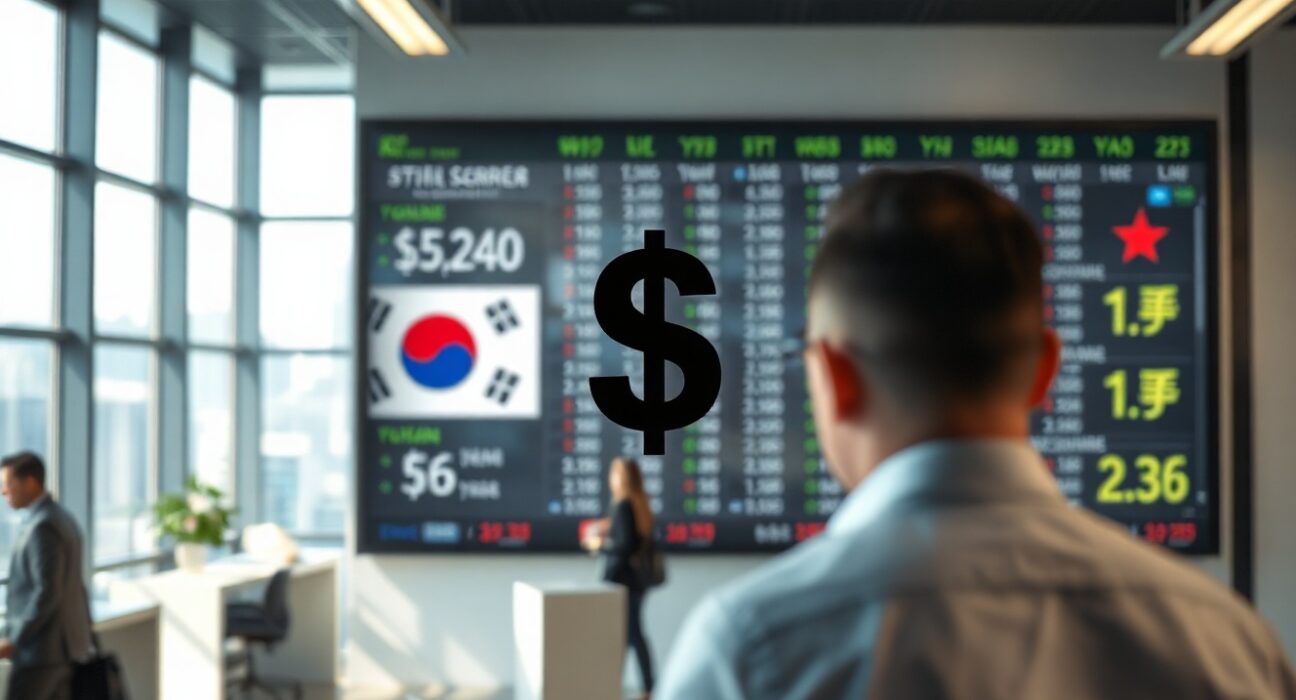
The US dollar edged higher against a basket of Asian currencies on [Date], with the South Korean won leading the losses, as investors weighed shifting monetary policy expectations and regional economic data. The dollar’s strength reflects a broader trend of capital flows favoring the US, while Asian currencies face pressure from domestic and external factors.
Market Drivers Behind the Dollar’s Rise
The dollar’s uptick is attributed to resilient US economic indicators and a hawkish stance from the Federal Reserve, which have kept US interest rates relatively high. This has made dollar-denominated assets more attractive, prompting investors to move funds away from Asian markets. In contrast, several Asian central banks have adopted accommodative policies to support growth, widening the interest rate differential.
Additionally, geopolitical tensions and trade uncertainties have contributed to a risk-off sentiment, further boosting the dollar’s safe-haven appeal. The dollar index, which measures the currency against six major peers, has climbed in recent sessions, reflecting the global trend.
Asian Currencies Under Pressure
Among Asian currencies, the South Korean won experienced the sharpest decline, falling by [X]% against the dollar as of [Date]. The won’s weakness is linked to concerns over South Korea’s export-dependent economy, which has been impacted by slowing global demand and a downturn in the semiconductor sector. Other regional currencies, including the Japanese yen, Chinese yuan, and Indian rupee, also lost ground, though to a lesser extent.
The Japanese yen hovered near multi-year lows as the Bank of Japan maintained its ultra-loose monetary policy, while the Chinese yuan faced headwinds from a property market slump and subdued consumer confidence. The Indian rupee was pressured by rising crude oil prices, which widen the country’s trade deficit.
Implications for Regional Trade and Investors
The depreciation of Asian currencies could have mixed effects. On one hand, it makes exports from these countries cheaper and more competitive globally, potentially supporting economic growth. On the other hand, it increases the cost of imports, fueling inflation and raising the burden of dollar-denominated debt for corporations and governments.
For investors, the currency movements underscore the importance of hedging against forex risk in portfolios with exposure to Asian assets. Analysts suggest that the dollar’s strength may persist in the near term, but the trajectory could change if the Fed signals a pause or if Asian economies show signs of robust recovery.
Conclusion
As of [Date], the dollar’s upward momentum against Asian currencies reflects a complex interplay of global monetary policy, economic fundamentals, and market sentiment. The South Korean won’s notable decline highlights the vulnerabilities of export-driven economies in the current environment. While a weaker currency can boost exports, the broader implications for inflation and debt sustainability warrant close monitoring by policymakers and investors alike.
FAQs
Q1: Why is the dollar strengthening against Asian currencies?
The dollar is strengthening due to a combination of robust US economic data, a hawkish Federal Reserve, and its status as a safe-haven asset amid global uncertainties. Higher US interest rates attract capital inflows, boosting the dollar.
Q2: What does a weaker won mean for South Korea’s economy?
A weaker won can make South Korean exports more competitive, potentially boosting trade. However, it also raises the cost of imports, which can fuel inflation and increase the burden of dollar-denominated debt, posing challenges for the economy.
Q3: How might these currency movements affect global investors?
Investors with exposure to Asian assets may face currency risk, which can impact returns. They might consider hedging strategies or rebalancing portfolios to mitigate potential losses from further depreciation of Asian currencies.
Disclaimer: The information provided is not trading advice, Bitcoinworld.co.in holds no liability for any investments made based on the information provided on this page. We strongly recommend independent research and/or consultation with a qualified professional before making any investment decisions.
