

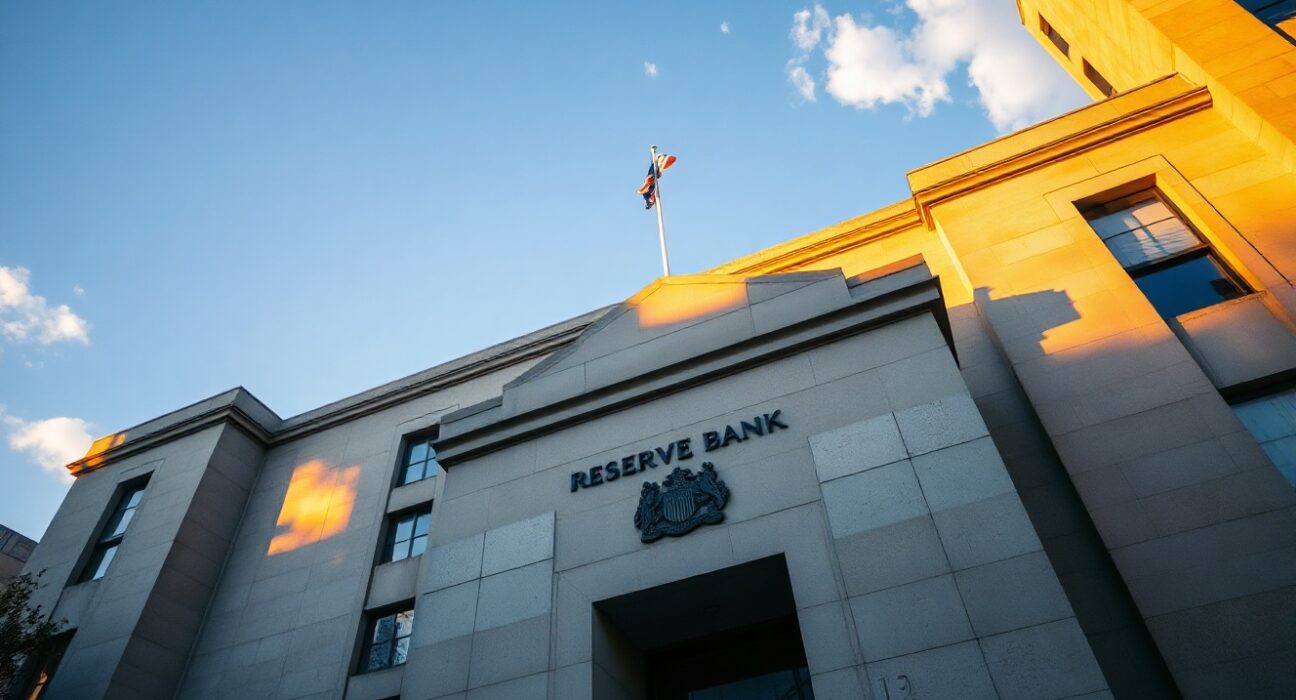
The Reserve Bank of Australia (RBA) left the official cash rate unchanged at 4.35% at its February meeting, a decision that aligned with market forecasts and marked the third consecutive hold since the last hike in November 2023.
Why the RBA Held Rates Steady
The central bank’s decision reflects a delicate balancing act between easing inflationary pressures and a resilient but slowing domestic economy. In its accompanying statement, the RBA noted that while inflation has moderated, it remains above the 2–3% target band, with the latest quarterly data showing headline inflation at 4.1% in the year to December 2023.
Underlying inflation, which strips out volatile items, also remained sticky at 4.2%, prompting the board to maintain a restrictive policy stance. The RBA reiterated that it remains vigilant to upside risks to inflation, including strong domestic demand and elevated services prices.
Market Reaction and Economic Implications
Financial markets had fully priced in a hold, so the decision triggered limited volatility. The Australian dollar traded marginally lower against the US dollar, while the S&P/ASX 200 index extended gains as investors welcomed the absence of a hawkish surprise.
For mortgage holders, the hold means no immediate change to variable loan repayments, offering a degree of relief after 13 rate rises since May 2022. However, the RBA’s guidance suggests that rate cuts are not imminent, and borrowers should continue to factor in elevated borrowing costs for the foreseeable future.
What This Means for the Australian Economy
The RBA’s decision underscores its commitment to bringing inflation back to target without unnecessarily harming the labour market. The unemployment rate remains near historic lows at 3.9%, but the central bank projects it to rise gradually to 4.2% by mid-2025 as economic growth slows.
Businesses and consumers are likely to face continued pressure from high interest rates, which are designed to cool demand. The RBA’s forward guidance remains data-dependent, with future moves hinging on upcoming inflation and employment data.
Conclusion
The RBA’s decision to hold the cash rate at 4.35% was widely expected and reflects a cautious approach to monetary policy amid still-elevated inflation. While the worst of the price surge may be over, the central bank has made clear that it will not hesitate to act if inflation proves more persistent than anticipated. For now, Australians can expect stable borrowing costs in the near term, but the path to rate cuts remains uncertain.
FAQs
Q1: When will the RBA cut interest rates?
Based on current market pricing and the RBA’s own forecasts, the first rate cut is not expected until late 2024 or early 2025, provided inflation continues to moderate as projected.
Q2: How does the cash rate affect my mortgage?
Most variable home loans are directly tied to the RBA’s cash rate. When the cash rate changes, banks typically adjust their standard variable rates, affecting monthly repayments. A hold means no immediate change for variable-rate borrowers.
Q3: Why is the RBA keeping rates high if inflation is easing?
The RBA wants to ensure inflation returns to the 2–3% target range sustainably. Premature rate cuts could reignite price pressures, forcing the central bank to raise rates again later, which would be more disruptive to the economy.
Disclaimer: The information provided is not trading advice, Bitcoinworld.co.in holds no liability for any investments made based on the information provided on this page. We strongly recommend independent research and/or consultation with a qualified professional before making any investment decisions.
