

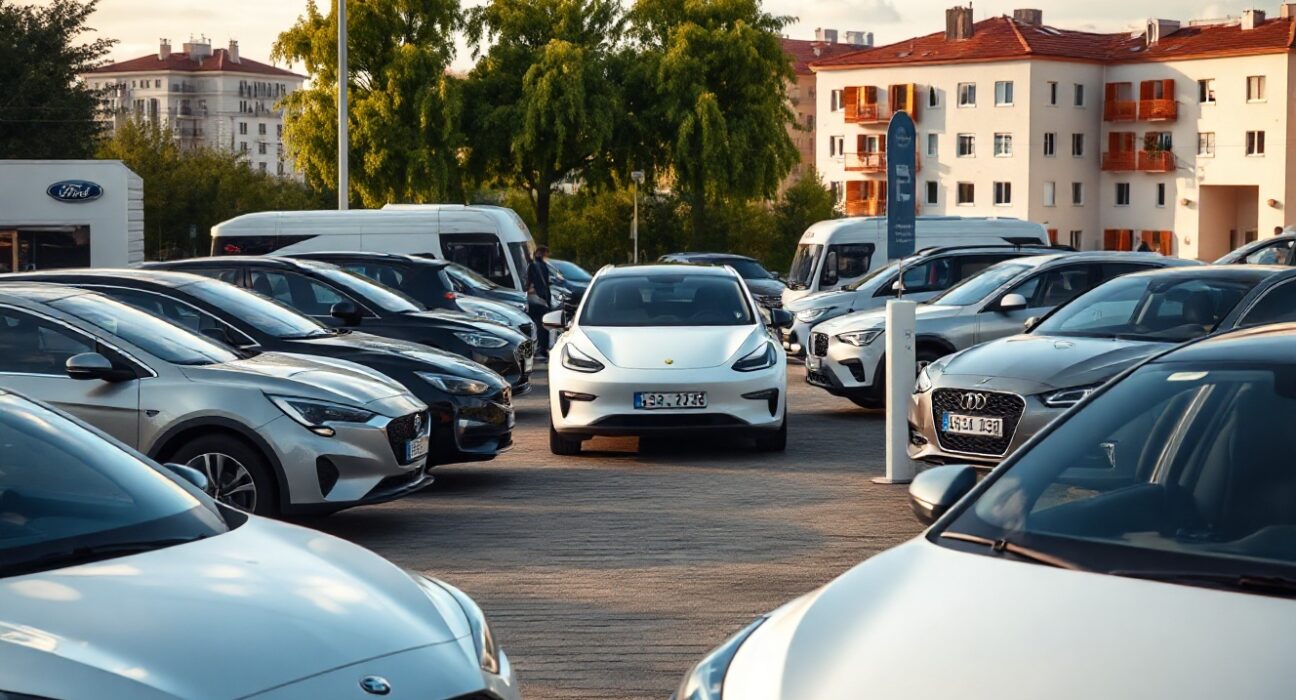
New passenger car registrations across Central and Eastern Europe (CEE) recorded steady growth through 2025, driven by improving supply chains and rising demand for electric vehicles, according to the latest industry data. The region’s automotive market is expanding at a moderate pace, with notable variations between countries.
Regional Overview: Growth Across the Board
As of the third quarter of 2025, CEE new car registrations have increased by approximately 6% year-on-year, outperforming the broader European average. Poland, the Czech Republic, and Romania are leading the growth, each posting double-digit gains in the first nine months of the year. This recovery follows a challenging 2024, when supply constraints and high inflation dampened sales.
The growth is attributed to easing production bottlenecks and a gradual normalization of consumer confidence. However, Hungary and Slovakia have seen more modest increases, reflecting their smaller market sizes and varying economic conditions.
Electric Vehicles: A Growing Share
Battery-electric vehicles (BEVs) now account for nearly 15% of new registrations in the CEE region, up from 10% in 2024. This shift is particularly pronounced in the Czech Republic and Slovenia, where government incentives and expanding charging infrastructure are accelerating adoption. In contrast, BEV penetration remains below 10% in Bulgaria and Romania, highlighting a widening gap within the region.
The increase in EV registrations is also driven by new model launches from both legacy manufacturers and Chinese brands, which are entering the CEE market with competitive pricing. However, concerns about charging availability and upfront costs persist, limiting faster uptake.
Impact on Dealers and Consumers
For consumers, the growing variety of EVs offers more choice, but the higher purchase price remains a barrier for many. Dealers are adapting by expanding their EV inventory and offering more flexible financing options. Meanwhile, the used-car market is starting to see an influx of electric models, which may gradually lower entry costs.
Outlook: Stability but with Risks
Looking ahead, analysts expect CEE car registrations to maintain a steady growth trajectory through 2026, supported by continued economic recovery and EU climate policies. However, potential risks include rising interest rates, geopolitical tensions, and the phase-out of purchase incentives in some countries.
The long-term trend is clear: the region is transitioning toward cleaner mobility, but the pace varies significantly by country and will depend on policy support and infrastructure investment.
Conclusion
CEE car registrations in 2025 reflect a resilient market recovering from recent setbacks, with electric vehicles playing an increasingly important role. While growth is broad-based, disparities among countries underscore the need for tailored policy approaches to sustain momentum and ensure the region’s automotive future is both green and economically viable.
FAQs
Q1: What is driving the growth in CEE car registrations?
Growth is primarily driven by easing supply chain issues, improving consumer confidence, and increased demand for electric vehicles, particularly in Poland, Czech Republic, and Romania.
Q2: How is the EV market performing in CEE?
EVs now make up about 15% of new registrations, with higher adoption in countries like Czech Republic and Slovenia due to incentives and infrastructure, while others lag behind.
Q3: What are the main challenges for the CEE auto market?
Challenges include high EV prices, limited charging infrastructure in some areas, economic uncertainty, and potential policy changes affecting incentives.
Disclaimer: The information provided is not trading advice, Bitcoinworld.co.in holds no liability for any investments made based on the information provided on this page. We strongly recommend independent research and/or consultation with a qualified professional before making any investment decisions.
