

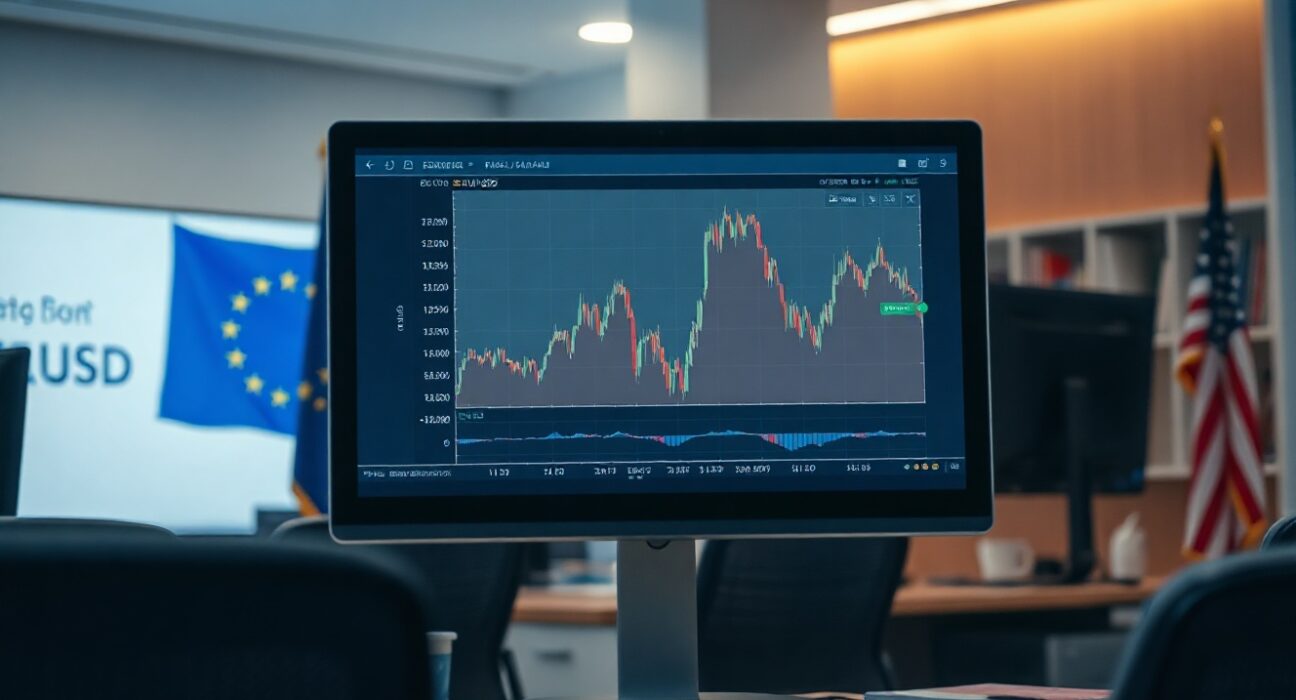
The euro is trading in a narrow range against the US dollar as currency market volatility sinks to multi-month lows, according to a note from ING’s foreign exchange strategy team on Wednesday.
Why is the euro rangebound against the dollar?
The recent lack of directional momentum in EUR/USD reflects a broader decline in currency volatility, with implied volatility measures dropping to levels not seen since early this year. ING attributes this to a convergence of factors: a lack of major economic surprises, a quieter geopolitical calendar, and a market that has already priced in the expected policy paths of the European Central Bank and the Federal Reserve.
For traders, the reduced volatility means fewer opportunities for large directional bets, leading to a consolidation phase. The euro has been hovering near the 1.08 mark against the dollar, with support and resistance levels holding firm in recent sessions.
What does the volatility drop mean for traders?
Low volatility environments often signal a market in equilibrium, but they can also precede a breakout. ING notes that the current calm may be temporary, with potential catalysts on the horizon, including upcoming US inflation data and ECB policy communications.
From a trading perspective, the rangebound nature of EUR/USD suggests that short-term strategies may favor range-trading approaches, while longer-term investors might wait for clearer signals. The market’s focus remains on the relative strength of the US economy versus the eurozone, with recent data showing a resilient US labor market and a more subdued European growth outlook.
What should investors watch next?
Investors should keep an eye on key economic releases and central bank speeches for hints of a volatility spike. A surprise in inflation or a shift in central bank rhetoric could easily break the current range. Additionally, political events, such as upcoming elections in the eurozone, could introduce new uncertainty.
The current stability in EUR/USD is a double-edged sword: it offers a predictable environment for businesses managing currency risk, but it also masks underlying imbalances that could lead to sharp moves once volatility returns.
Conclusion
In summary, the euro’s rangebound trade against the dollar is a direct result of sinking volatility, as highlighted by ING. While the market may remain calm in the near term, traders and investors should stay alert to potential triggers that could disrupt the current equilibrium. Understanding the dynamics of this low-volatility phase is crucial for making informed decisions in the currency market.
FAQs
Q1: What does “rangebound” mean in forex trading?
Rangebound refers to a market condition where the price of a currency pair trades within a relatively narrow and defined range, moving between consistent support and resistance levels without a clear trend in either direction.
Q2: Why does low volatility affect currency trading?
Low volatility reduces the potential for large price movements, which can limit profit opportunities for short-term traders. It often indicates market stability but can also lead to complacency, making markets more susceptible to sharp moves when volatility eventually returns.
Q3: What could cause the euro to break out of its current range?
A breakout could be triggered by significant economic data surprises, such as a major miss in US inflation or eurozone GDP, unexpected central bank policy changes, or geopolitical events that shift risk sentiment. Traders watch these catalysts closely for signs of a volatility spike.
Disclaimer: The information provided is not trading advice, Bitcoinworld.co.in holds no liability for any investments made based on the information provided on this page. We strongly recommend independent research and/or consultation with a qualified professional before making any investment decisions.
