

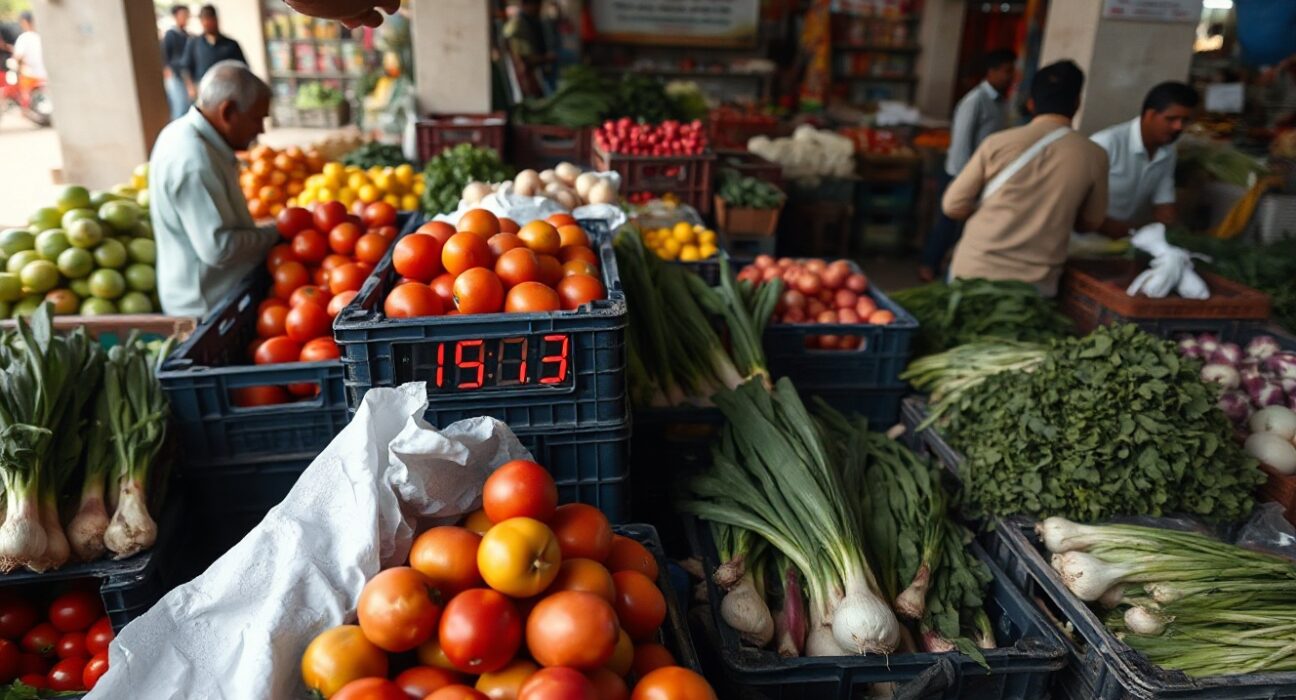
India’s retail inflation, measured by the Consumer Price Index (CPI), accelerated to 4.45% in July, according to official data released on [Date of release], slightly below market expectations of 4.5%. The uptick from June’s 4.25% was driven primarily by rising food prices, which account for nearly half of the CPI basket.
What Drove the Inflation Uptick?
The acceleration was largely attributed to a spike in vegetable prices, particularly tomatoes and onions, which saw sharp seasonal increases. However, core inflation, which excludes volatile food and fuel items, remained relatively subdued, indicating that underlying price pressures are still contained. The Reserve Bank of India (RBI) has consistently targeted a 4% midpoint for CPI inflation, with a tolerance band of 2-6%.
Market and Policy Implications
The data comes ahead of the RBI’s next monetary policy review, where the central bank is widely expected to maintain its current interest rate stance. While the headline number remains within the RBI’s comfort zone, the persistent food price volatility continues to pose a challenge for policymakers. Analysts suggest that a sustained dip below 4% is needed to trigger any rate cuts, but the current trajectory suggests the RBI will likely hold rates steady in the near term.
Why This Matters to You
For consumers, higher inflation means increased costs for essential goods, particularly food items. For businesses, it influences input costs and pricing power. For investors, inflation data directly impacts bond yields, currency strength, and equity market sentiment. A slightly lower-than-expected reading offers some relief, but the underlying trend remains a key watch point for economic stability.
Conclusion
India’s July inflation print of 4.45% reflects persistent food price pressures, though it remains within the RBI’s target band. With the central bank prioritizing growth support, rate cuts are unlikely in the immediate future. The coming months will be crucial to see if food inflation eases and core inflation remains benign, which would provide more room for monetary policy easing later this year.
FAQs
Q1: What is the current inflation target in India?
The RBI targets a medium-term CPI inflation of 4%, with a tolerance band of 2-6%. As of July, inflation at 4.45% remains within this range.
Q2: How does inflation affect interest rates?
When inflation is high, central banks often raise interest rates to cool spending and bring prices down. Conversely, when inflation is low, they may cut rates to stimulate economic activity. The RBI’s current stance is focused on supporting growth, given that inflation is within its comfort zone.
Q3: What is core inflation?
Core inflation excludes volatile items like food and fuel. It provides a clearer picture of underlying price trends. In July, core inflation remained moderate, suggesting that price pressures are not broad-based.
Disclaimer: The information provided is not trading advice, Bitcoinworld.co.in holds no liability for any investments made based on the information provided on this page. We strongly recommend independent research and/or consultation with a qualified professional before making any investment decisions.
